
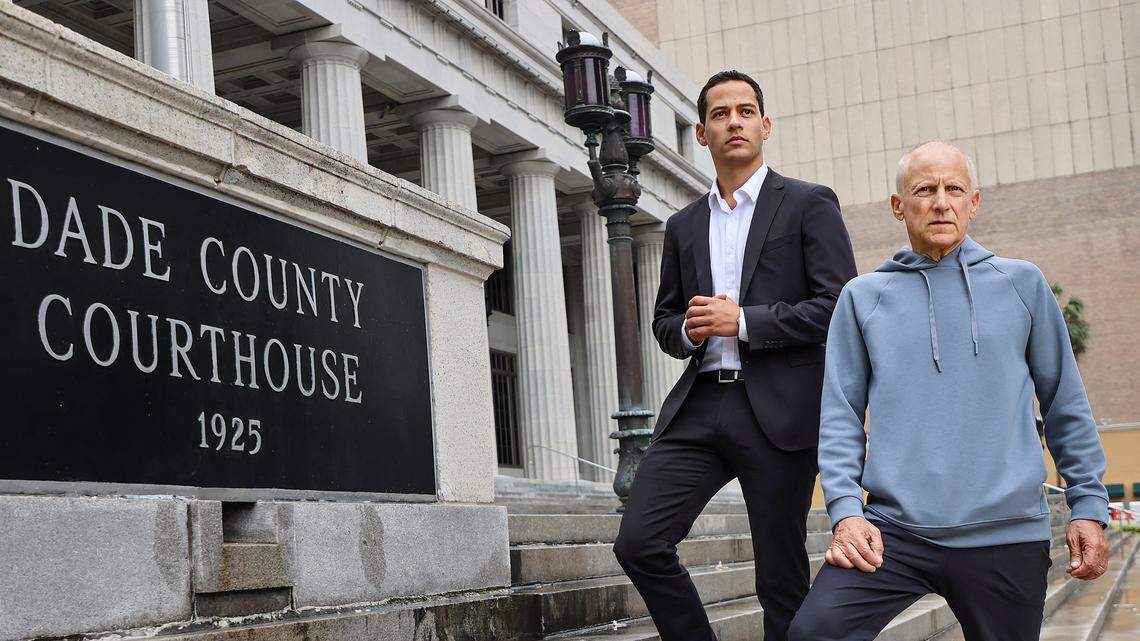
Pablo Langesfeld, right, stands with his son Martin, left, outside the old Dade County Courthouse in Miami on Tuesday, April 7, 2026. Langesfeld, now battling advanced pancreatic cancer, is suing Oscar Health Insurance for denying coverage of a drug therapy his doctors recommend, underscoring broader struggles over access to treatment.
Carl Juste
cjuste@miamiherald.com
Can your health insurance decline to pay for lifesaving cancer medication?
That’s what Doral resident Pablo Langesfeld and his family are waiting for Miami-Dade Circuit Judge Migna Sanchez-Llorens to decide. The 60-year-old father is battling an advanced stage of pancreatic cancer that has since spread to his liver.
His health insurer, Oscar Health Insurance, has repeatedly declined to cover the costly cancer-fighting drug therapy his doctor says he needs, arguing that the prescribed drug is not medically necessary and is not federally approved to treat his type of cancer.
That’s left Langesfeld priced out of treatment. The out-of-pocket cost for the drug therapy? $48,500 every three weeks.
“Fighting cancer is already overwhelming — the toll of chemotherapy is brutal. But battling insurance denials at the same time makes it unbearable and incredibly stressful for me and my family,” Langesfeld told the Miami Herald in a statement. “No patient should have to fight for their life on two fronts.”
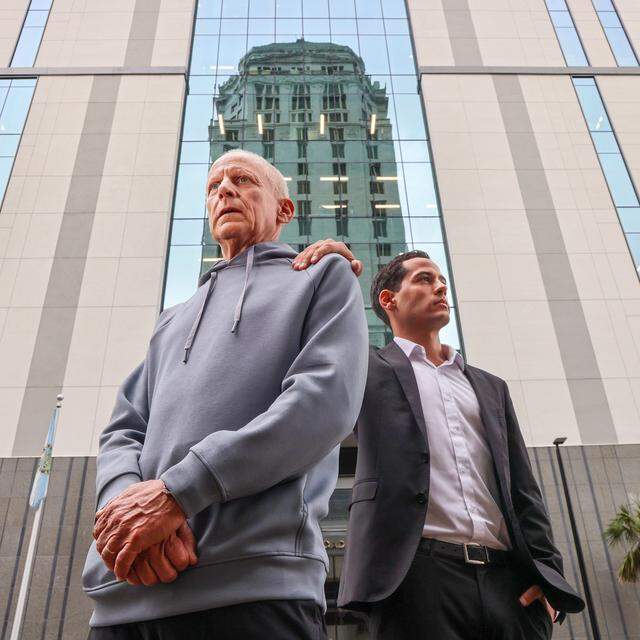 Pablo Langesfeld, left, stands with his son Martin, right, outside the Osvaldo N. Soto Miami-Dade Justice Center in Miami on Tuesday, April 7, 2026. Carl Juste cjuste@miamiherald.com
Some may know the Langesfeld family for their involvement in memorial efforts to remember the victims of the Surfside building collapse. Pablo Langesfeld lost his daughter and son-in-law in the 2021 building collapse.
Now, the family is an ongoing court battle with his health insurer. The jury last week ruled in favor of Langesfeld, answering “yes” on four out of five questions related to whether the prescribed drug therapy — called Avmapki Fakzynja Co Pack — is appropriate to treat his aggressive cancer. The judge is expected to rule Thursday on whether the health insurer needs to pay for the therapy.
How do doctors use cancer-fighting medication? 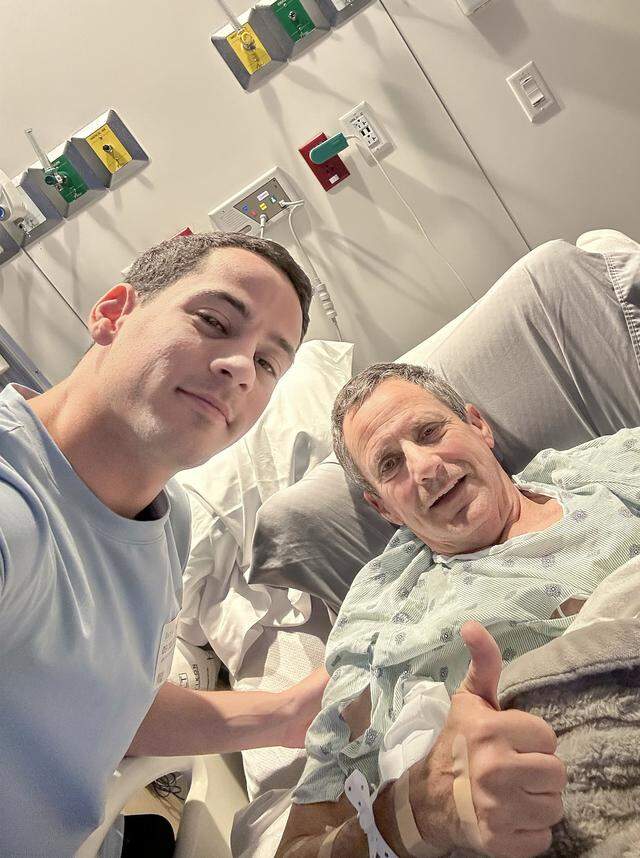 Pablo Langesfeld, right, gives a thumb-up with his son Martin Langesfeld, left, during a hospital visit. Carl Juste Courtesy of Martin Langesfeld
The drug therapy Langesfeld was prescribed is approved by the U.S. Food and Drug Administration to be used for ovarian cancer treatment and was granted an “orphan drug” designation in 2024 to encourage research and testing against pancreatic cancer, the third-leading cause of cancer-related death in the country.
Manufacturer Verastem Oncology says the drug combo of avutometinib and defactinib has so far shown promising trial results in patients with metastatic pancreatic cancer, a condition that affects over 30,000 patients in the U.S. each year.
“There is abundant evidence that this medication is medically necessary for Pablo,” said attorney Maria Santi, who is representing Langesfeld. “We are confident the judge will make the right decision.”
It’s not uncommon for doctors to use a combination of drugs during cancer treatment, including drugs that are not approved for the type of cancer being treated, according to the National Cancer Institute. That’s because “many cancer drugs are effective against more than one type of cancer,” and the FDA “usually does not approve combinations of chemotherapy” because of how many different combinations there are.
There are sometimes safety and effectiveness risks with using “off-label” drugs, though doctors often turn to research studies to find new uses for already-approved drugs. The American Cancer Society’s website explains that federal law does require health insurers to “cover medically appropriate cancer therapies,” including using approved drugs for other types of cancer if “the treatment has been tested in careful research studies and written up in well-respected drug reference books or medical journals.”
However, it’s also not uncommon for insurance companies to declare the unapproved use of the drug as “experimental” or “investigational” and refuse to pay or reimburse for the medication, according to the society.
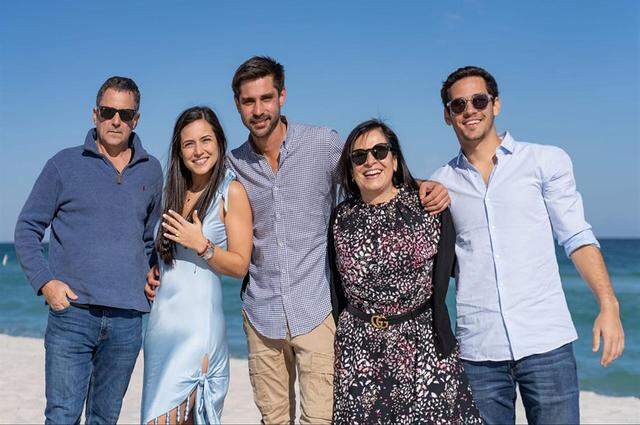 Pablo Langesfeld, left, with his family in an undated photo. Carl Juste Courtesy of Langesfeld family
In Langesfeld’s case, his in-network doctor prescribed Avmapki Fakzynja in December “due to failed chemotherapy interventions” against his Stage 4 pancreatic cancer, according to Langesfeld’s complaint. His attorneys argue in court documents that Oscar’s denial goes against its own coverage policy, which covers chemotherapy drugs and “medically necessary medications for the treatment of cancer” that have FDA approval or “have been studied in scientific literature as safe and effective for your specific type of cancer.”
Oscar Health Insurance and its attorney did not respond to the Herald’s requests for comment on the ongoing suit.
Langesfeld’s son, Martin, told the Herald the family is “just asking for simple approval.”
“It shouldn’t be this big of a fight,” he said.
For now, Langesfeld is undergoing intense weekly chemotherapy sessions to try and defeat his cancer, according to his son. But he’s doing so without the extra aid of the costly cancer-fighting drug therapy his doctor recommended. Martin Langesfeld hopes that will change soon.
”Every day he waits is another day without medication,” he said.
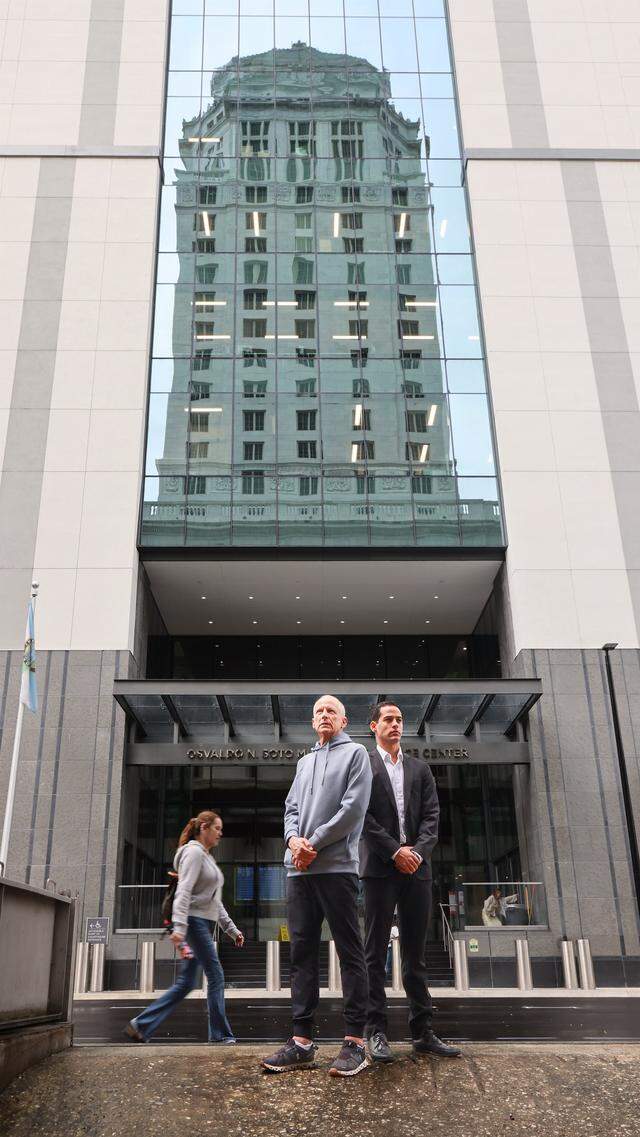 Pablo Langesfeld, left, stands with his son Martin, right, outside the Osvaldo N. Soto Miami-Dade Justice Center in Miami on Tuesday, April 7, 2026. Carl Juste cjuste@miamiherald.com
Miami Herald
Michelle Marchante covers the pulse of healthcare in South Florida and also the City of Coral Gables. Before that, she covered the COVID-19 pandemic, hurricanes, crime, education, entertainment and other topics in South Florida for the Herald as a breaking news reporter. She recently won first place in the health reporting category in the 2025 Sunshine State Awards for her coverage of Steward Health’s bankruptcy. An investigative series about the abrupt closure of a Miami heart transplant program led Michelle and her colleagues to be recognized as finalists in two 2024 Florida Sunshine State Award categories. She also won second place in the 73rd annual Green Eyeshade Awards for her consumer-focused healthcare stories and was part of the team of reporters who won a 2022 Pulitzer Prize for the Miami Herald’s breaking news coverage of the Surfside building collapse. Michelle graduated with honors from Florida International University and was a 2025 National Press Foundation Covering Workplace Mental Health fellow and a 2020-2021 Poynter-Koch Media & Journalism fellow.
Support my work with a digital subscription