
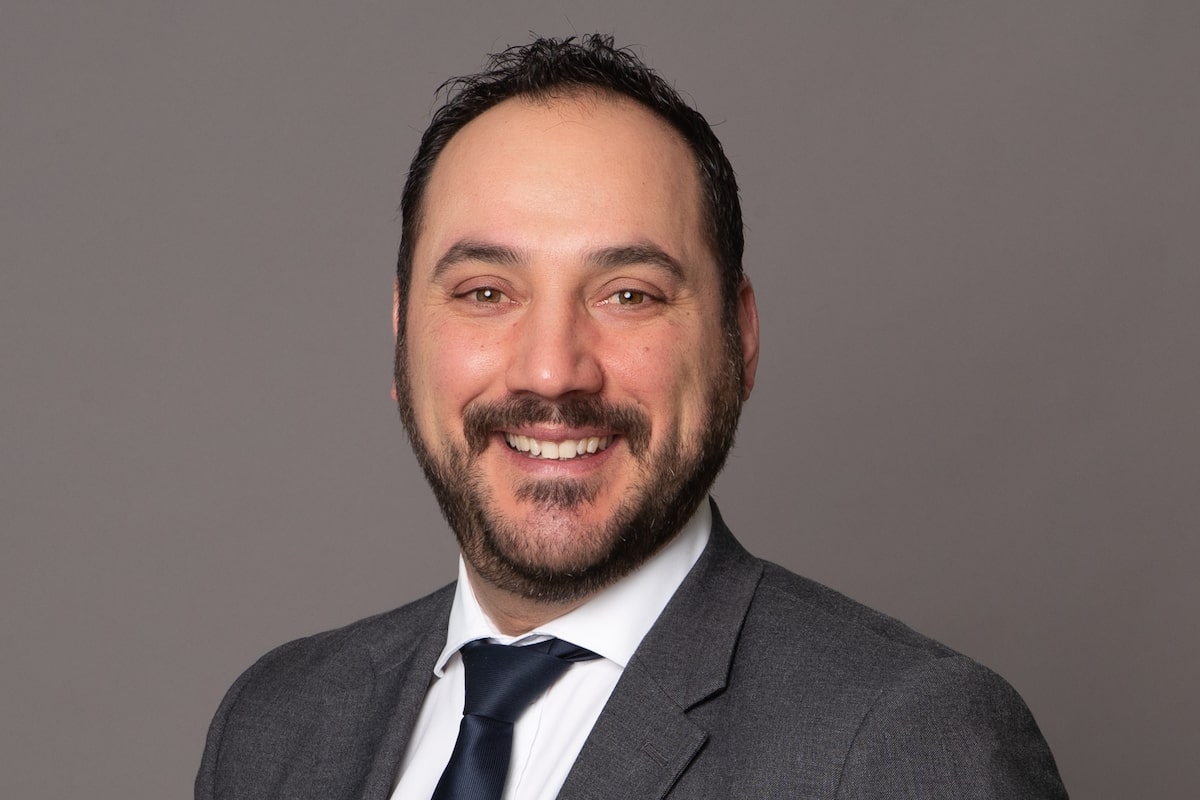
Frank Di Pietro of Investia Financial Services grew tired of the heavy travel schedule working for a fund company.Georgia Kirkos/Supplied
In Buy the Book, advisors discuss their experiences acquiring a book of business, from practice valuation to client retention.
Frank Di Pietro, a 49-year-old financial advisor at Investia Financial Services Inc. in St. Catharines, Ont.
For more than 20 years, Frank Di Pietro travelled across Canada, helping advisors demystify complex tax solutions for wealthy clients.
But something was missing. As a tax and estate planning expert for a major fund company, he proposed strategies, but he never knew how things progressed with clients. And he grew tired of the heavy travel schedule and commutes to Toronto from St. Catharines, where he had a young family.
Already armed with the chartered financial analyst (CFA) and certified financial planner (CFP) designations, he thought about starting his own advisory practice closer to home.
“I had a great corporate job, but I wanted that work-life balance,” he says.
He stayed in touch with three advisors at a family-owned firm, one of whom was planning to retire. The firm operated as a corporation with two of the advisors as shareholders. The firm served 450 client families invested in mutual funds and guaranteed investment certificates.
In 2023, the seller picked a firm retirement date and Mr. Di Pietro began negotiations for a 50-per-cent stake in the firm.
The book
Mr. Di Pietro says two-thirds of the clients were over 50 years old, most in St. Catharines, but a portion residing in Toronto, Peterborough, Ont., and Ottawa.
The seller co-owned the firm with his brother, each with a 50-per-cent stake, and his spouse was also an advisor. She and the seller each managed 25 per cent of the firm’s assets.
One challenge for Mr. Di Pietro was justifying paying for 50 per cent of the business to manage only 25 per cent of the assets.
“They had their own structure that worked fine in a family business, but made it challenging for an outside person to come in,” he says.
Ultimately, instead of three advisors working in silos, Mr. Di Pietro and the other two advisors created a more unified structure focused on one vision.
“Everybody needed to be comfortable with me coming in. The succession plan wasn’t just with the retiring advisor, but the existing advisors who have another three to 10 years between the two of them,” he says.
The purchase
In May, 2024, Mr. Di Pietro paid approximately two times recurring revenue. The seller received higher offers from other dealers, but he wanted to bring in somebody he trusted.
“He needed to be sure I could work well and fit with the remaining advisors, who were his family as well,” Mr. Di Pietro says.
There was still a negotiation. The seller wanted full payment up front, which Mr. Di Pietro wasn’t prepared to offer. They came up with a deal in which Mr. Di Pietro paid 50 per cent upfront, with the remaining 50 per cent in equal instalments over four years.
The transition
The seller left the business two months after Mr. Di Pietro joined the firm. Mr. Di Pietro had a lengthy to-do list for growing the business, but soon realized his first job was getting to know the 170 clients for whom he was going to be primarily responsible.
“I wanted to ensure the clients knew that although I was new to the firm, I wasn’t new in the business,” he says.
Most of the clients wanted more tax and estate planning and more frequent communication.
“We’ve got an older client base, so we’re talking about transferring wealth to the next generation or how to structure estates,” he says. “My experience in tax and estate planning allows me to take what I’ve known and really structure it for clients in a way that achieves their objectives.”
On the product side, each advisor previously had their own product shelf, but the firm has streamlined the options. They’re now licensed to sell exchange-traded funds and offer some alternative products.
The firm employs two administrative assistants and Mr. Di Pietro says they hope to add a licensed assistant.
Advice for buyers
Mr. Di Pietro says that after buying a book, advisors should focus on getting to know their newly acquired clients rather than trying to add more. He ended up generating quite a bit of new business from those new relationships.
“Focus on what you have first,” he says.
Are you a financial advisor or financial planner who recently bought a book of business? Globe Advisor would love to speak with you about your experience. Candour, especially around the finances, is appreciated, and your name and photo will be used for the column. Please e-mail dgage@globeandmail.com and include a brief synopsis of your situation.