
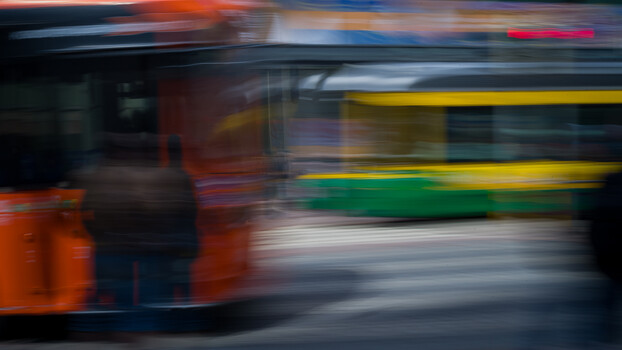
Street photography was built on proximity, on the unscripted moment when two strangers briefly shared the same space and the same gaze. In a world where every face is searchable, traceable, and legally accountable, that proximity no longer carries the same meaning.
The future of street photography doesn’t look like a sudden collapse. It looks like a slow, managed retreat. On the surface, the genre seems healthy: cameras are easier to use, and cities are more crowded than ever. But the shift isn’t about aesthetic trends. It’s about a fundamental change in the status of the human face. Street photography was built on the “friction of the second” — the unscripted encounter between strangers. In this tradition, the face wasn’t an accessory; it was the raw material of the craft. Now, that material has become toxic.
The idea of the “random passerby” is eroding as a category. In a data-driven environment, the person in the frame is no longer anonymous by default. They are a data subject. The language shifts quietly, but the implications are significant: what once appeared as incidental presence now carries traceability. The camera no longer captures a passerby. It captures a profile.
From Eye to Scanner
The street is no longer a neutral stage. Today, a camera in a public space functions less like an artist’s eye and more like a biometric scanner. In many jurisdictions, the moment a face is captured, it ceases to be “character” and becomes “personal data.” Once an image is uploaded, licensed, or even used to build a photographer’s online brand, it enters a commercial context that strips away the old protections of “artistic freedom.”
This isn’t just a theoretical threat. Reverse-image search has turned every street portfolio into a searchable database. A stranger in your frame is now one click away from being de-anonymized, linking their private life to your “decisive moment.” Legal risk no longer starts with a court order; it starts with a DM or a takedown notice. Even a baseless privacy complaint is expensive to fight. This financial pressure is pushing spontaneous work toward insurance policies and written consent. The ethical weight has shifted, too: you aren’t just capturing a moment, you are fixing a person into an endlessly retrievable digital record for someone who never asked to be indexed. The photographer has evolved from a witness into an involuntary agent of surveillance.
We can already observe the direction of travel by looking at news photography. Photojournalism is gradually losing its faces — not because of a new love for minimalism, but as a defensive adaptation to tightening legal standards. This is not a completed transformation but an ongoing drift. As publication becomes instantaneous and global, every photographer with a social media account operates, in effect, as a micro-publisher. The boundary between street shooter and newsmaker is thinner than it once was. To avoid the legal minefield of publishing identifiable people without consent, photographers are adjusting in real time.
Across editorial environments, a quieter adjustment is visible. Faces appear less centrally framed. Crowds are described through scale rather than expression. The camera lingers on space, signage, architecture, density. Individuals remain present, but less individually legible. This is not stylistic fashion. It is a gradual narrowing of what can be published without risk. This pattern is not confined to newsrooms. It reflects a broader recalibration of what can be shown without consequence.
The Cost of Proximity
The canon of street photography — Winogrand, Meyerowitz, Gilden — is a history of faces and the tension of the “close-up.” Distance was never just about focal length; it was a declaration of involvement. Even the most chaotic, layered frames relied on the legibility of the human figure.
Consider a midday intersection seen from above. Crosswalk lines, shadows from traffic lights, pedestrians reduced to shapes moving between blocks of concrete and glass. Shot from a distance, the composition becomes about rhythm and alignment rather than expression. The people remain present, but their faces are no longer the anchor of the image. It’s atmospheric, legally neutral, and utterly anonymous.
But this isn’t the encounter that defined the genre. It lacks the exchange of gazes, the flash of recognition, the social friction. Anyone who has worked the street knows the “tremor in the hands” — that spike of adrenaline and guilt when a stranger starts to turn toward your lens. That collapse of distance from observation into confrontation was the genre’s heartbeat. When the face becomes a liability, that heartbeat stops. What once felt like courage now carries legal exposure.
Some will argue that nothing fundamental has changed, that the street remains public and the law still permits capture. The right to capture may remain intact. The consequences now concentrate at publication. Those who claim that nothing has changed often focus on the right to capture. The pressure now sits elsewhere, at the point of publication, circulation, and liability.
Over time, these adjustments accumulate. Shooting from behind, relying on distance, dissolving faces into motion — what appears as stylistic refinement may also reflect constraint. When some approaches carry less risk than others, they spread. Over time, that changes the look of the genre.
Regulation and Simulation
AI intensifies this pressure by offering a risk-free alternative. Artificial generation has broken the link between the image and the location. A city scene no longer requires a city; a confrontation no longer requires a stranger’s consent.
If a perfect, tense moment on a subway platform can be prompted into existence from a desk, the value of traditional street photography shifts toward “authenticity” — the raw proof that this actually happened. But here is the trap: the “proof” of the event — the identifiable face — is exactly what the law is making increasingly fragile to publish. The genre is being squeezed from both sides. Simulation removes the need for physical risk, while regulation makes that risk too expensive to bear.
There is another layer to this shift. Every publicly uploaded image now enters datasets beyond the photographer’s control. Images of strangers do not only circulate socially; they are absorbed into training environments that refine the very systems competing with human photographers. Documenting the street now feeds the very systems that reduce the need to document it.
The practice does not need to be outlawed to be transformed. Instead, the practice is narrowing until it resembles something else. Spontaneity is being traded for “negotiated portraits.” Instinct is being replaced by legal awareness. Street photography is not disappearing. It is moving away from proximity. In a world where every face is data, standing close to a stranger no longer carries the same meaning. When the face becomes a point of liability, proximity ceases to function as an encounter. The genre may continue, but it no longer belongs to the conditions that created it.