

Government spending on pensions and social benefits reached a record €1.62 billion in 2025, according to figures published by the National Statistics Office (NSO), marking the highest level ever and accounting for 21% of the government’s total recurrent expenditure.
The total amount paid in contributory and non-contributory benefits was double the level recorded in 2013. Spending on contributory benefits rose by €106.3 million over the previous year to exceed €1.25 billion, while non-contributory benefits increased by more than €36 million to €362.5 million.
The number of contributory pensioners has now surpassed 100,000. When including those receiving the non-contributory old age pension, the total number of pension recipients in 2025 stood at around 106,800. Their combined income from pensions and pension bonuses increased by €103 million to €1.25 billion. This rise was largely driven by a €416 annual increase in all pensions, along with further pension improvements.
Additional increases were introduced for widowed pensioners, with reforms set to ensure that from next year they receive the same pension rate their deceased spouse would have received. Other pensioners born before 1962 also benefited from adjustments aimed at reducing disparities in maximum pensionable income, while changes to the cost-of-living bonus will result in a uniform bonus for all pensioners from next year, removing another anomaly created in 2008.
Around 13,800 people, mostly women, who are not eligible for a pension because they lack sufficient contributions, also saw increases in their annual bonus payments, with total payments reaching €10.5 million.
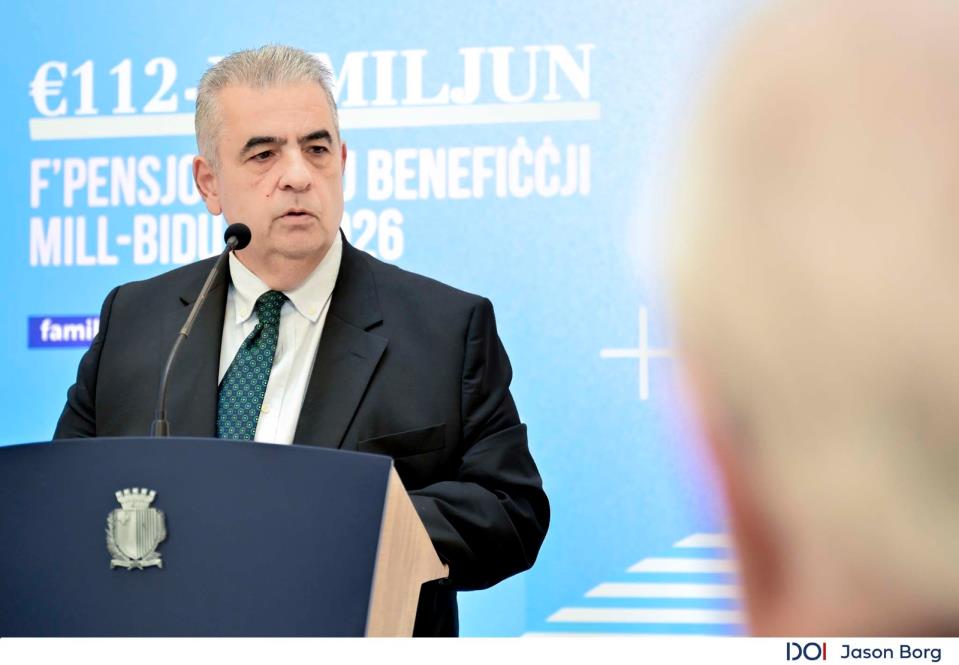
Families with children also benefited, with spending in this area rising by around €18 million to nearly €113 million. This was driven mainly by higher children’s allowances, increased support for children with disabilities and improvements to the In-work Benefit.
The additional COLA benefit for low- and middle-income households rose by €9.2 million to almost €52 million, benefiting 107,770 individuals or families.
Social Policy Minister Michael Falzon said the figures reflect stronger social investment made possible by economic growth, adding that the government remains focused on supporting pensioners, families and vulnerable people while addressing future challenges.