
Fashion historian Laura Fitzachary writes about surrealist designer Elsa Schiaparelli and her links to Ireland, as a landmark exhibition on the fashion pioneer opens in London.
When Juan Trippe, the then President of Pan American Airlines, first suggested the idea of an Irish nationwide tourism festival based on the 1951 ‘Festival of Britain’, the idea was embraced the Irish government, together with Bord Fáilte Eireann (the Irish Tourist Board).
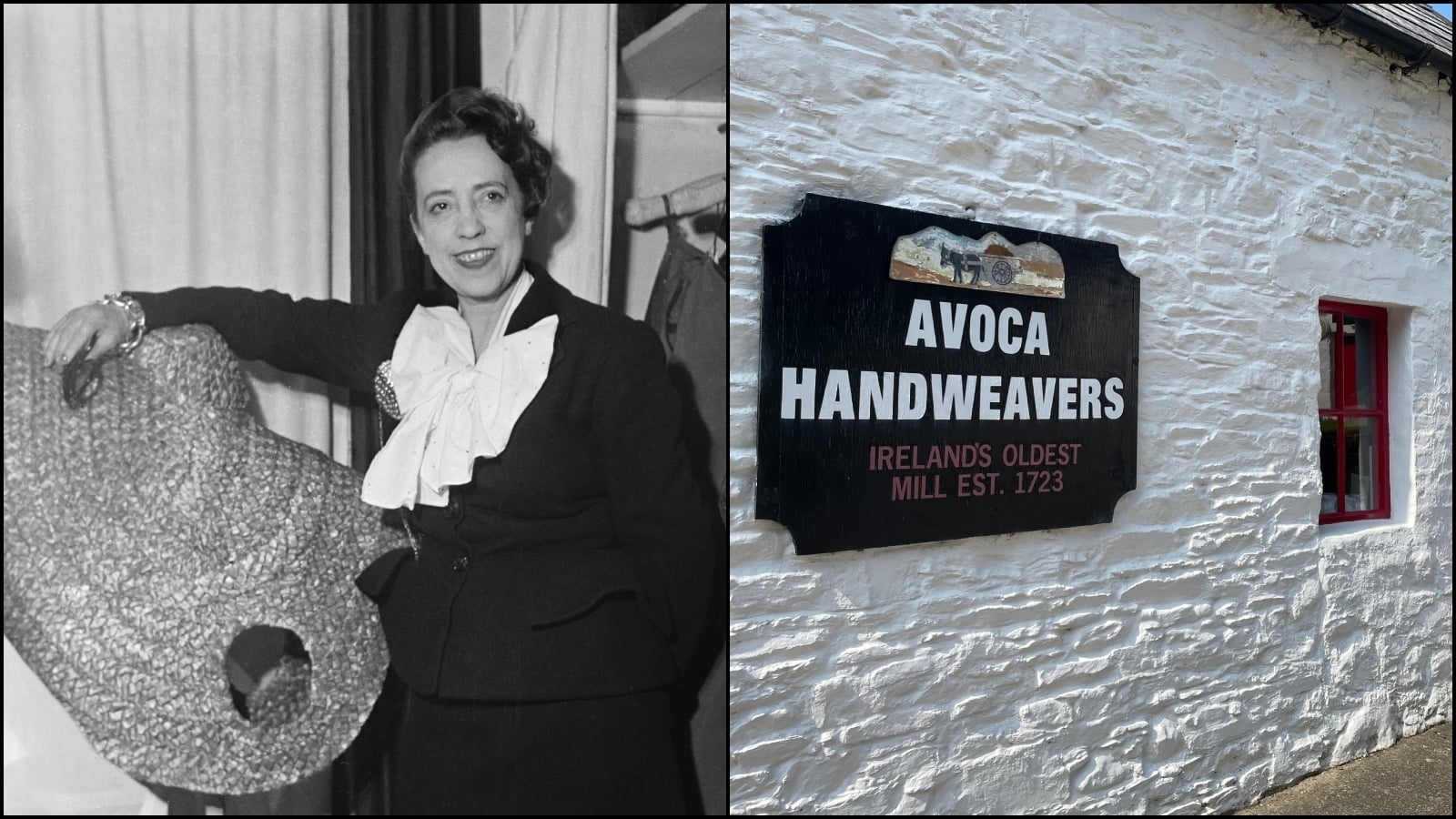
‘An Tóstal’ (meaning ‘The Gathering or ‘The Assembly’), as it became known, also aligned with a fashion parade organised by the National Agricultural and Industrial Development Association (NAIDA). The glamorous parade took place at the Gresham Hotel in Dublin from 21-23 April 1953, and was overseen by the head adjudicator, Mme Elsa Schiaparelli.
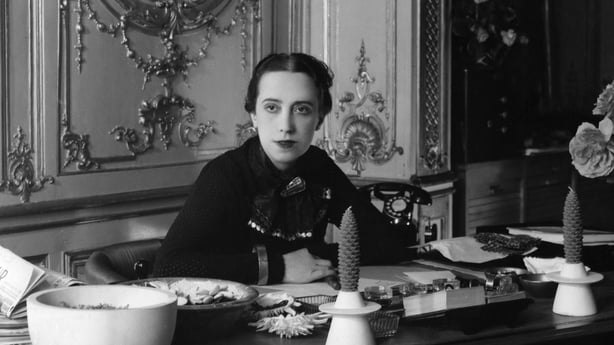
Elsa Schiaparelli
Upon arriving in Ireland, Schiap (as she preferred to be known as) lamented that regulations on imports for Irish goods into France meant it was quite difficult to acquire Irish tweed, linen and lace – despite the demand for it.
Decades into a pioneering career as one of the fashion industry’s most influential – and surrealist – designers, Schiaparelli’s presence in Ireland spoke to the provenance of Irish materials, long before the names of Irish designers like Jonathan Anderson and Sean McGirr became so commonplace in talk of modern fashion.
Now, Schiaparelli’s own legacy is undergoing yet another moment in the sun, as a retrospective of her work, ‘Schiaparelli: Fashion Becomes Art at the V&A Museum’, London, opened just weeks ago.
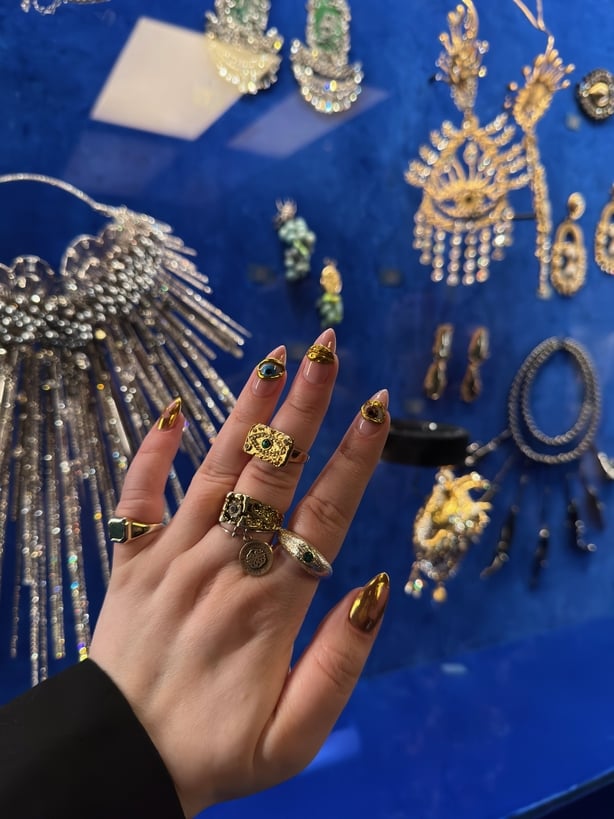
Laura Fitzachary’s Schiaparelli-inspired nail art, by Nat McCabe (@hereticz_nailz)
Having worked on Schiaparelli’s links to Ireland for number of years, it was great to visit another retrospective of her work, following ‘Shocking: The Surreal World of Elsa Schiaparelli’ in 2022 at the Musée des Arts Décoratifs in Paris.
Everytime Schiap’s work is on display, I am looking at the material and it is always clear that she had a penchant for quality of tweed – especially when it came to Ireland. In fact, a key inspiration in the work of the Italian-born, Paris-based couturier was the time she spent in Ireland in the 1930s, especially visits to see the Wynne sisters in Avoca, Co Wicklow.
On a visit to Ireland in 1958, Dorothy Critchlow noted in her article for the Manchester Evening News how the water mill along the Avoca River taken over by three soft-voiced sisters, who lived close by, was small and exclusive, certainly alluring to designers but ultimately unable to keep up with the demands of high fashion.
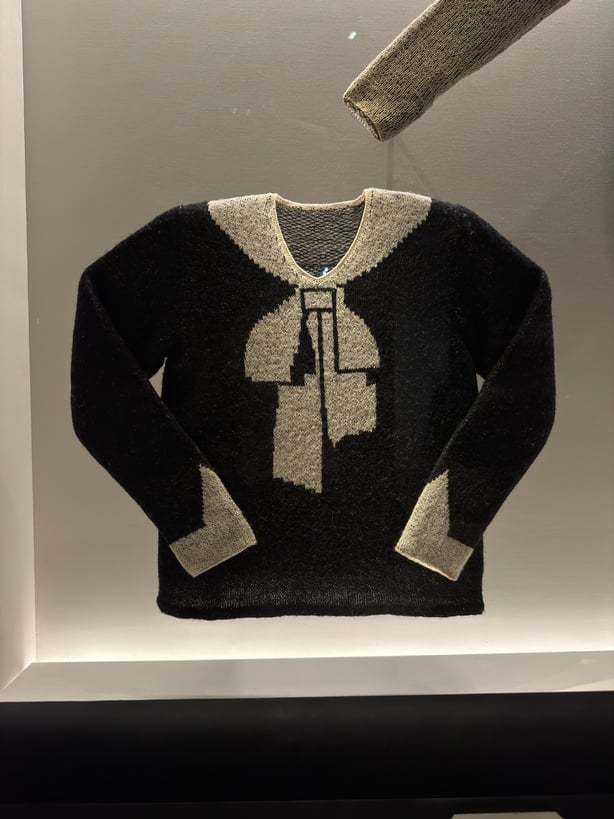
Black sweater with white bow-knot, Elsa Schiaparelli (designed 1927, made 1971) Paris, wool. Photo: Laura Fitzachary
The signature colours of the Avoca brand owe themselves to the innovations in colour that three sisters, Emily, Winifred and Veronica Wynne, pioneered. But by delving into the centuries-long history of Avoca handweaving, it’s clear that the Avoca valley itself, the flora and legacy left behind by the 18th century mill inspired the Wynnes two centuries later – and, eventually, the work of Schiaparelli herself.
Established as a co-operative weaving mill in 1723, the mill began to employ the newest advances in the world of weaving, including the use of a Flying Shuttle Loom, whose invention in 1733 by Englishman John Kay revolutionised the woollen industry. It allowed a weaver to weave fabrics of any width much more quickly than two weavers could do before. Visitors to the mill can still see a Flying Shuttle loom in use today.
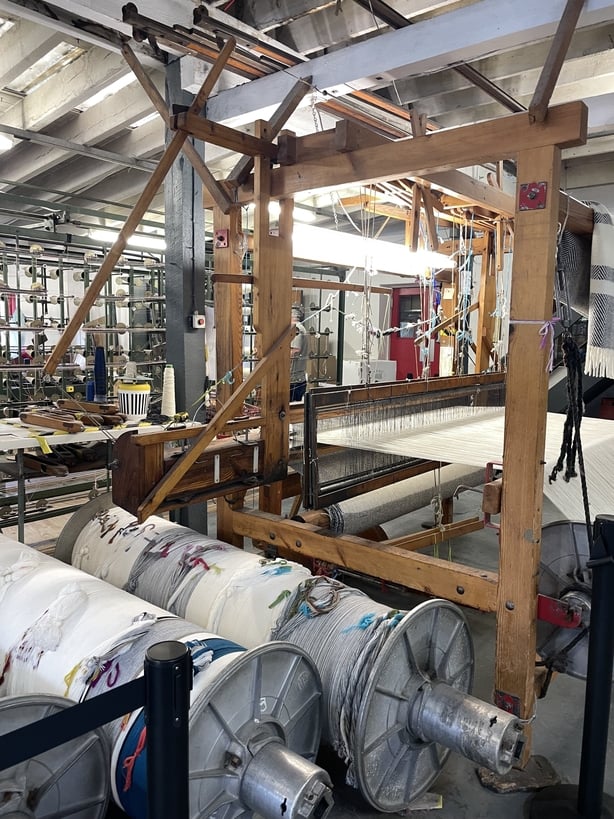
The mill at Avoca. Photo: Laura Fitzachary
Nicholas Dunne took ownership of the mill in the 1850s, renaming it ‘Millmount Mill’. Emily Wynne, the eldest daughter of an industrial family, began working with the mill after studying at Andrew S. Robinson Designing Rooms in Belfast, where she was trained in pattern drafting for damask and how it was woven on a jacquard loom. At the mill, she introduced new techniques, new designs and of course, colour.
When she was joined by her two sisters, Winifred and Veronica, in 1927, the ageing miller at Millmount Mill (who had run it since 1900) handed Emily the keys begging her to “keep the weaving up”. This was the same year incidentally that Maison Schiaparelli was created.
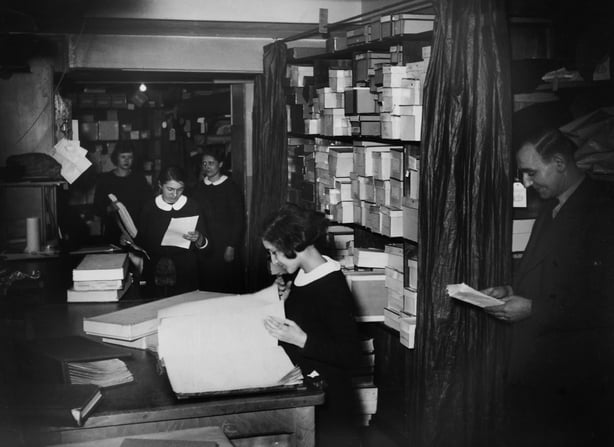
The seamstresses of Elsa Schiaparelli’s Fashion House, Place Vendome, Paris, 1935.
Critchlow in her 1958 article reminisced on time spent with Winifred and Veronica, walking through the grounds of the mill, writing: “The misty blues, lilacs and greens of the hills and sky-lines, the cyclamen, rose, magenta and gold of the bushes, and blossoms outside are exact reproductions of natural colours.”
According to Critchlow, the tweed had reached Schiaparelli through a Frenchwoman who had once been a governess to the girls in Ireland. However, it may be more likely that Schiaparelli was introduced to this tweed due to artist circles both Emily and Elsa moved in.
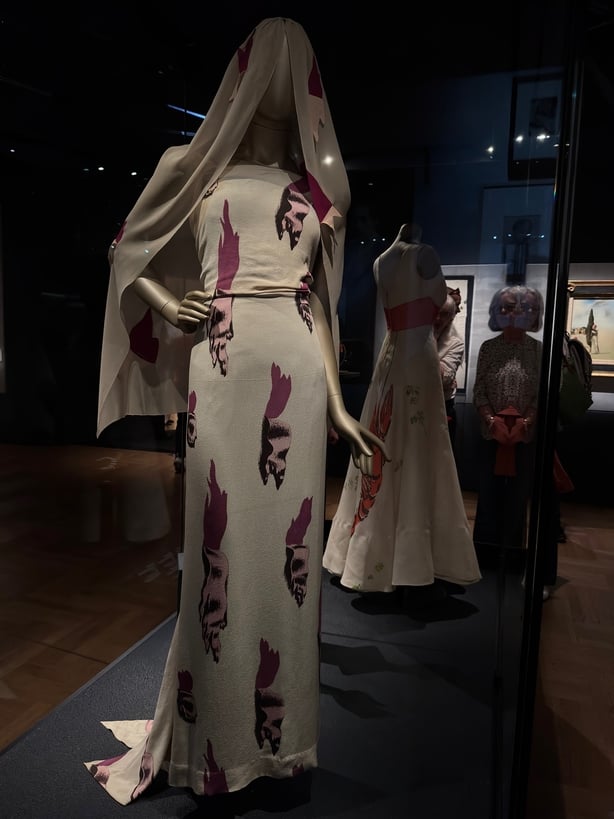
Torn dress and veil, Elsa Schiaparelli with Salvador Dalí (Summer 1938, Circus collection) Paris. Photo: Laura Fitzachary
Emily visited the Parisian atelier of Elsa Schiaparelli twice in the 1930s, in 1933 and again in 1937. As noted by historian Sarah Gillespie, Emily would report back to Ireland from her visits to Schiaparelli, noting sales and observations on style to her sister Veronica.
In December of 1934, The Avoca Handweavers had an exhibition in Dublin at Mills’ Hall, Merrion Row. There they displayed tweeds of all weights, from check tweeds, to the finest featherweights for evening dresses. Included there was a navy pattern with an orange and green over-check, described as a ‘Schiaparelli pattern’ made for the atelier.
And in orders created in 1937 by Avoca Handweavers for Schiaparelli, navy appears once again – her historical use of navy blue was a counterpoint to her famous ‘Shocking Pink,’ serving as a foundation for surrealist elements and featured in her 1938 Zodiac collection.
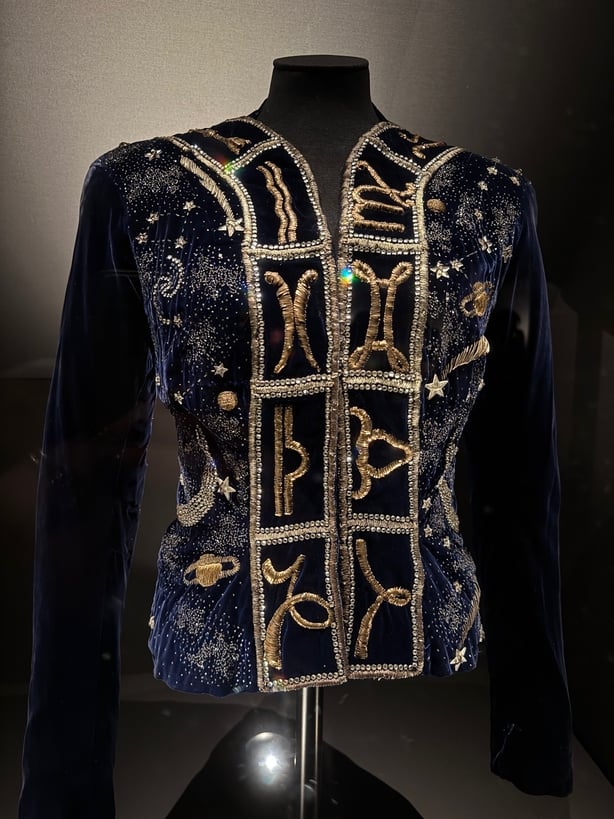
Evening Jacket, Elsa Schiaparelli (Winter 1938, Zodiac collection). Photo: Laura Fitzachary
The war may have put a pause on Schiaparelli obtaining Irish textiles but as the Irish Press noted in April 1953, Schiaparelli took home several Irish goods that had won awards including Miss Maureen Power’s winning evening sweater.
But what of the other winners, such as best Evening Gown for example? That was Irish designer Nicholas O’Dwyer, who had been pitched in articles in the run up to the event as a designer to catch Schiap’s eye – and he did, leaving with a winning cup for his grey poplin gown. One of the few men working in Irish fashion in the 1950s, he had his own store on Suffolk Street in Dublin and was one of the first employers of Ib Jorgensen who, there, perfected his pattern-cutting skills on a weekly salary of £14.
In the run up to the house’s 100th anniversary in 2027, it will be interesting to see how they will pay homage to Schiap’s story and her mastery of materials, which we now know has a thread of Ireland woven into it.
The exhibition runs until 8 November 2026 and tickets are available online.
The views expressed here are those of the author and do not represent or reflect the views of RTÉ.