
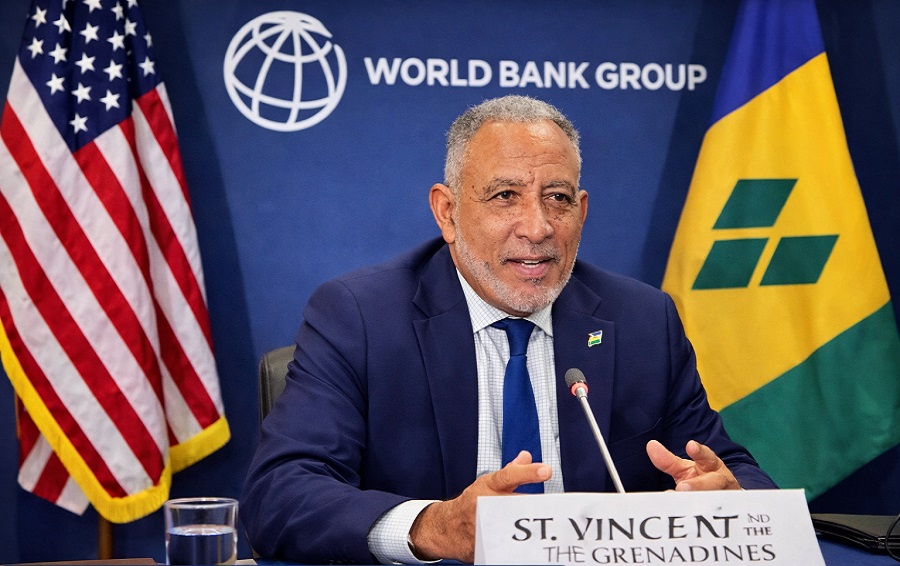
Prime Minister Dr. Godwin Friday has issued a stark assessment of St. Vincent and the Grenadines’ economic health, describing the financial situation his new administration inherited as “dire”. In a recent comprehensive interview, the Prime Minister rated the inherited economy a mere “one or two” out of ten, pointing to an increasingly unmanageable national debt.
According to Friday, the previous administration routinely borrowed at non-concessional, domestic interest rates of six and seven percent, resulting in a heavy burden of monthly payments. He specifically highlighted the alleged misuse of the government’s overdraft facility.
While the law mandates that the overdraft facility should not exceed $85 million to tide the government over during shortfalls, the previous administration pushed the overdraft to nearly $200 million. Because they lacked the means to repay these funds, the previous government regularly negotiated with banks to hive off chunks of this overdraft into long-term loans, a practice the Prime Minister strongly criticized.
To stabilize the “ship of state,” the new administration is actively working domestically and internationally to make the country’s debt more affordable.
A central component of this strategy involves upcoming meetings with the World Bank and the International Monetary Fund (IMF) at their Spring Meetings in Washington, D.C. Friday stated that his team intends to negotiate “debt swaps,” a process aimed at exchanging expensive, high-interest debt for lower-cost loans with longer amortization periods.
This move is expected to free up immediate liquidity and provide the government with much-needed breathing room to fund basic public services.
Warning that the country had been teetering on the edge of a “failed state situation” and debt distress where public servants could potentially go unpaid, Dr. Friday emphasized that the focus is now squarely on a clean-up mission.
“We can’t succeed as a country unless we get a handle on the management of the finances,” he stated, promising tangible results by the time of the next budget.