
If we know anything about marketing we know that gossip on social media does not necessarily translate into box-office success. Many are the chewed-over titles that crashed into obscurity on release.
That is not the case with Kristoffer Borgli’s The Drama. Featuring Zendaya and Robert Pattinson in a tale of lovers getting nervy before marriage, the slickly made picture was launched with a wacky viral campaign that got audiences scratching heads before and after Christmas.
Just when the online babblers had got over that, news emerged of a potentially shocking plot point that threatened to repel more cautious moviegoers. Uh-oh. Right?
Wrong. “Plot twist: The Drama actually did great at the box office,” Vulture blared. Okay, the film did not open so hugely as Zendaya smashes such as Spider-Man: No Way Home and Dune: Part Two, but those enormously budgeted films are playing a different game from Borgli’s intimate dark comedy.
Taking $14 million, it registered the third-highest US opening ever for the hip independent studio A24. The $28 million worldwide haul already covers the film’s production budget. All this for a title with a challenging R certificate in the United States.
What gives? Did that crafty campaign work? Did the controversy actually draw in viewers? Or is something more astonishing happening: is the public queuing up to see movie stars again?
Forbes magazine has argued that A24’s campaign is “rewriting the rules of movie marketing”. In December last year The Boston Globe published a faked engagement announcement for one Emma Harwood and Charlie Thompson – Zendaya and Pattinson’s characters in the film – confirming a ceremony on April 3rd. Later, Norman & Blake, a genuine wedding-photography firm, began posting photographs of the happy couple. On Valentine’s Day A24 launched charlieandemmaforever.com, a convincing facsimile of a wedding site that appeared to include an RSVP option.
[ Zendaya spotted wearing a diamond engagement ring. Cue internet hysteriaOpens in new window ]
April 3rd, the wedding day, was, of course, the release date for The Drama. (The distributor’s decision not to offer a press show in Ireland – hence no advance review in these pages – is an apparently unrelated local difficulty for another day.)
All this combined with a carefully curated uncertainty about just what sort of film The Drama would turn out to be. Early trailers combined jaunty gags with a late shot of the female lead turning a knife on R-Patz. Before long, wild theories began circulating about sinister goings-on at the centre of the film.
A week or so before release, information emerged confirming that startling plot point. Reports have called it a “twist”, but, arriving in the first third, it is closer to being the key premise of the film. Is it really a “twist” that Raymond Burr is planning to murder his wife in Rear Window? At any rate, look away now if you don’t want to know what happens at the beginning of The Drama.
While trying out wines for the wedding, the couple and two pals play a game, during which each must relate the worst thing they have ever done. Emma goes last and reveals that, as a teenager, she contemplated carrying out a school shooting – but, at the last minute, dropped her plans (and, as we later learn, set to campaigning for gun control).
This does not go down well. Her maid of honour, played with delicious venom by Alana Haim, denounces her as a monster. Charlie makes an effort to understand, but he is soon cast into confusion and depression.
This sort of reference would have triggered little concern in an art-house release premiered at a festival. But, understandably enough, Americans are more sensitive about such subjects. March for Our Lives, an organisation associated with survivors of the Marjory Stoneman Douglas High School shooting, in Parkland, Florida, in 2018, claimed the way the film was “marketed is deeply misaligned with the reality it engages”. Tom Mauser, father of a victim of the Columbine High School shooting, in Colorado in 2019, worried that the film “humanised” school shooters.
One can only sympathise. But the response to The Drama suggests audiences understand that intelligent comedy can address the grimmest issues without trivialisation. The cinemas are busy. The buzz is strong. Maybe shrewd promotion and tantalising controversy are key to selling new stories that have no connection to superheroes or alien visitation.
[ Who’s to blame for the end of cinema? It’s not who you thinkOpens in new window ]
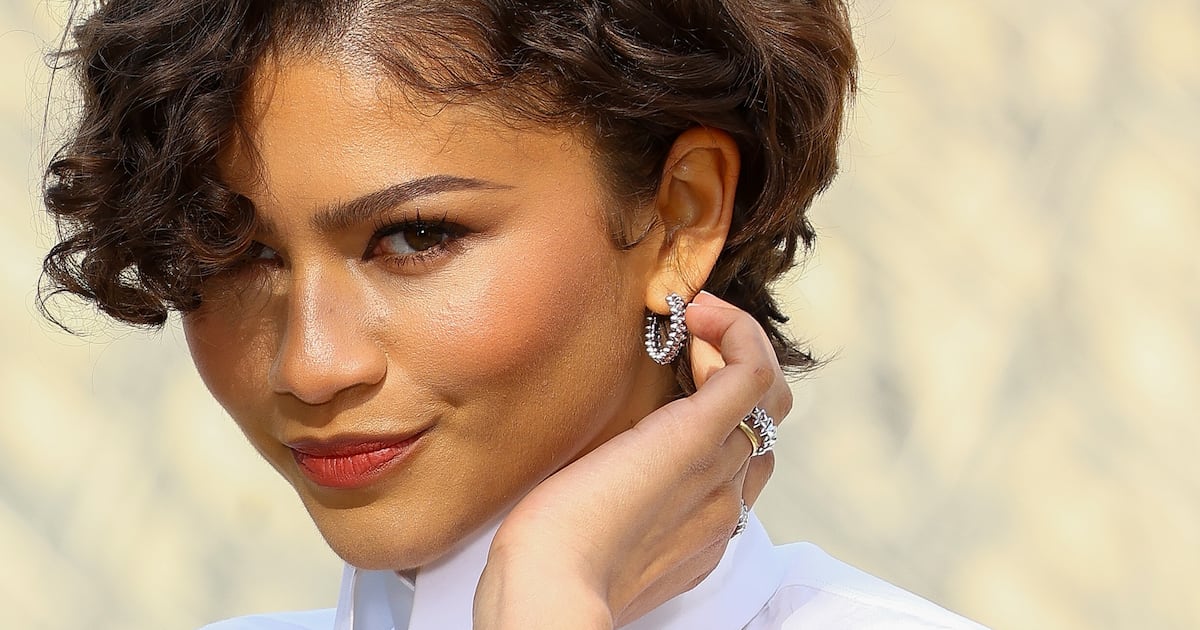
Do not, however, rule out the Z-factor. Pattinson, a terrific actor and a handsome fellow, can still get movies made with his presence alone, but he doesn’t bring the kids to the foyer the way Zendaya does. She helped the tennis drama Challengers become a hit in 2024. Her appearances on red carpets for The Drama were plastered across the entertainment media.
Every time we declare movie stardom an extinguished force, some new supernova pops up to prove us wrong. Long may she reign.