
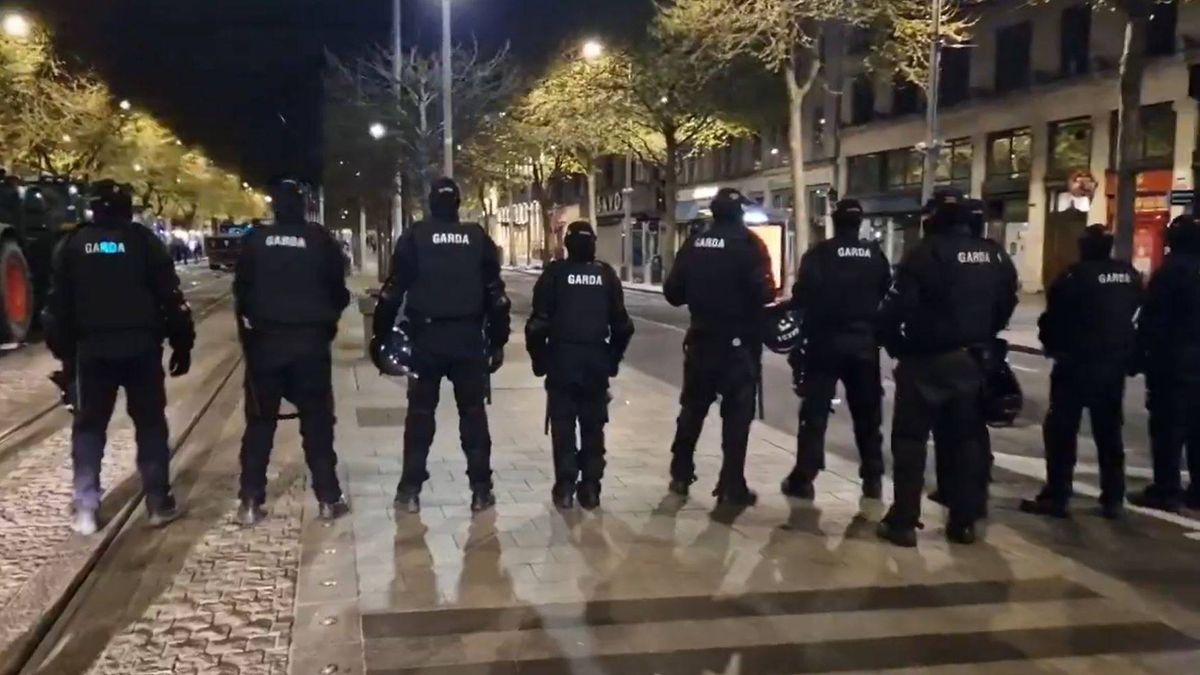
Gardaí needed just 60 minutes to wrench control of O’Connell Street from hundreds of protesters who had blocked the area for five days, it has emerged.
“The street was under Garda control in an hour,” a source confirmed. We have also learned that not a single protester was arrested in the early morning operation – which saw 500 gardaí clear the street and surrounding areas.
It’s understood there was a handful of arrests during the operation that kicked off at 3am on Sunday – but they were for people who were largely drunk and all were unconnected to the protest. Sources have confirmed there were no issues for gardaí clearing the blockade in the capital – which started on Tuesday morning as part of nationwide demonstration against rising fuel prices.
As well as taking just an hour to clear the site, gardaí stayed on the scene all day on Sunday, escorting the tractors and other vehicles that had blocked off central Dublin for almost a week. And, as small demonstrations continued on Sunday across the country, sources have revealed details of the massive operation to clear the main blockades.
It’s understood the three main operations – in O’Connell Street, at the Galway docks, and the Whitegate oil refinery in East Cork – took up some 1,500 gardaí between Friday night and Sunday.
That is around 10 per cent of the entire 14,400 force – but a much higher percentage of the uniformed branch, who made up the bulk of the operation. We have also learned the massive operation – codenamed Plain Porch and which started on Friday night when Garda Commissioner Justin Kelly declared a so-called exceptional event that allowed him to cancel leave and rest days in the force – was organised and implemented in less than 24 hours.
“It was an amazing piece of operational planning and execution to get it done so quickly,” a source told us. We understand that Commissioner Kelly and his two deputies – Paul Cleary and Shawna Coxon – devised the plan on Friday morning as it became increasingly clear the force would have to mount major operation to take on the protests.
Sources tell us the plan was quickly drawn up – and Commissioner Kelly then gave local commissioners in each region responsibility to implement. The sources confirmed, as we revealed on Friday morning, that the Whitegate refinery – the only one in the state – was the top issue for gardaí. “It is so important to the functioning of the state, it was the top priority for the whole operation,” a source said.
It was deemed so important that 100 gardaí were deployed to the refinery itself on Friday evening to secure it – and ensure protesters who were blockading it could not get access to the facility itself. “They were sent to hold it overnight,” one source said.
The source said that some 400 gardaí in total, including officers from the public order unit, were deployed in Saturday’s operation to lift the blockade. There was some trouble in that operation and gardaí used pepper on some protesters.
There were also several arrests. We have also learned that the Defence Forces heavy lifting vehicle – known as the Beast – was used to tow away some barricades at the scene.
Sources also tell us that many protesters handed over the keys to their vehicles of drove them away themselves when they saw the Army heavy lifters. That’s because they were worried the army vehicle would be used to drag them away – and cause massive and expensive damage to them. A key part of the operation also gardaí protecting around 10 km of the route to Whitegate to make sure it was free from other protests.
Gardaí from all over Ireland were deployed at short notice for the operations in Galway, Dublin and Cork – and some officers drove hundreds of kilometres to get the locations they were ordered to police. The Galway operation, which began at around 8am on Sunday, took some 200 gardaí, sources said.
And as well as the 500 gardaí involved in the Sunday morning operation, a further 400 were deployed on Friday and Saturday. There was still a heavy Garda presence in all three locations on Sunday evening, but the protests in each site had been ended.
Want to see more of the stories you love from Dublin Live? Making us your preferred source on Google means you’ll get more of our exclusives, top stories and must-read content straight away. To add Dublin Live as a preferred source, simply click here.
Join our Dublin Live breaking news service on WhatsApp. Click this link to receive your daily dose of Dublin Live content.
We also treat our community members to special offers, promotions, and adverts from us and our partners. If you don’t like our community, you can check out any time you like. If you’re curious, you can read our Privacy Notice.