

Listen to this article
Estimated 4 minutes
The audio version of this article is generated by AI-based technology. Mispronunciations can occur. We are working with our partners to continually review and improve the results.
The Wolastoqey Nation in New Brunswick is continuing its call for the federal Department of Fisheries and Oceans to keep the Mactaquac Biodiversity Facility or at least find an alternative.
Justice Gruben, the chief of Bilijk or Kingsclear First Nation, called on people to sign a petition and to voice their concerns to all levels of government.
“Raise your voice and let the minister know that this decision is unacceptable and we cannot allow this important species to go extinct,” said Gruben.
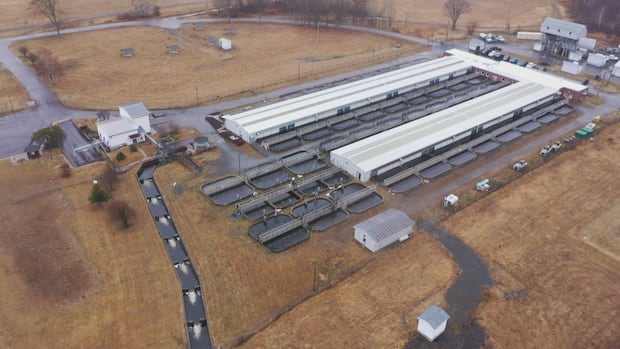
Roughly 50 people were in attendance in Bilijk on Monday to hear community members speak in opposition of the government’s decision to close the facility, which is located just below the Mactaquac Dam on the St. John River, also known as the Wolastoq.
DFO announced earlier this year that the facility will close along with another one in Coldbrook, N.S., as the federal government pursues spending cuts.
WATCH | Mactaquac Biodiversity Centre set to close: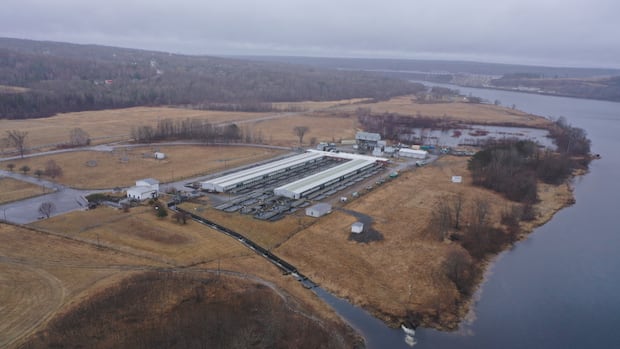
Wolastoqey Nation protests against hatchery closure
The federal government announced earlier this year that it would close the Mactaquac Biodiversity Centre, but some fear the move will doom the prospects for salmon in the St. John River.
Gruben said it was “shocking” to see the decision since no one from Bilijk or the Wolastoqey Nation were consulted.
Gruben and other community members worry that losing the facility could be spell the end of Atlantic salmon above the Mactaquac Dam.
The Wolastoqey Nation said DFO and N.B. Power has a responsibility to support salmon conservation efforts.
A news release said an agreement was made between DFO and N.B. Power to build the facility and operate it during the life of the Mactaquac project.
“The dam is set to undergo major repairs that will extend its lifespan to 2068, even as the key mitigation measure created to reduce its effects is being dismantled,” the news release said.
The facility was set up in 1968 as a way to counteract the effects of the Mactaquac Dam on salmon returning from the ocean. Salmon will come from the ocean and return to rivers, like the Tobique River.
The facility is a salmon hatchery and a place for juvenile salmon from the Tobique River to grow before being returned to the water.
There is also a program that studies salmon’s genetic diversity.
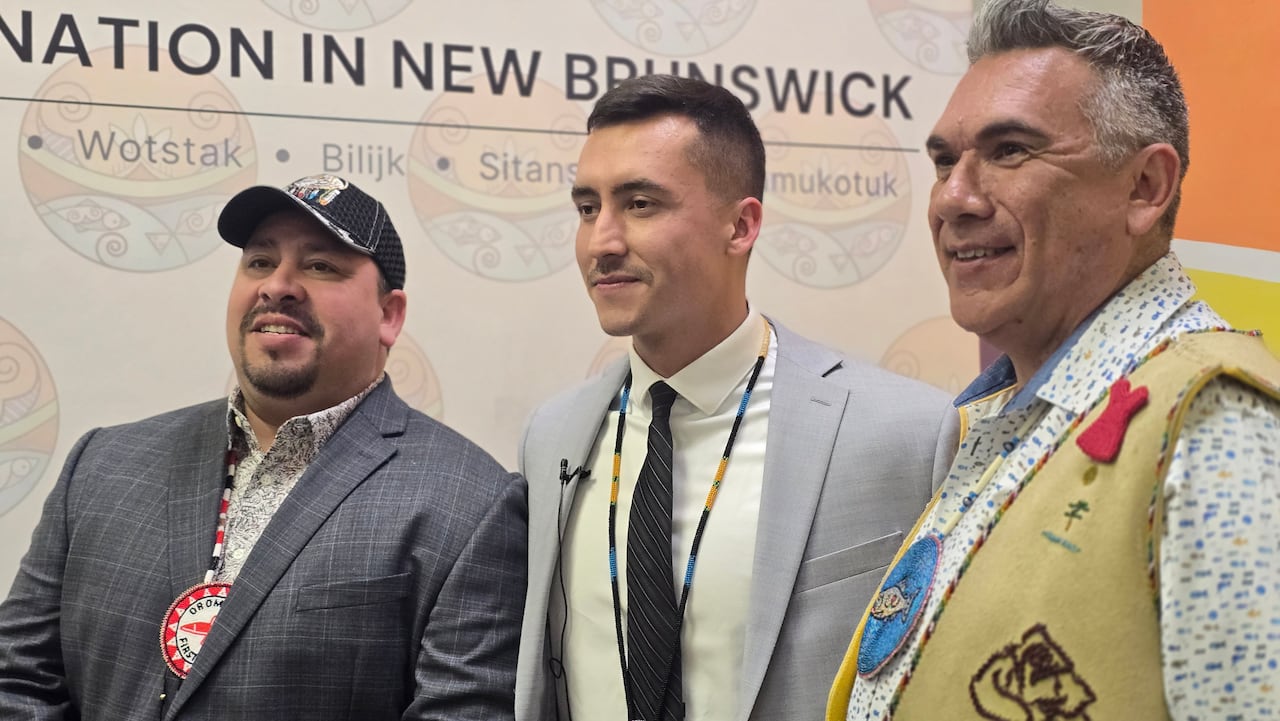 Bilijk Chief Justice Gruben, middle, spoke to his community in opposition of closing the Mactaquac Biodiversity Facility. He worries closing the facility could also allow salmon in the river system to go extinct. (Shane Fowler/CBC)
Leonard Nicholas works at Tobique First Nation catching juvenile salmon, also known as smolts, to transfer to the facility. He said smolts can be vulnerable to invasive species like muskie and small-mouth bass.
“Now when we catch them, we have nowhere to take them. Not only did they just spring this on us in January, they’re not even taking our fish this year,” said Nicholas.
He said they’re now trying to find an alternative to the Mactaquac facility, which is set to close in the fall.
Nicholas said they caught roughly 2,600 smolts in the Tobique last year, which is up from about 600 smolts eight years ago.
He said the system of catching the fish and bringing them to the facility is proving to work.
The salmon population in the Saint John River system was once estimated around 100,000 fish decades ago and is now a fraction of that.
According to DFO, 379 grilse were counted at the Mactaquac Dam in October 2025. Those are salmon that have gone to the ocean for one winter and are returning for the first time.
At the same time, there were 17 adult salmon counted at the dam.
No one from DFO was available for an interview Monday about the future of the Mactaquac Biodiversity Facility.