
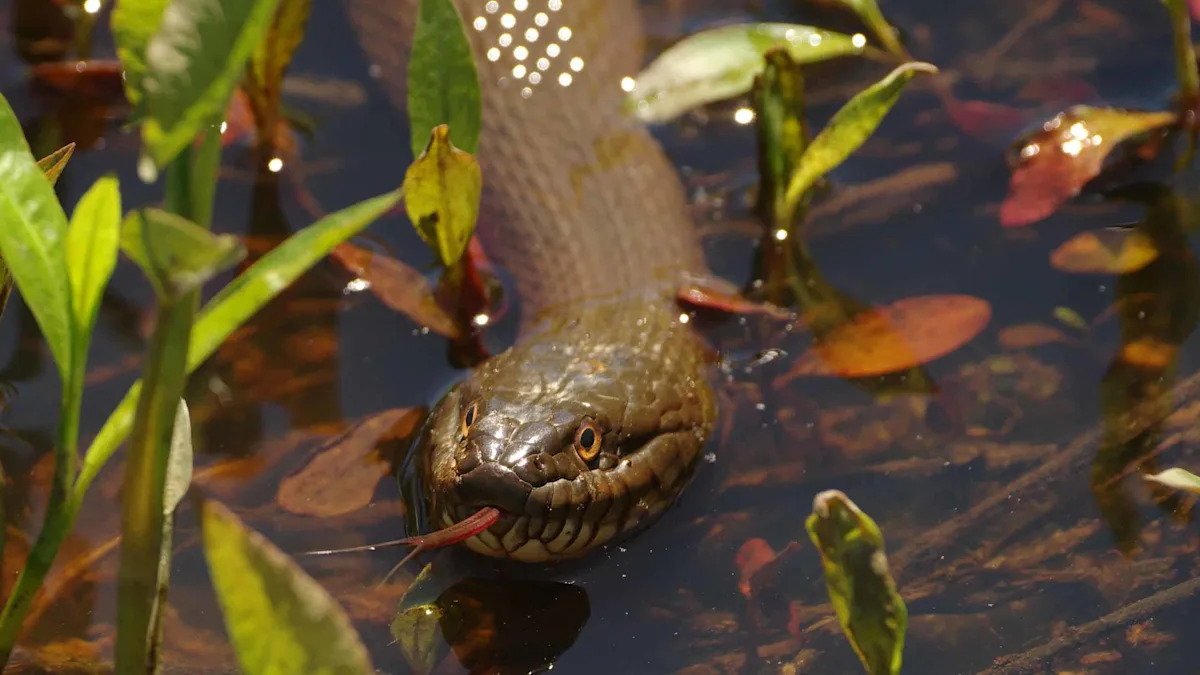
The post How Big Can a Northern Water Snake Get? appeared first on A-Z Animals.
Quick Take
Achieving the record 4.5 feet length represents the absolute biological limit for female specimens.
Growing past 24 inches creates a metabolic need for defensive musk and repetitive biting.
Large aquatic predators can resemble an anaconda despite lacking any medically significant venom.
Reaching the species maximum size requires a specific habitat selection process involving slow-moving river systems.
The northern water snake looks ordinary at first glance, but they can grow larger than many people expect. While it’s no anaconda, it is still big enough to startle you if you’re out boating or fishing and not expecting it. Learning about this snake helps explain how northern water snakes live, hunt, and survive in busy lakes and rivers alongside people.
Adult northern water snakes typically measure between 24 and 42 inches. Females tend to grow larger than males, and the biggest individuals are usually well-fed females that have lived several years in productive habitats. However, researchers report that the maximum recorded size for a northern water snake is just over 4.5 feet, about the length of a shovel or rake. The rare specimens that reach the maximum end of their range are true outliers rather than typical examples.
Where Do Northern Water Snakes Live?
Northern water snakes live across much of eastern and central North America. They prefer freshwater habitats such as lakes, rivers, ponds, and marshes, especially areas with plenty of cover. Logs, rocks, and vegetation along the shoreline provide places to bask in the sun and hide from predators. These snakes often stay close to the water’s edge, where they can quickly escape if threatened.
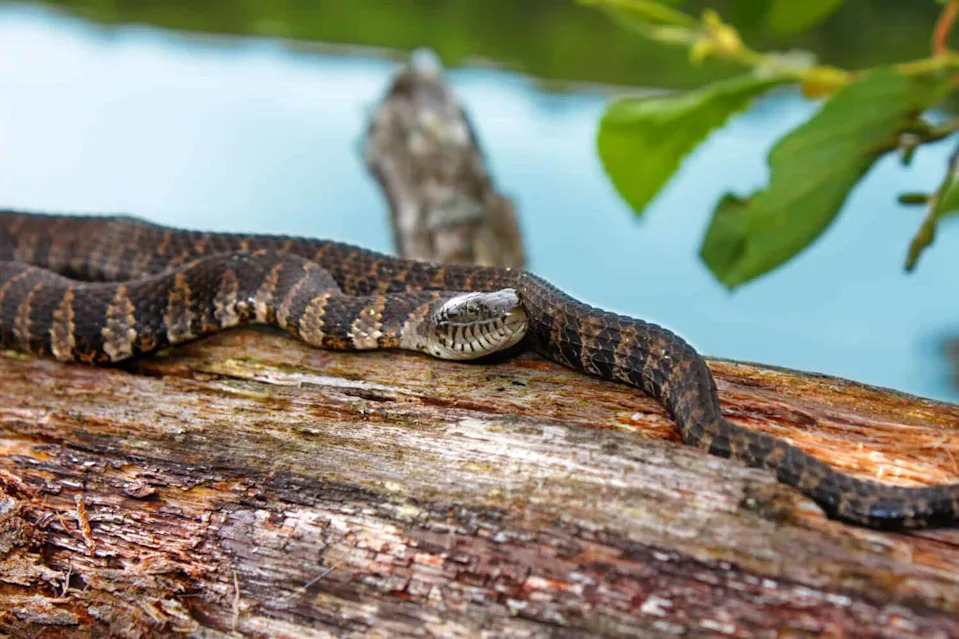
Adult northern water snakes are often only about 2 feet long, but at the maximum end of their range, they can reach 4.5 feet.
©Jason Patrick Ross/Shutterstock.com
How Does the Environment Affect Their Size?
Their size is closely tied to their environment. In areas with abundant food and few threats, northern water snakes can grow larger and live longer. They play an important environmental role in the wetland food chain and feed mainly on fish, frogs, and other amphibians, striking quickly and swallowing prey whole. A steady food supply allows them to build the body mass needed to approach the species’ maximum size. Quiet wetlands, farm ponds, and slow-moving rivers often produce the largest individuals because they offer both food and shelter.
Are They Dangerous to Humans?
Despite their size, northern water snakes are nonvenomous and pose little danger to humans. They belong to the colubrid family and lack venom glands or specialized fangs. However, they can be defensive if handled. A large individual may bite repeatedly and release a foul-smelling musk as a deterrent. Although their bite can be painful and may bleed more than expected, it is not medically significant.
A Quiet Giant in the Water
Seeing a northern water snake of this size in the wild would be an impressive experience. A thick-bodied snake as long as a rake can look even larger in the water, especially when it glides along the surface or coils on a log. Yet even the biggest individuals are more interested in escaping than confronting people. Large snakes demonstrate the remarkable potential of a species that lives quietly alongside people in lakes and rivers throughout North America.
The post How Big Can a Northern Water Snake Get? appeared first on A-Z Animals.