
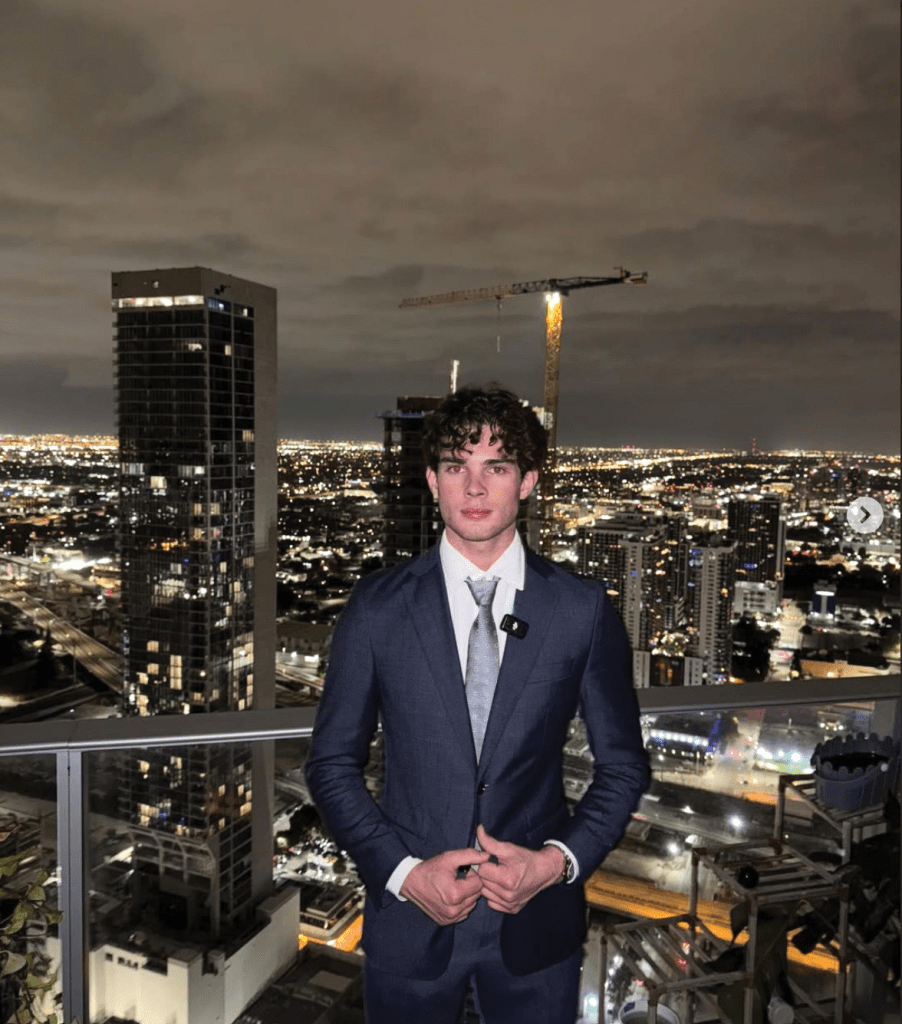
Mogging. Chad. Stacy. Looksmaxxing. Any word with “-maxxing” attached to it would probably confuse someone with a normal amount of screen time. But spend a few minutes scrolling on TikTok and you’ll likely end up on the side of the algorithm dominated by Clavicular, where “ascending” and optimizing your appearance isn’t just encouraged, it’s the entire point.
A few months ago, none of this language meant anything to me. Now, it feels impossible to ignore. Clavicular’s rise on TikTok and streaming platforms has pushed these ideas further into Gen Z’s everyday vocabulary, turning what used to be niche internet slang into something oddly mainstream.
At the center of his content is an extreme version of “self-improvement.” Facial “bone smashing” to alter your appearance. Open conversations about anabolic steroids. Even references to using substances like crystal meth to stay lean. All of it framed as part of becoming more attractive, more dominant, more watchable. Even typing that out feels a little absurd, but that’s kind of the point. The more shocking it sounds, the more it grabs attention. And that’s where the problem starts.
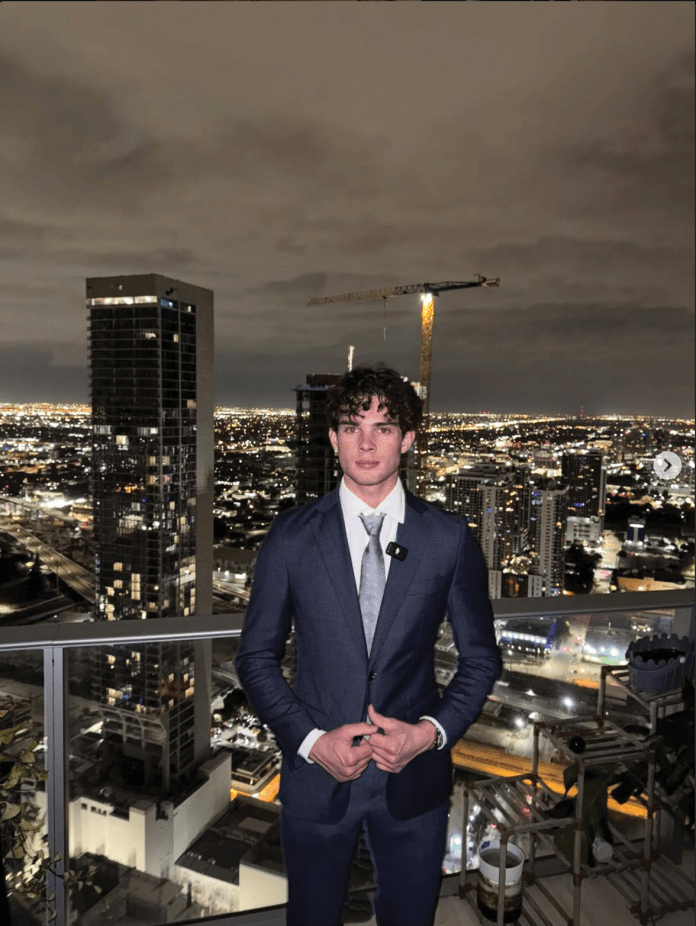 A photo of social media influencer Clavicular standing against a city backdrop. Clavicular’s content is centered around extreme body modification in an attempt at “self-improvement.” Photo courtesy of @clavicular0 on Instagram.
The pressure to look a certain way online isn’t new, but this version of it feels more intense and more literal. It’s not just about editing photos or posting your best angles anymore. It’s about physically changing your body, sometimes in dangerous ways, to fit an algorithm-friendly ideal. For creators, looking “better” often means performing better. More views, more engagement, more growth. For viewers, especially younger ones, it creates a warped baseline for what’s normal or expected.
Clavicular isn’t just a byproduct of this culture, though. He actively feeds into it and benefits from it. That’s what makes him interesting, and honestly, more complicated to talk about. Online, he knows how to present himself in a way that keeps people watching. He can be funny, self-aware, even relatable at times. There are moments where you catch yourself thinking, “Wait, he’s actually kind of entertaining,” and that’s what keeps the cycle going.
But those moments often exist alongside a track record that’s much harder to ignore. Throughout his content, there are instances where he’s used slurs or built entire segments around rating women purely based on their appearance. On paper, that should be enough to turn people away. In reality, it rarely is.
Instead, those moments get brushed aside, or at least softened, by the way he performs online. Personality becomes a buffer. Humor becomes a distraction. And attractiveness, or at least the pursuit of it, becomes a kind of shield.
You can see this clearly in the way people talk about his recent content with Woah Vicky, someone who also got famous because of controversy, attention and internet spectacle. The conversation online doesn’t center on what his past behavior says about him. It turns into “shipping,” edits, and commentary about their relationship dynamic. People focus on whether they’re entertaining together, not what that entertainment is built on.
I get it. I’m not immune to it either. It is entertaining. It’s easy to get pulled into the dynamic and forget everything else, at least for a moment. But that’s also what makes it worth paying attention to. The fact that it works.
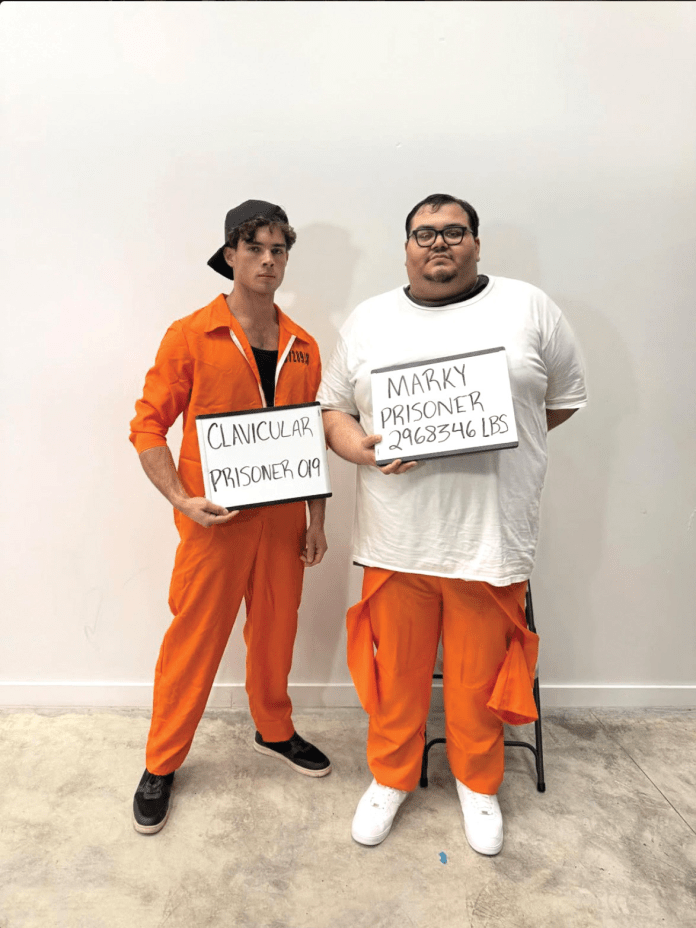 Social media influencer Clavicular posing with another individual, with both dressed as inmates. While some of Clavicular’s content is entertaining, he often displays bigoted views. Photo courtesy of @clavicular0 on Instagram.
Because at its core, this culture doesn’t just reward a certain look. It rewards behavior that’s packaged well enough to be watchable. You can be controversial, offensive or just not a great person, but if you’re attractive, funny or engaging enough, people will keep watching anyway. That’s the part that feels off.
A lot of this is driven by how social media itself is structured. Platforms like TikTok prioritize quick, high-engagement content. There’s no real incentive to slow down and critically think about what you’re watching when the next video is already queued up. Everything becomes surface-level. Who looks good. Who’s entertaining. Who can hold your attention for the next 10 seconds.
In that kind of environment, nuance doesn’t really stand a chance. It’s easier to engage with a storyline, like a potential relationship or a viral moment, than it is to sit with the bigger picture of someone’s behavior over time. The more uncomfortable parts get pushed to the side, not necessarily because people agree with them, but because they’re less interesting to watch.
Clavicular’s rise isn’t happening in a vacuum. It’s a reflection of what the current content landscape rewards. Extreme self-optimization. Shock value. Blurred lines between irony and sincerity. And an audience that’s willing to overlook a lot as long as it’s entertaining.
That doesn’t mean viewers are entirely passive in this, though. The fact that this content continues to grow says something about what we choose to engage with. What we share. What we laugh at. What we decide isn’t a dealbreaker.
Maybe that’s the uncomfortable takeaway. It’s not just about one creator or one trend. It’s about a system where appearance and performance can outweigh behavior, and where the line between entertainment and endorsement gets harder to see the longer you scroll.