
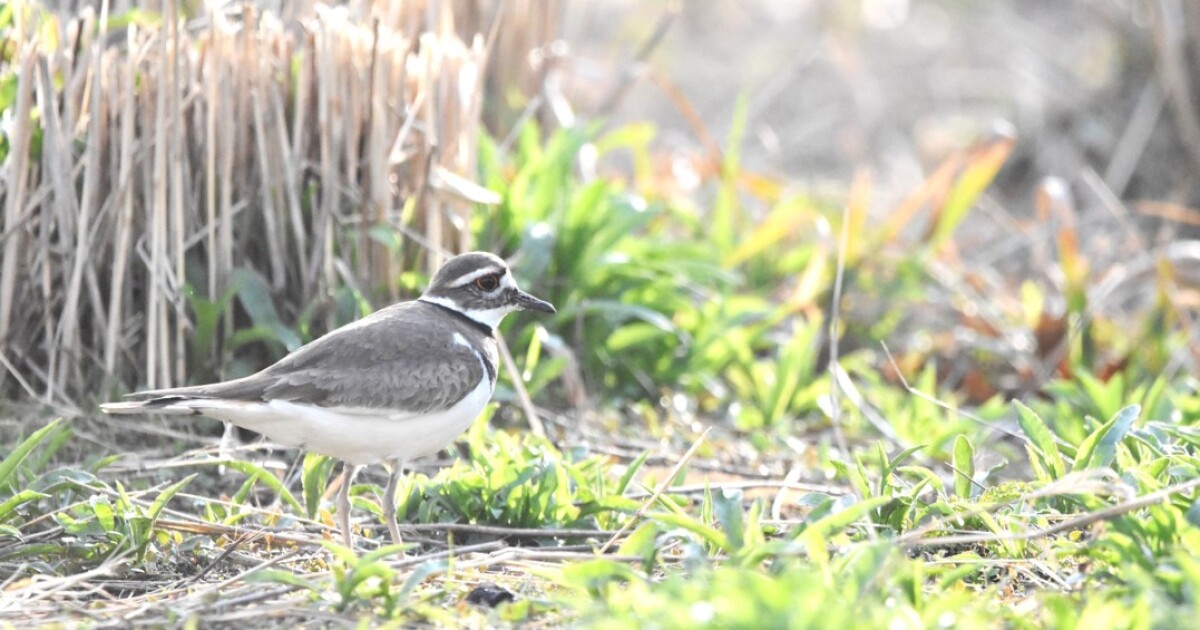
In the midst of a biodiversity crisis caused by human activity, often referred to as Earth’s sixth mass extinction, there’s a unique cause for celebration in St. Louis.
New research in Forest Park finds that long-running habitat restoration efforts are linked to a measurable increase in bird diversity.
Stella Uiterwaal, a researcher now at the Smithsonian Conservation Biology Institute, is lead author on the new study that was conducted during her time as a postdoctoral scholar with the Living Earth Collaborative at Washington University.
The study, “Urban habitat restoration increases native bird diversity in the Midwestern United States,” was published in the Journal of Ecological Applications in March.
The researchers conducted surveys at locations throughout Forest Park in 2023 and 2024 to get a better understanding of the biodiversity of birds in the area. They compared their findings to survey data from 1997 and 2007 through 2012. Uiterwaal said they were particularly excited to see the populations of native bird species on the rise.
“In urban settings, we have a lot of non-native species that are coming from elsewhere in the world, and so when we see high biodiversity in urban areas, it might not necessarily be the biodiversity of species that we’re interested in protecting or conserving in that area,” she said. “One of the species that I personally was very excited to see was a merlin. It’s a raptor, a type of falcon, and one that I had personally never seen in St. Louis before. So it was very exciting for me to see this bird in Forest Park in an area that had received restoration efforts.”
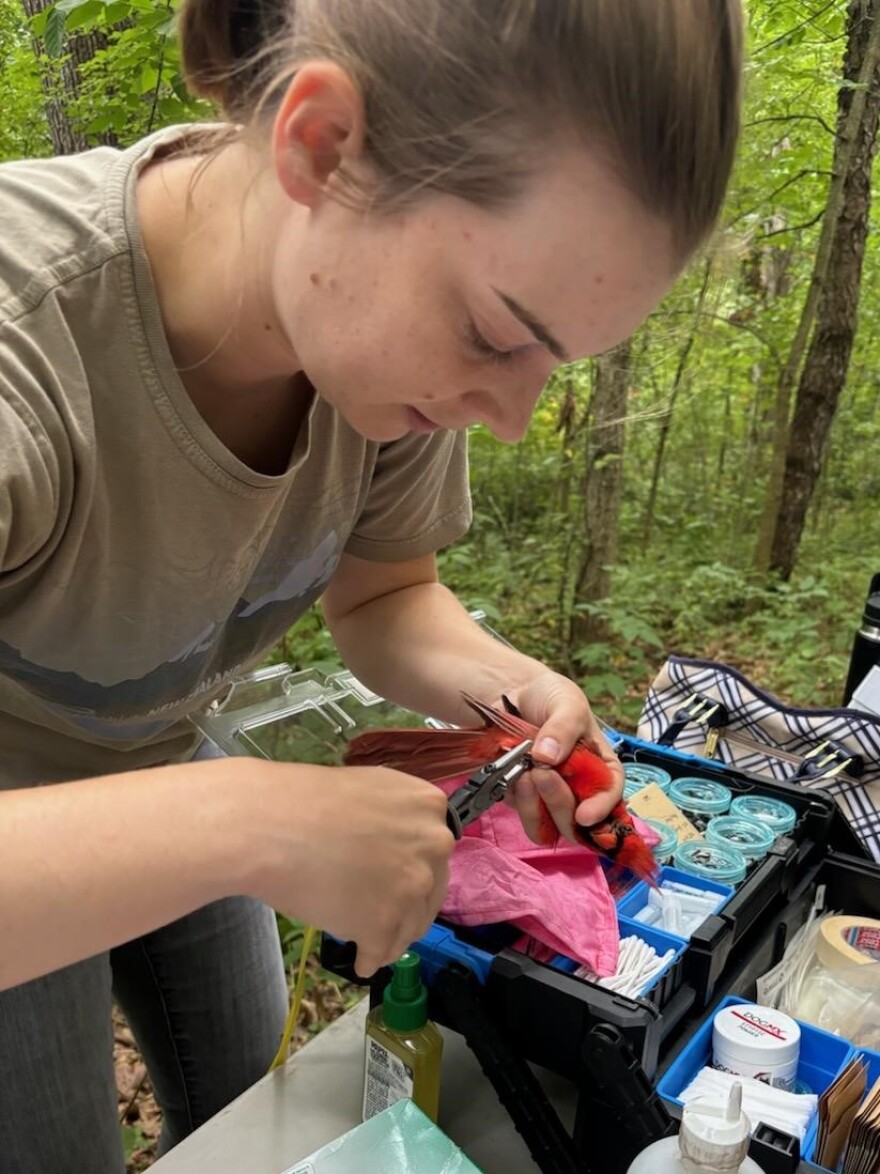
Stella Uiterwaal puts a band on a northern cardinal while collecting health data on the birds that live in Forest Park.
Forest Park Forever is the major steward of restoration projects in the park, Uiterwaal added. Over the decades, the group has conducted prescribed burns to keep vegetation under control. It also removes invasive plant species, such as honeysuckle and wintercreeper, and replace it with native vegetation.
“Goldenrods and asters can provide food for birds, both by providing seeds and also by supporting pollinators and other insects, which are excellent food sources for birds,” she said.
Habitat restoration efforts remain underway in Kennedy Forest in the southwest corner of Forest Park and along the edges of ponds and waterways.
“And that includes, for example, Deer Lake Savanna,” she said. “Also, if anyone has been in Forest Park lately, you probably know that there’s been a lot of restoration and other construction efforts that are going on around Jefferson Lake near the hospital area. Those are all great places to see Forest Park Forever’s restoration in action.”
As spring migration continues through mid-May, Uiterwaal suggested that park visitors keep an eye out for migrating species.
“You should be able to see plenty of warblers in Forest Park. Those are usually very bright yellow birds, sometimes with other colors like black or blue. You can definitely see those in the trees in Kennedy Forest or near Deer Lake Savanna,” she said. “You should also be able to see some raptors as well as lots of waterfowl, especially around the fish hatchery.”
For more information on the biodiversity within Forest Park, listen to “St. Louis on the Air” on Apple Podcasts, Spotify, YouTube or click the play button below.
Forest Park habitat restoration efforts are a biodiversity win
“St. Louis on the Air” brings you the stories of St. Louis and the people who live, work and create in our region. The show is produced by Miya Norfleet, Emily Woodbury, Danny Wicentowski, Elaine Cha and Alex Heuer. Layla Halilbasic is our production assistant. The audio engineer is Aaron Doerr.