
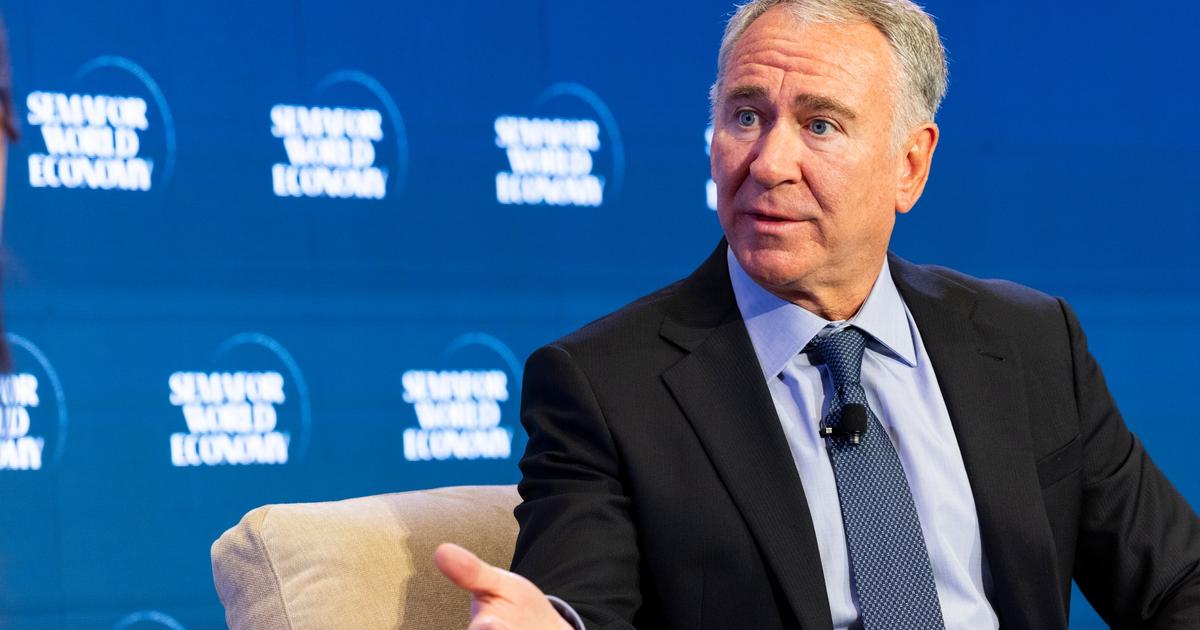
The world faces a global recession if the Strait of Hormuz remains closed for the remainder of this year, Citadel CEO Ken Griffin said Tuesday.
“Let’s assume it’s shut down for the next six to 12 months,” Griffin said at Semafor World Economy in Washington, DC. “The world’s going to end up in a recession. There’s no way to avoid that.”
Countries would also make a rapid shift toward the use of renewable energy sources, such as nuclear and wind power, Griffin said, coupled with efforts to reduce dependence on fossil fuels. He said that the risk of recession had already increased due to the classic energy shock that is now unfolding.
The increased risk of recession would not only destroy demand for goods and services but also force central bankers to make some very difficult decisions, he added. Chief among them: whether an inflationary spike would be transitory, leaving monetary policy as it is; or a scenario where rates would have to be raised to keep inflation expectations anchored.
“This really is a very, very treacherous moment for the world economy as we navigate the consequences of trying to secure a lasting peace in the Middle East,” Griffin said.
Responding to a question about the impact of the Trump administration’s foreign policy approach on the American brand, Griffin said there were “both good and bad” impacts. The government pulled off the ouster of Venezuela’s leader with “incredible grace,” he said, but that it created “undue confidence” about implementing regime change in Iran.
“We did a very poor job of messaging to the world” over the US campaign in Iran, Griffin said. “The moral imperative for what has happened in Iran over the course of the last 50 days … we did not position this issue with the world through the right talking points, and nor did we bring our allies on board with us. And I think that was a mistake.”