
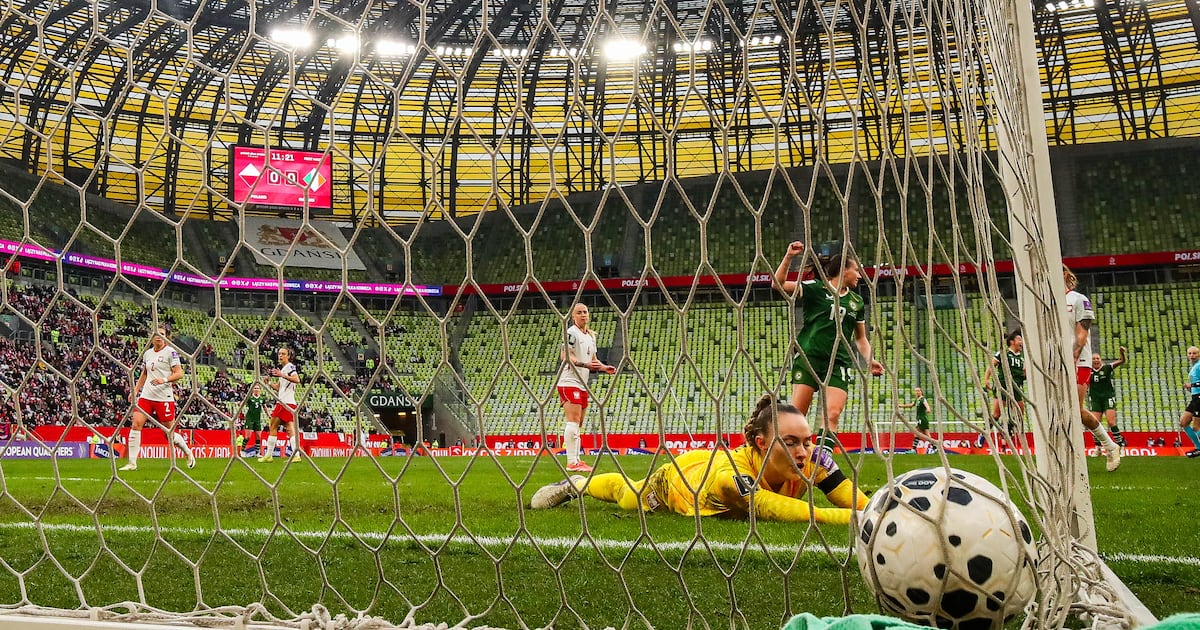
That was a very, very decent win. On a pitch more akin to something you’d see at the Ploughing Championships, too. Even Denise O’Sullivan concluded at times that hoofin’ was the order of the day.
No, the Netherlands are not the force they were a few years back, but they’re still the 11th ranked nation on earth and all they could muster in Gdansk a month ago was a draw. So, Ireland’s 3-2 victory on the same turf is not to be sniffed at.
And it inserts them in the driving seat for a third-place finish in the group ahead of Poland, although those ambitions might expand if they can get the better of the Dutch in Cork come June.
For now, though, they’ll take no little comfort from this result after 2-1 defeats to France and the Dutch in their opening games, while knowing they’ll undo their good work if they don’t repeat the feat against the Poles at the Aviva Stadium on Saturday.
Katie McCabe’s left foot will take up most of the postgame chat – first, for the exquisite volley that put Ireland 2-0 up, second for the penalty that almost ended up in Belarus.
But let’s talk about Emily Murphy, Ireland’s standout player in the early stages of this qualifying campaign. Three games played, three Player of the Match awards collected.
She opened the scoring in Gdansk, set up Marissa Sheva for her goal, won the penalty that McCabe skied, and even made a mighty tackle at the back in the closing minutes when supporters of this team were on their eighth Novena.
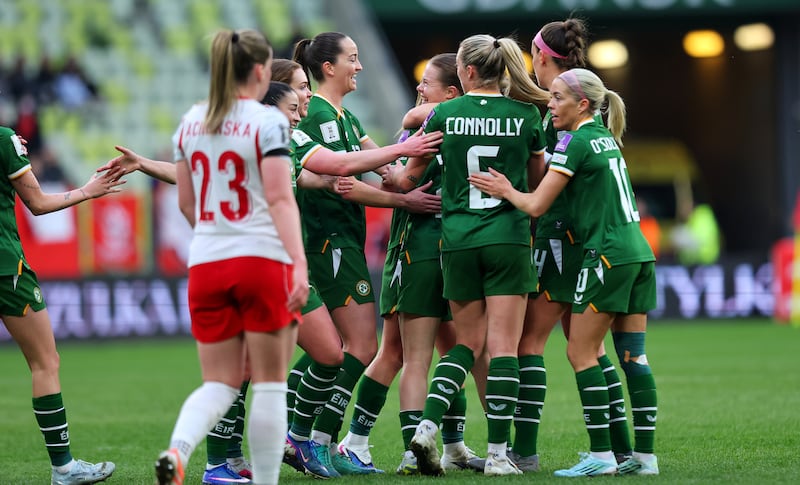 Ireland celebrate after Emily Murphy’s goal against Poland. Photograph: Ryan Byrne/Inpho
When Vera Pauw invited the English-born Murphy to train with the squad back in 2021, the gist of the response was: Emily who? And there was some indignation back home too. At that stage, the Arsenal academy product was playing her football with Wake Forest University in North Carolina, not quite the peak level of the American college game, leaving some wondering why on earth an emerging young talent in the domestic game hadn’t been afforded the same opportunity.
Once Murphy got her passport sorted out, Eileen Gleeson gave her a debut in a friendly against Wales in 2024. Her performance, when she came on at half-time in a dismal display by Ireland, was underwhelming.
And that’s how it continued to be in her next few appearances, a fish out of water. But then she ended her time in America, returned to England armed with a degree in political science, signed for Newcastle in the WSL2, her first taste of professional football, had a bumpy time of it at first, but has blossomed ever since.
So much so, WSL2 joint-leaders Charlton, who look close enough to certs for promotion to England’s top flight, tried to sign her in the January transfer window. Murphy was keen on the move, but Newcastle wouldn’t let her go. They might find it harder to hold on to her in the summer.
Carla Ward deserves credit for helping Murphy bloom. But she’s long since known her potential. When Ward was Birmingham City manager, she signed the then 17-year-old Murphy on loan from Chelsea where she had made her name by scoring twice on her debut. “Emily is the future,” the then Chelsea manager Emma Hayes had said of the former England under-17 captain. Opportunities were limited, though, so Murphy took the American college route.
She’s only 23, but she has matured no end since moving to England, and is now developing in to a player who is becoming indispensable for Ireland. Her holdup play is excellent, her work-rate endlessly impressive, her confidence rocketing.
In her earliest exchanges with the Irish media after her introduction to the squad, she was timid to the point of nigh on apologising for her presence. Now? She knows she belongs. Her Rathfarnham-born Da Jonathan had hoped she’d play international rugby. He’s probably content enough with her sporting choices at this stage.