
Why does the Strait of Hormuz matter so much to the Asean?
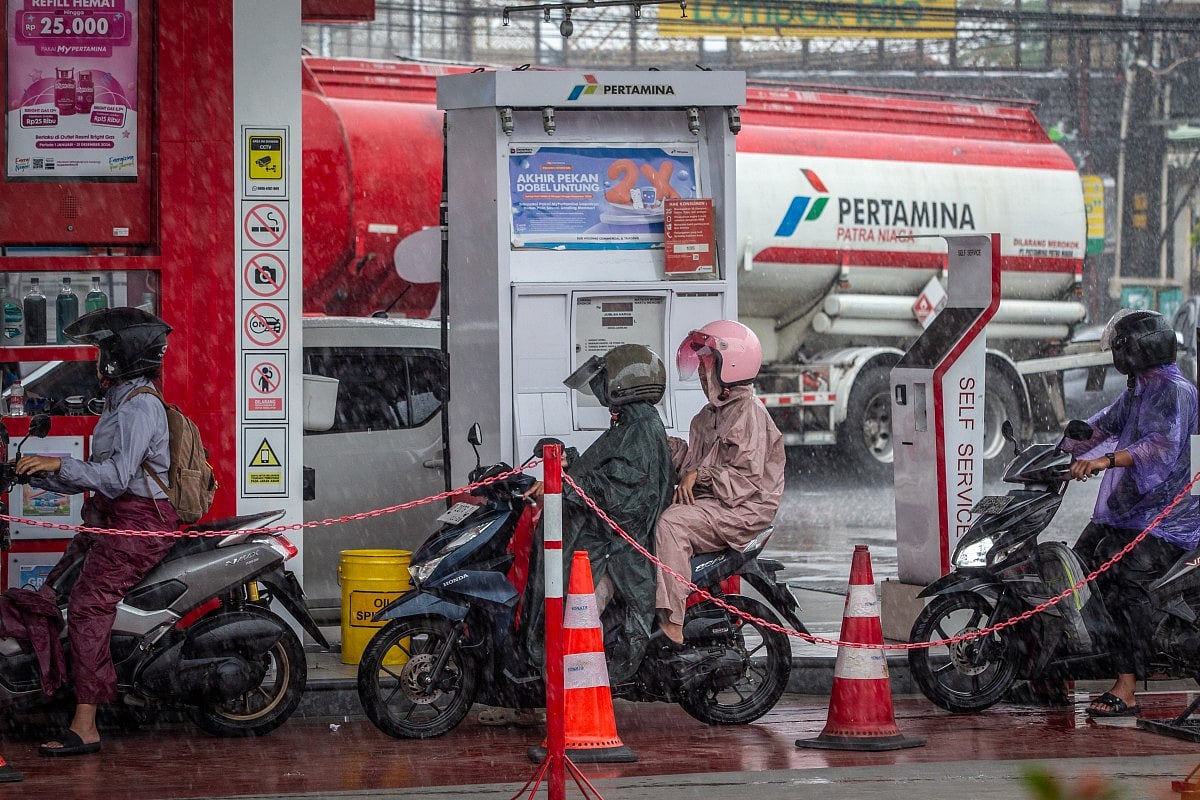
Asean economies, depend on open sea lanes and imported fuel. A shock at Hormuz quickly feeds into pump prices, power costs and inflation from Manila to Bangkok.
As of late 2025, Asean (Association of Southeast Asian Nations) has 11 member states, with a combined total population of over 700 million people.
Here is the list of the 11 Asean member states:
Brunei Darussalam (Joined: Jan 8, 1984)
Cambodia (Joined: April 30, 1999)
Indonesia (Founding member)
Lao PDR (Joined: July 23, 1997)
Malaysia (Founding member)
Myanmar (Joined: July 23, 1997)
Philippines (Founding member)
Singapore (Founding member)
Thailand (Founding member)
Timor-Leste (Officially joined: October 2025)
Vietnam (Joined: July 28, 1995)
The region is the world’s third most populous and features diverse economies, with Indonesia having the highest population
What is the effect on the Asean economy?
Which countries are most exposed?
Philippines: Imports all its crude; about 98% from the Middle East. Petrol prices have surged 76%, diesel near historic highs.
Vietnam: Imports about half its crude; 88% from the Middle East. Prices up roughly 19% despite tax relief.
Thailand, Indonesia, Malaysia: Somewhat cushioned by diversification and domestic output, but using fiscal measures to soften the blow.
What secondary effects are appearing?
Refining and export controls are tightening. Thailand, a refining hub, has begun export restrictions. Countries with little refining capacity — including the Philippines, Cambodia, Laos and Myanmar — are more vulnerable to shortages and price spikes.
Is natural gas a safer buffer?
Somewhat. Asean draws on Australian LNG and intra-regional suppliers. But Middle Eastern gas still matters, and the halt of Qatari LNG output has added strain. Singapore, where gas made up 93.1% of the fuel mix in 2025, is seeing rising energy bills and contract pressure.
Can renewables solve this quickly?
Not immediately. As Ravi Menon noted on April 6, renewables are a long-term answer to fossil vulnerability.
Hydropower and solar are already cost-competitive in parts of Asean, and the bloc targets 45% renewable capacity by 2030. But renewables do not directly replace oil in transport, shipping, aviation or petrochemicals.
Which renewables make most sense for Asean?
Research from the Asia Competitiveness Institute shows:
Hydropower is the cheapest in East Malaysia, Indonesia and Vietnam, as well as the Philippines.
Solar PV is close behind in Indonesia, Cambodia and Vietnam.
Wind remains costlier, though subsidies and scale could reduce costs.
Do renewables create new dependencies?
Yes. Solar panels, batteries and critical minerals are heavily concentrated in China’s supply chains.
Shifting away from Middle Eastern oil could deepen reliance on Chinese clean-energy manufacturing.
Interest in nuclear power introduces other supplier ties — to Russia, China, South Korea, France or the US.
What structural problem is this crisis exposing?
Asean’s energy system is vulnerable to single chokepoints and uneven refining capacity. Regional power grid interconnection — key for sharing renewable electricity — still lacks the trust and harmonisation needed to work at scale.
What is the viable path forward?
Energy security must mean diversification across fuels, technologies and suppliers, plus stronger regional coordination.
Buying more oil from the U.S., Norway, Brazil, Venezuela, Russia and Nigeria, not just the Middle East
Embedding energy-resilience rules into trade pacts, stockpiling and crisis protocols
Using this shock, like Covid did for supply chains, to hardwire energy security into Asean’s economic architecture
Can the Asean take lessons from Europe’s strategy?
Renewables are essential — but not enough
Renewables are indispensable to Asean’s energy transition, but they cannot carry the burden alone.
The region still needs a broader mix of fuels, stronger interconnections, and clearer crisis-response rules to cushion the shock when wars, shipping disruptions, or supply squeezes ripple through global markets.
That is why diversification matters as much as decarbonisation.
Solar, wind, hydro, paired with batteries and other clean sources can lower exposure over time, but they do not yet provide the backup capacity, storage depth or dispatchable power needed when demand spikes or imports are interrupted.
Long-duration energy storage (such as pumped-storage hydropower) could significantly help boost energy security.
More important, regional coordination is of significant strategic value, because Asean’s energy security is only as strong as its weakest supply line.
Asean cannot afford to treat the energy transition as a one-fuel strategy.
The bloc should keep accelerating renewables, but it must also strengthen grids, expand reserves and align emergency rules across borders.
Otherwise, the next geopolitical shock will again expose how fragile the region’s power system remains.
Without diversification and regional rules for crisis response, Asean’s energy future remains exposed to the next geopolitical shock.