
A quiet cemetery might seem like an unlikely place for a scientific discovery. Yet, beneath the grass, millions of tiny ground-nesting bees are busy shaping their underground world.
This story reveals how one peaceful place turned into a buzzing hotspot of activity, helping scientists learn more about bees, nature, and survival. Understanding these hidden ecosystems can change how we see everyday spaces.
A hidden world beneath the soil

Most people think of bees as social insects living in hives. In reality, most bee species live alone and build nests in the ground. These solitary bees play a major role in pollination, yet research often overlooks them.
Scientists from Cornell University studied one such species called Andrena regularis. This bee lives alone and builds small underground nests.
Each female creates a few chambers where she lays eggs. Even though each bee lives independently, large groups can gather in one area and form dense nesting sites.
The discovery began in a simple way. Researcher Rachel Fordyce walked into the lab carrying a jar full of bees. “These are all over the cemetery,” she told Professor Bryan Danforth, the corresponding author of the study. That moment led to a major scientific finding.
A surprising bee discovery in a cemetery
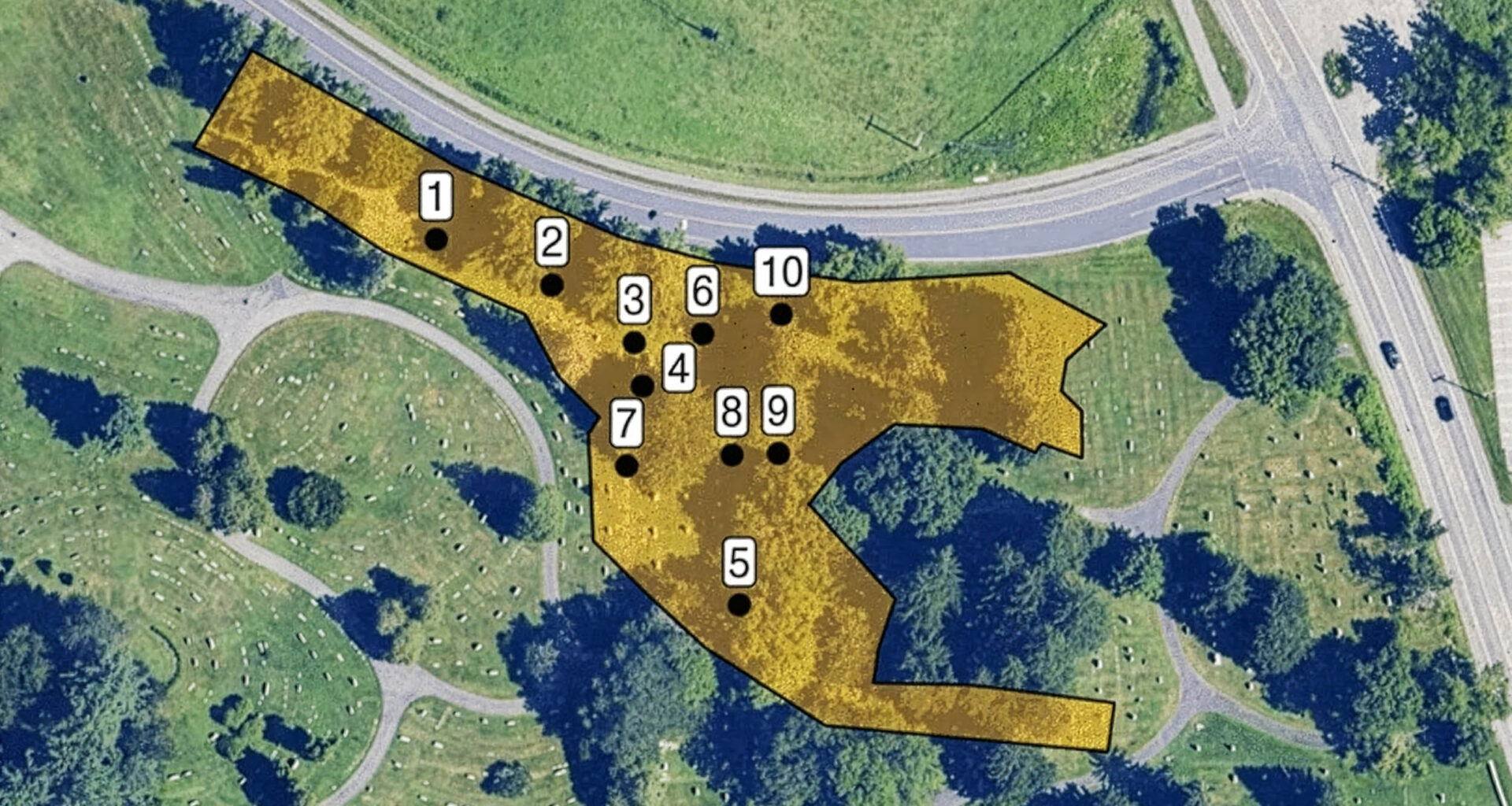
Researchers soon realized that East Lawn Cemetery in Ithaca, New York, holds one of the largest bee aggregations ever recorded. The ground there supports millions of bees living side by side.
The study collected over 3,000 insects from 16 species in just a few weeks. Among them, Andrena regularis dominated the area. Scientists estimated that between 3.1 million and 8 million bees emerged from this single site in one season.
“I’m sure there are other large bee aggregations that exist around the world that we just haven’t identified, but in terms of what is in the literature, this is one of the largest,” said Steve Hoge, the study’s lead author.
This number is massive. It equals the activity of more than 200 honey bee hives in a small area.
Why these bees matter
These solitary bees do more than just live quietly underground. They play a key role in pollinating crops and wild plants. Crops like apples, cherries, strawberries, and blueberries depend on such bees for healthy growth.
In some cases, a single visit from a solitary bee spreads more pollen than a honey bee, making them highly efficient pollinators.
“The research elevates the value of solitary ground-nesting bees and shows just how abundant these bees are, how important they are as crop pollinators, and that we need to be aware of these nest sites and preserve them,” said Danforth.
The cemetery lies close to Cornell apple orchards. This nearby bee population likely supports pollination in those farms.
Not alone: parasites and survival
Life underground is not always peaceful. Some insects take advantage of these bees. A parasite called Nomada imbricata lays eggs inside the nests of Andrena regularis. The young parasite then takes over the food meant for the host bee’s offspring.
Scientists also found flies and beetles that act as parasites. However, the overall parasitism rate remained low. Only about 1.4 percent of the bees faced this threat.
This low level shows that the bee population remains strong. A stable ecosystem can handle such challenges without collapsing.
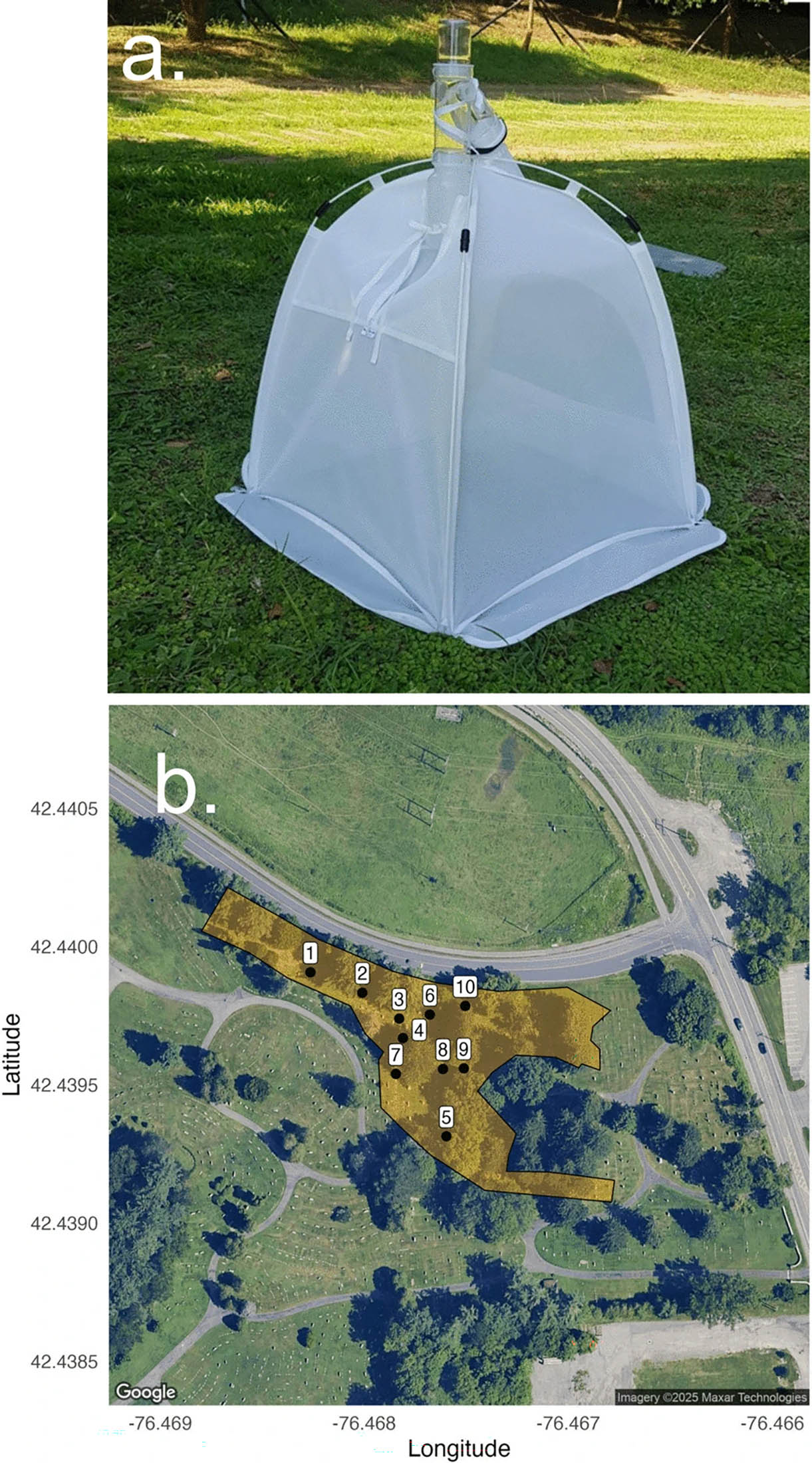 Colony containing millions of ground-nesting bees living underground. (a) Bug Dorm II emergence trap, (b) Aerial view of northeastern corner of East Lawn Cemetery showing area of aggregation (in yellow) and locations of emergence traps (numbered 1-10). Credit: Apidologie. Click image to enlarge.Timing is everything
The study also tracked when bees emerged from their nests. Warm temperatures triggered large numbers of bees to appear.
Male bees emerged first. This gives them time to prepare for mating. “The males come out first and wait for the females, so that they have the best opportunities to mate and pass on their genes,” said Hoge.
Parasite bees emerged later and more slowly. This delay helps them find active nests at the right time. These patterns show how timing helps each species survive.
A sign of a healthy ecosystem
Scientists also studied the balance between male and female bees. Even though more males appeared in number, the overall energy investment favored females.
This means the bees had enough food and resources. A struggling population would produce more males because they require less energy.
“It’s the most common lifestyle for bees,” Danforth said, referring to ground-nesting species. Yet research on them remains limited.
This cemetery does not just host bees. It supports a thriving and healthy ecosystem.
Why cemeteries can protect nature
Cemeteries may seem quiet and unused, but that is exactly why they help wildlife like bees. These areas face less disturbance compared to cities or farms. The soil remains stable, and pesticide use is low.
This creates a safe habitat for bees and other species. Even the cemetery staff noticed the abundance of life. One staff member shared, “I just felt bad having to mow in certain areas… there’s a lot of them.” Such places act as natural shelters where biodiversity can grow.
What this means for the future
This study shows how much remains hidden in ordinary places. A simple lawn can support millions of pollinators that help grow food and maintain ecosystems. The researchers now encourage people to notice such sites and protect them.
“These populations are huge, and they need protection. If we don’t preserve nest sites, and someone paves over them, we could lose in an instant 5.5 million bees that are important pollinators,” said Danforth.
Small actions like protecting green spaces and reducing pesticide use can make a big difference.
The study is published in the journal Apidologie.
—–
Like what you read? Subscribe to our newsletter for engaging articles, exclusive content, and the latest updates.
Check us out on EarthSnap, a free app brought to you by Eric Ralls and Earth.com.
—–