
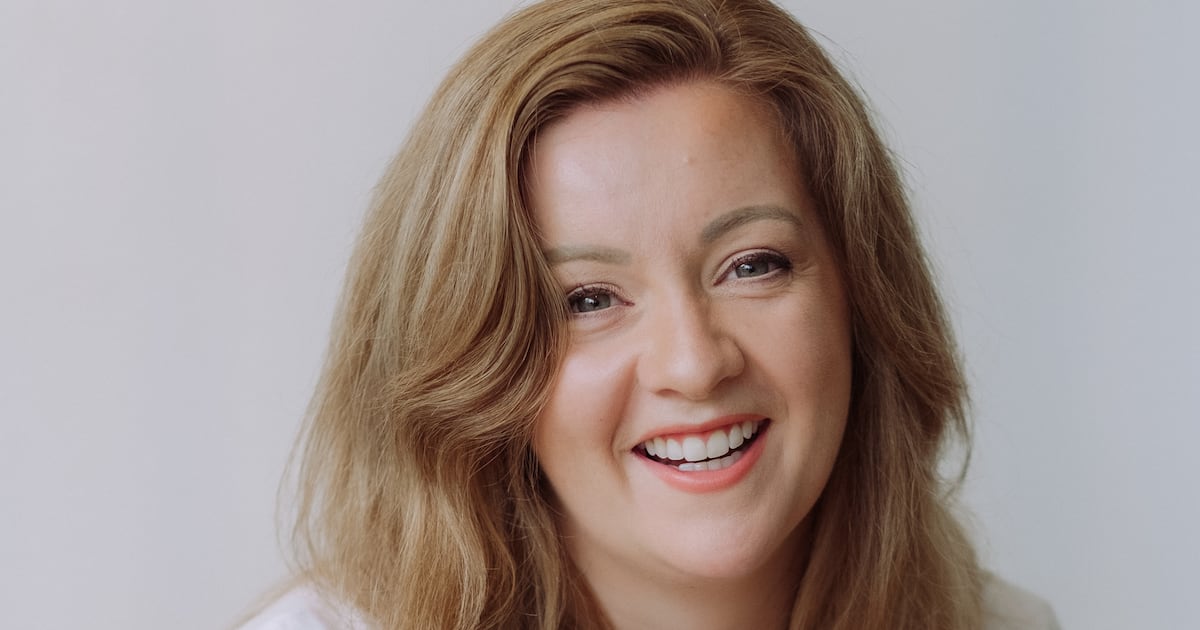
Memories of a living through months of severe fuel shortages in Sri Lanka four years ago have recently resurfaced for Mayo woman Anna McMahon.
“What happened in Sri Lanka, I never imagined it. People had said to me ‘this could get bad’. But I thought they were fearmongering. It’s easy to say ‘why didn’t I just leave?’ I didn’t expect it to get that bad,” she says.
McMahon lived in Sri Lanka for three years, moving there in 2020, for her husband’s education job. But in the following years a major economic crisis, intensified by the Covid tourism downturn, left the Indian Ocean island short of foreign reserves. The country struggled to afford basic imports, leading to widespread shortages and rationing of petrol and diesel over several months in 2022, spiralling food costs and electricity blackouts.
For McMahon, the experience was intensified by being pregnant and giving birth to her first child at the height of the crisis in 2022 (though she has high praise for the health service).
As her due date approached, the couple tried not to use their car, meticulously watching the petrol gauge so they would have enough to reach the hospital, explains McMahon. “You had to drive everywhere like you do in Ireland … We had a phone group. Someone would see a tanker coming to a fuelling station and announce it.”
“I had started early contractions and we got a call at 11pm. A fuel tanker had just pulled up nearby. We sat in the queue for two hours.” But the amount of petrol they were allowed to purchase rationed. “I told them I was in early labour and asked would they give me extra petrol. They did.”
When their son was four weeks old, McMahon and her husband both became extremely unwell. “We thought we had a virus, a really high temperature.” It was later diagnosed in hospital as dengue fever, a virus which can be fatal.
But they only had enough petrol for one journey to the nearest medical facility. And this was only because her husband had spent 36 hours queuing (and sleeping in his car) at a petrol station for fuel a few days earlier. They worried if they used the petrol for treatment, what would happen if their baby got ill with the virus later?
There were upturned cars, buses set on fire in Colombo
— Anna McMahon
“I watched my husband get worse and worse. We sat and waited”. Eventually McMahon, herself recovering, made the decision to go. “He was put into an ICU bed. We would have been there two days earlier if we had enough petrol.”
Although most of the rolling protests were peaceful, McMahon ended up caught in one of the worst days, what became known as Black Monday, May 9th, 2022. On that day McMahon had get to back from hospital during a curfew after a late pregnancy scan.
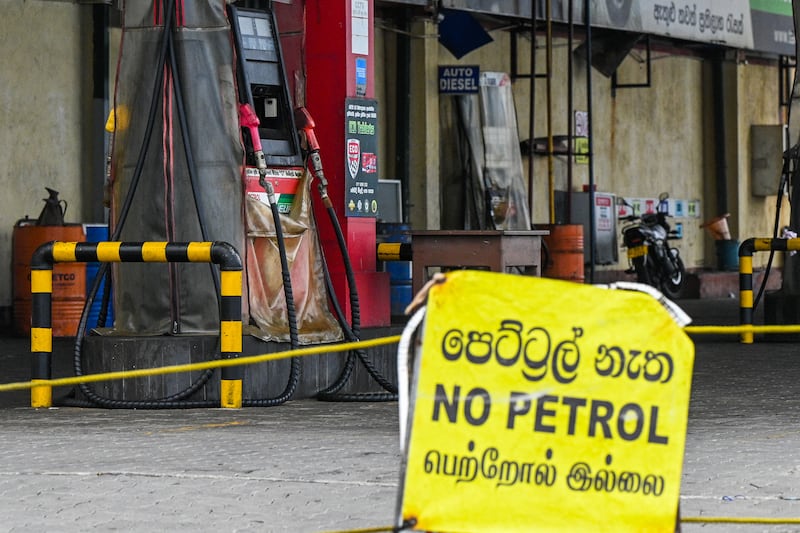 A sign reading No Petrol’ is seen at a closed Ceylon Petroleum Corporation fuel station in Sri Lanka’s capital city, Colombo, 2022. Photograph: Ishara S. Kodikara/AFP via Getty Images
“There were upturned cars, buses set on fire in Colombo and we turned a corner to the mob-banging on the car, that was pretty scary,” she says. Government supporters had attacked protesters resulting in violent backlash with hundreds injured and later the prime minister resigning.
The economic crisis also meant hours of daily power cuts for a year (detrimental to McMahon’s online coaching psychology practice). Generator use was limited because people were not allowed to buy fuel in gerrycans. “I remember my husband siphoning petrol out of a motorbike with a pipe into the generator,” she says. The impact was worse in a country with high temperatures and where the sun sets at 6pm.
McMahon was speaking from Mayo last week on a short visit home from her current base in Hanoi, Vietnam, but before the Irish fuel protests escalated.
“I remember a Venezuelan friend in Sri Lanka saying she was scared it would get really bad. I thought it was a bit of a trauma response [from Venezuela’s past fuel and economic crises]”, she says of what she later saw as a “naive” reaction.
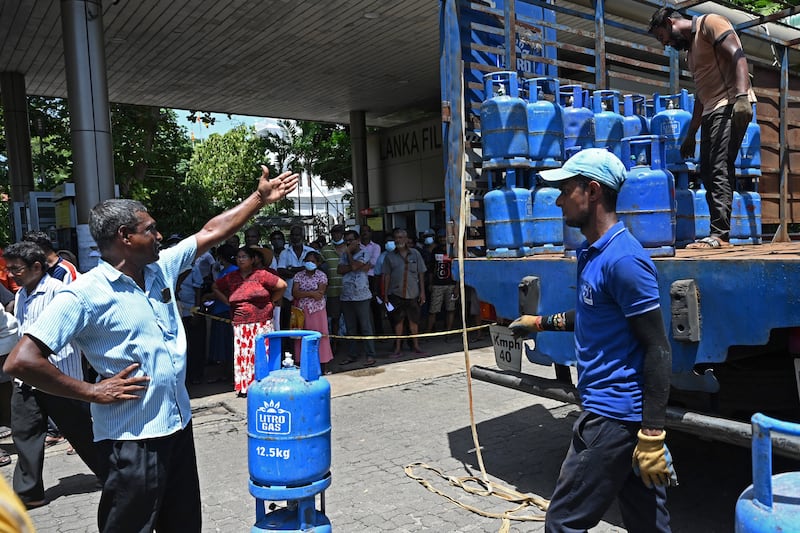 Sri Lanka suffered months of lengthy blackouts, acute food and fuel shortages and galloping inflation in its most painful downturn on record in 2022. Photograph: Arun Sankar / AFP via Getty Images
Sometimes the western world can be “a bit insulated … there’s nothing to say how long this [war] could go on for,” she says.
Are you Irish and living in another country? Would you like to share your experience in writing or by interview? You can use the form below, or email abroad@irishtimes.com. Irish Times Abroad submission guidelines here.