
Animal communication can look wildly different – flashing lights, chirping calls, body movements, and songs. But beneath all that variety, scientists are starting to see a surprising pattern.
A new study suggests that many animal species, from insects to mammals, may be “speaking” at nearly the same rhythm – about two beats per second. And that shared tempo might not be a coincidence, but a reflection of how brains are wired to process the world.
Many animals, same rhythm

The researchers found that many communication signals across species fall within a fairly tight range. Again and again, animals appeared to produce rhythmic signals at about 2 hertz, or roughly 2 pulses every second.
That pattern showed up across a striking variety of creatures. It was not limited to one branch of the animal world or to one type of signal.
“There seems to be an abundance of organisms signaling or communicating at a relatively narrow band of tempos,” said the study’s co-author, Guy Amichay, a research associate from Northwestern University.
“They all seem to stay around 2 or maybe 3 hertz. In principle, they could communicate at other rhythms. Physically, there is nothing preventing them from communicating at, say, 10 hertz, yet they do not.”
The researchers propose that a tempo of around 2 hertz may be easier for brains to process because it resonates across many species, including humans, fireflies, sea lions, and frogs.
A pattern caught on camera
The idea began with a field trip to Thailand, where Amichay and colleagues were collecting footage of fireflies flashing together in the countryside. While watching them for long stretches, he noticed something odd.
The blinking of the fireflies seemed to line up with the chirping of nearby crickets. For a moment, it looked as though two very different species might somehow be keeping time with one another.
“At some point, I thought that the flashing of the fireflies and the chirping of the nearby crickets were in sync,” Amichay said.
When the team examined their recordings more carefully, they found that the insects were not actually synchronizing. They were signaling independently, yet both were doing so at a very similar pace, around two to three pulses per second.
A rhythm across the animal world
That coincidence pushed the researchers to look much more broadly. They turned to previously published studies covering many kinds of animal communication.
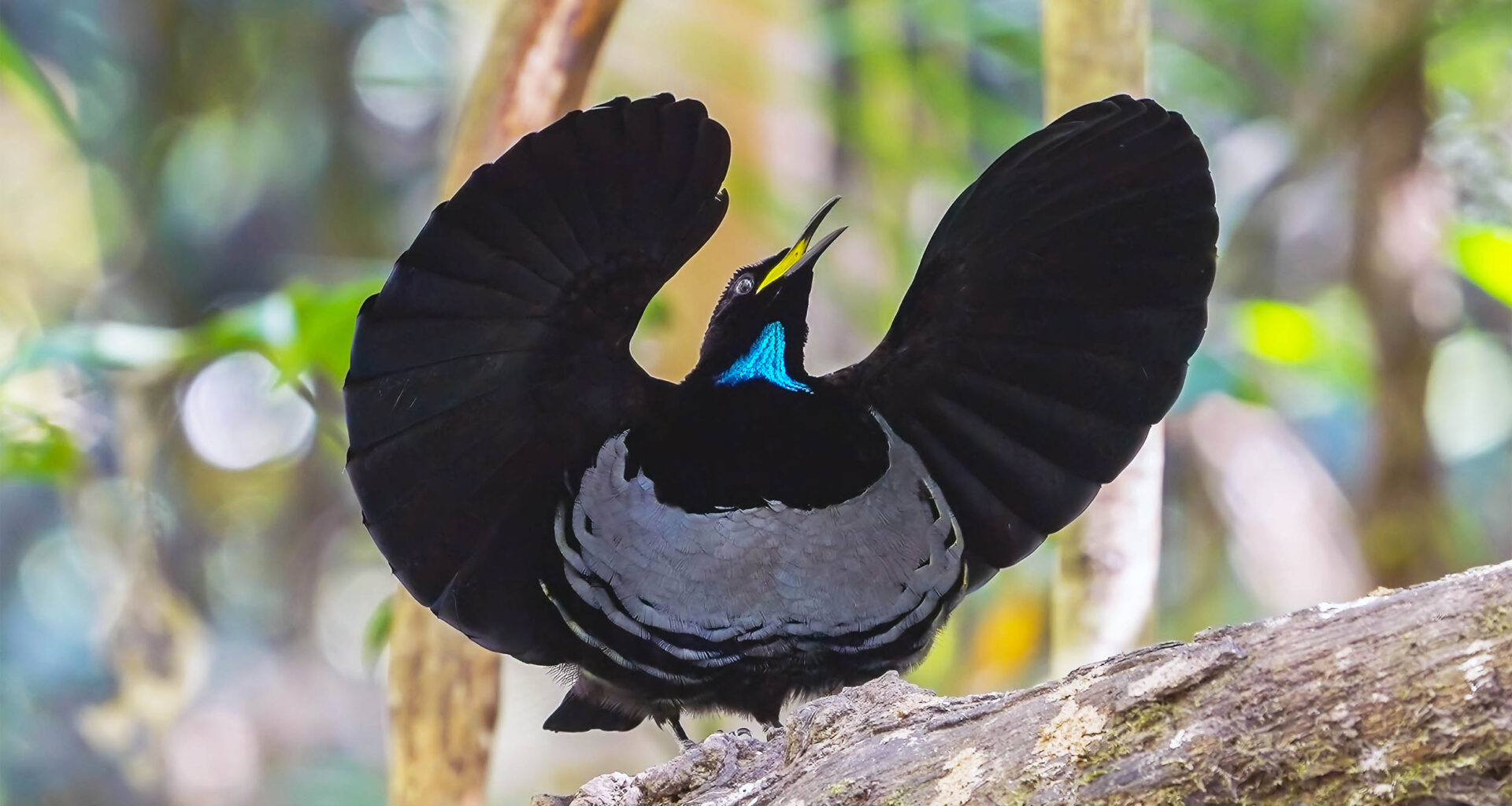
Their survey included firefly flashes, cricket chirps, frog calls, birds’ courtship displays, light and sound pulses from fish, and both vocal and physical signals from mammals. The animals differed greatly in size, environment, and communication style.
Even so, many of them repeated signals within a range of about 0.5 to 4 hertz. Whether the message came through sound, light, or movement, the same basic tempo kept appearing.
This was especially intriguing because the limit did not seem to come from the body alone. Some animals can clearly signal much faster when needed.
“If you try to catch a firefly, it panics and flickers much faster,” Amichay said.
“Biomechanically, they are able to signal faster. So, we wondered if there might be a deeper reason why very different systems signal at this tempo and not any other tempo.”
The brain’s sweet spot
The possible answer came into focus after researchers met University of Pennsylvania theoretical physicist Vijay Balasubramanian at a conference tied to the National Institute for Theory and Mathematics in Biology. Balasubramanian pointed out that individual neurons operate on a similar timescale.
Neurons need time to gather information and reset before firing again. Because of that, simple neural circuits may be especially responsive to signals that arrive every few hundred milliseconds.
To explore the idea, the researchers built computer models of basic neural circuits. They then tested how those circuits reacted to signals delivered at different tempos.
The models showed the strongest responses in the same range seen in the animal data, near 2 hertz. That supports the idea that communication may have evolved to match the rhythms brains can process most efficiently.
“There’s a somewhat subtle point here: we suspect that getting the ‘carrier’ signal in the right tempo range is key to communicating efficiently,” said study co-author Daniel Abrams, a professor of Engineering Sciences and Applied Mathematics at Northwestern University.
“It might not be that the tempo itself conveys any information, but it just serves as a baseline for getting attention, with actual content sent on top of it like musical notes following along with the beat in a song.”
Echoes in human life
The researchers also think this pattern may help explain familiar rhythms in human behavior. The team noted that popular music often sits close to 120 beats per minute, which is the same as 2 hertz.
“That rhythm fits our body; it fits our limbs,” Amichay said. “We walk roughly at 2 hertz, so it’s easy for us to dance to music that’s 2 hertz.”
“Of course, more experimental music can have drastically different beats. But if you turn on the radio and hear Taylor Swift – that’s often 2 hertz.”
The finding does not prove that all these rhythms come from exactly the same source. But it raises the possibility that animals, including humans, share a common timing preference rooted in the way nervous systems work.
Amichay now hopes other scientists will test more species directly and examine how brains respond to different communication tempos. That could show whether this rhythm is truly a widespread feature of neural systems in animals.
“It’s tempting to think there’s a deeper connection here – that maybe we’re all on the same shared wavelength. But we’re still exploring what this might mean,” he concluded.
The research is published in the journal PLOS Biology.
—–
Like what you read? Subscribe to our newsletter for engaging articles, exclusive content, and the latest updates.
Check us out on EarthSnap, a free app brought to you by Eric Ralls and Earth.com.
—–