
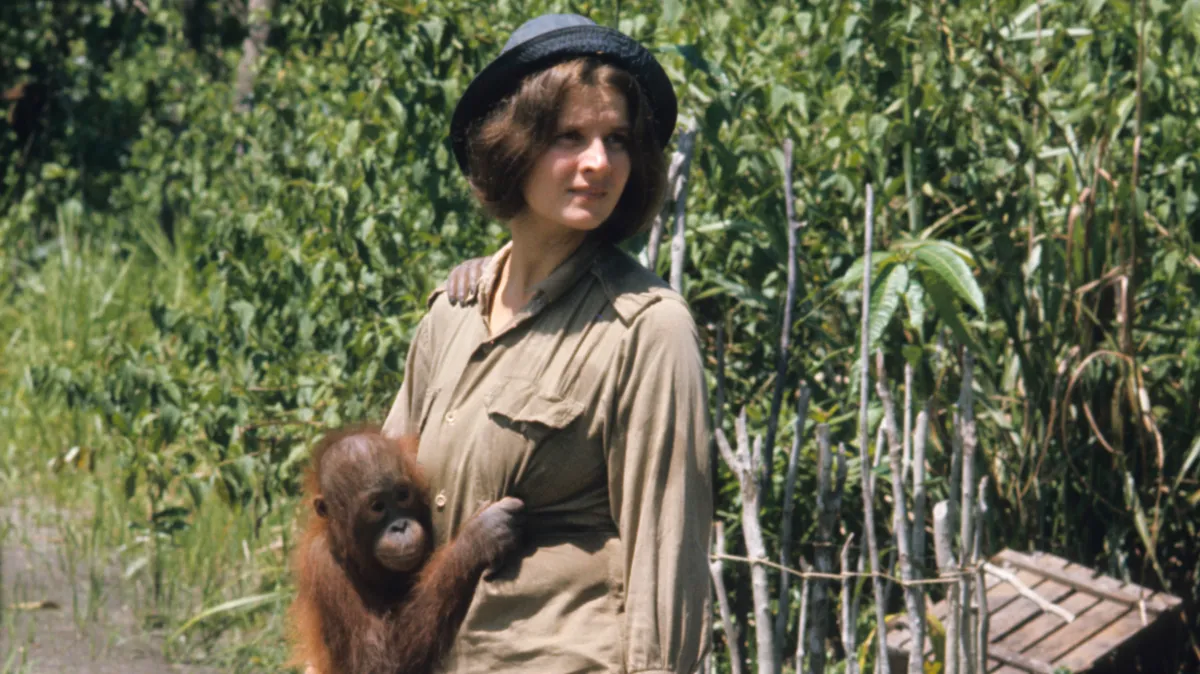
In the early 1970s, Biruté Galdikas and Rod Brindamour, then her husband, often awoke to find “not one, but four orangutans in bed with us”.
Little in their bark-walled hut in the Borneo jungle — an old shelter for illegal loggers that Galdikas turned into a rehabilitation camp for orangutans — was safe from consumption. The primates devoured flashbulbs, fountain pens, tubes of toothpaste, candles, binoculars and bottles of shampoo. Mosquito nets were carried into the trees for bedding. Galdikas often found old socks floating in her morning coffee, umbrellas nestled high up in the canopy or a pair of monkeys sitting on her bed spraying milk at each other. One young orangutan got into the unfortunate habit of dumping bowls of salt into her tea. “I was sometimes convinced that they were using their high ape intelligence to maximum capacity,” she reflected, “just thinking up new ways of driving me crazy.”
Galdikas and Brindamour eventually moved into an “orangutan-proof” wooden house nearby. It took Sugito — Galdikas’s first adoptive orangutan, with whom she had an “endearing but claustrophobic relationship” that involved changing the sheets when he wet the bed — two minutes to solve the puzzle. “He dragged a stick to the nearest window, leant it against the wall and climbed right up,” recalled Galdikas in National Geographic in October 1975, in a feature that brought orangutans — the only great ape found in Asia — international attention for the first time. On the cover, in a photograph taken by Brindamour, Galdikas holds a young orangutan on her hip like a child, one furry arm curled around her neck protectively.
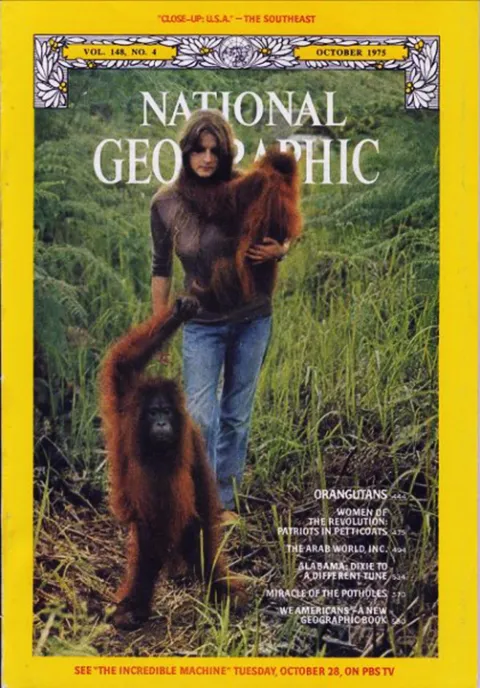 Galdikas on the October 1975 cover of National Geographic
Over a 50-year period, Galdikas conducted the longest study by one scientist of any wild mammal in the world in Tanjung Puting, a national park nestled in the heart of Indonesian Borneo where approximately 90 per cent of the world’s orangutans live. She was the world’s foremost expert on the primate but when Galdikas began her study in 1971 little was known about them. Were orangutans solitary or social? Did they prefer to eat leaves or fruit? Were they genetically similar to humans, like chimpanzees or gorillas?
Galdikas’s study was funded by Dr Louis Leakey, the pioneering Kenyan-British palaeoanthropologist who sought to understand the similarities between humans and the great apes by sending three female primatologists to observe them in their natural habitat (Leakey believed women to possess greater patience and powers of observation than men, and they were less threatening to male primates).
In 1960 he sent Jane Goodall to study chimpanzees in the Gombe National Park in Tanzania; six years later Dian Fossey flew to Rwanda to observe mountain gorillas.
If Goodall revealed how remarkably similar chimpanzees were to humans, Fossey how surprisingly gentle and family-orientated the gorilla was, then Galdikas discovered that, of the three apes, the orangutan (which in Malay means “person of the forest”) was the most genetically distant from humans. They are solitary creatures but the bond between a mother and infant is one of the most intense of any animal; she discovered that orangutans had the longest birth interval of any land mammal — roughly every eight years, which makes them particularly susceptible to extinction — and a sophisticated spatial memory to support a diet of fruits scattered across the forest. Galdikas identified some 400 species of plant consumed by the primate and argued that by distributing the seeds of the larger plants through the act of digestion, orangutans acted as vital “gardeners of the forest”.
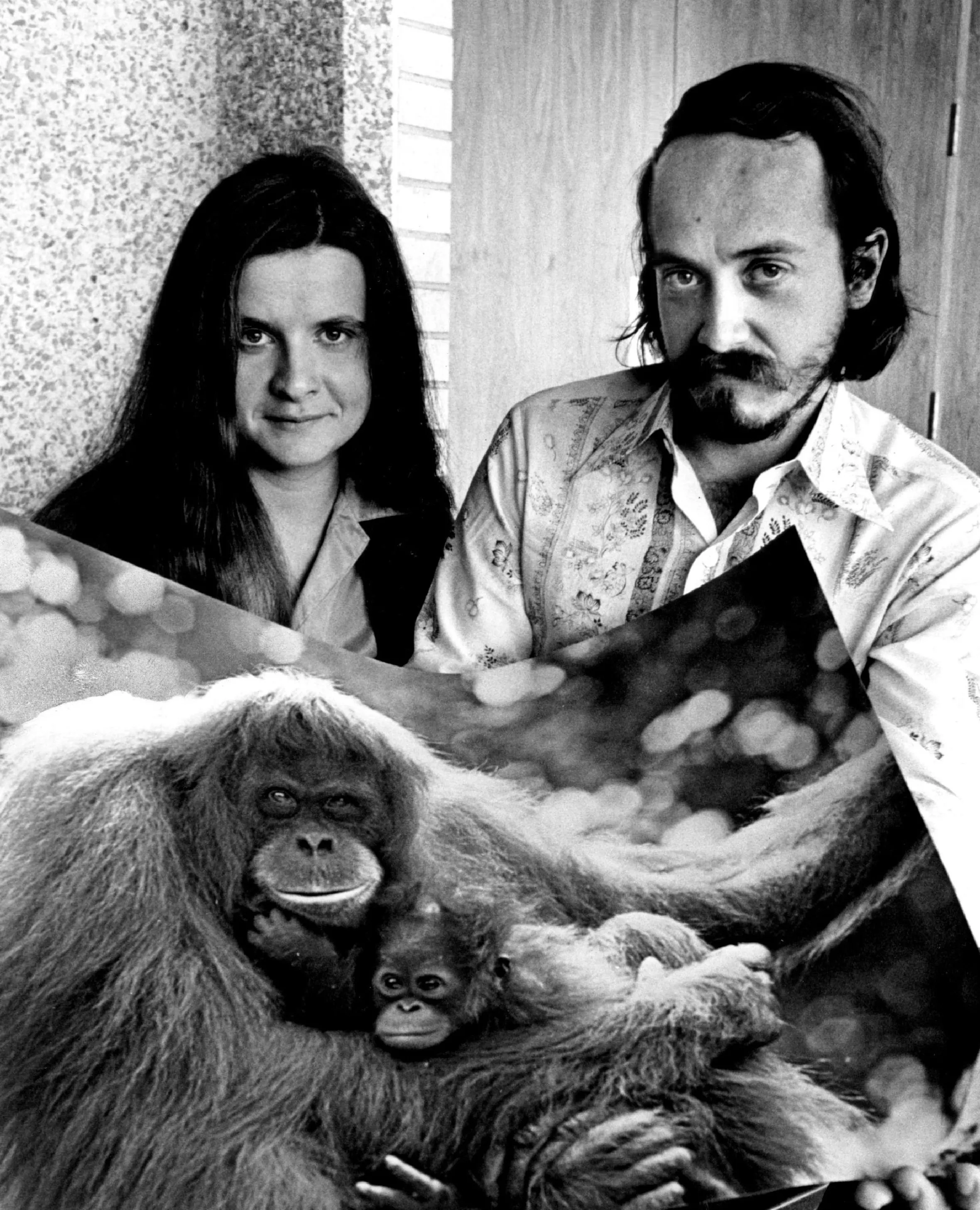 Galdikas and her first husband Rod Brindamour, a wildlife photographer, in 1978 with a poster from a zooDenver Post via Getty Images
Of the so-called Leakey’s Angels (or the “Trimates”, as Leakey nicknamed them) Galdikas was the least well-known — she reckoned because “I have a name nobody can pronounce and because I’ve been in Borneo all these years, tracking an elusive and solitary animal’’.
What would become Camp Leakey, which Galdikas named after her mentor, was at the start a forest with no telephones, roads or electricity. She was told by professors back in America that her mission couldn’t be done — that orangutans were too elusive and wary of humans to be closely observed, that they lived in deep swamps in a forest controlled by illegal loggers and hunters.
Yet Galdikas, like Fossey and Goodall, had a steely determination and courage that changed the perception of what women could achieve in inhospitable environments. Every day she rose at dawn and ventured into the jungle, often alone, to search for the wild primates. As she walked, Galdikas listened. “The wild orangutans sometimes disclose their presence by the snap of a twig or the regular dropping of fruit stones as they eat,” she wrote, “sometimes by the crashing of branches as they move through the trees.”
Sometimes it took weeks to find them — as Goodall observed, “compiling data on the animals was considerably tougher for Biruté than for me. Chimps are very sociable. It might take her a year to see what I can observe in one lucky day” — and Galdikas had “close encounters” with adult male orangutans including several who charged her. The humidity of the forest was often unbearable and the swamps, swollen by rains, regularly impassable. Leeches fell out of their socks and “squirmed in our underwear”.
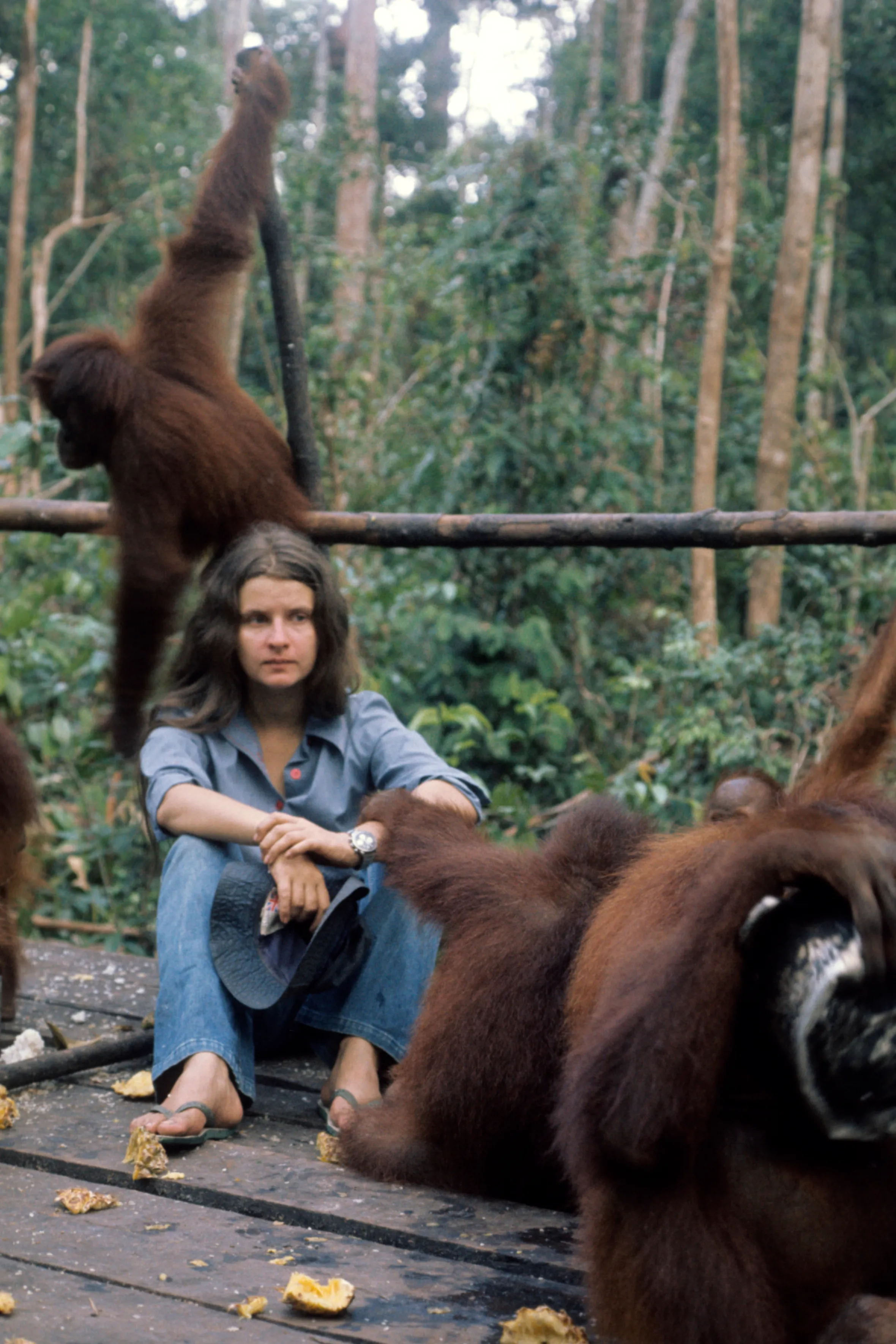 Galdikas in the forest, 1965Universal Archive/Universal Images Group via Getty Images
Galdikas grew very thin because she didn’t want to carry the extra weight of food on her excursions, and she survived on a breakfast of rice and canned sardines with only black coffee for the jungle. “Days were spent in the swamps, up to our armpits in black acidic water, searching for wild orangutans and following them wherever we found them,” she recalled. “Insect bites that led to inflamed sores, malaria, and mysterious fevers were very common occurrences. Once my hand was so swollen from insect bites that I couldn’t move my fingers. Another time a centipede bit me on the face and my face swelled up so much that I looked like an old potato.”
As Galdikas learnt about the orangutan, she began giving talks “to anyone who would listen. I told them about orangutans’ intelligence, their emotions and their role in the forest” — and she turned Camp Leakey into what she called a “halfway house” through which young orangutans, accustomed to captivity, could return to their natural life in the forest.
Like Fossey and Goddall, Galdikas became a surrogate mother figure to the primates, whom she once called “among my best friends”. There was one orangutan who would “knock” on her door and “we would sit on my porch”, she said, “sometimes for hours”.
Biruté Marija Filomena Galdikas was born in 1946 in Germany, as her parents were fleeing Soviet occupation in their homeland of Lithuania. They ended up in Toronto, Canada, where her father, Antanas Galdikas, was a house painter and her mother, Filomena (née Slapsis), a nurse.
Biruté decided that she wanted to be an explorer after reading Curious George, the children’s book about a monkey’s friendship with “The Man with the Yellow Hat”. She wrote to a museum director in Borneo whose wife kept orangutans and sent letters to the newly independent nation of Malaysia in the hopes she would be permitted to study them.
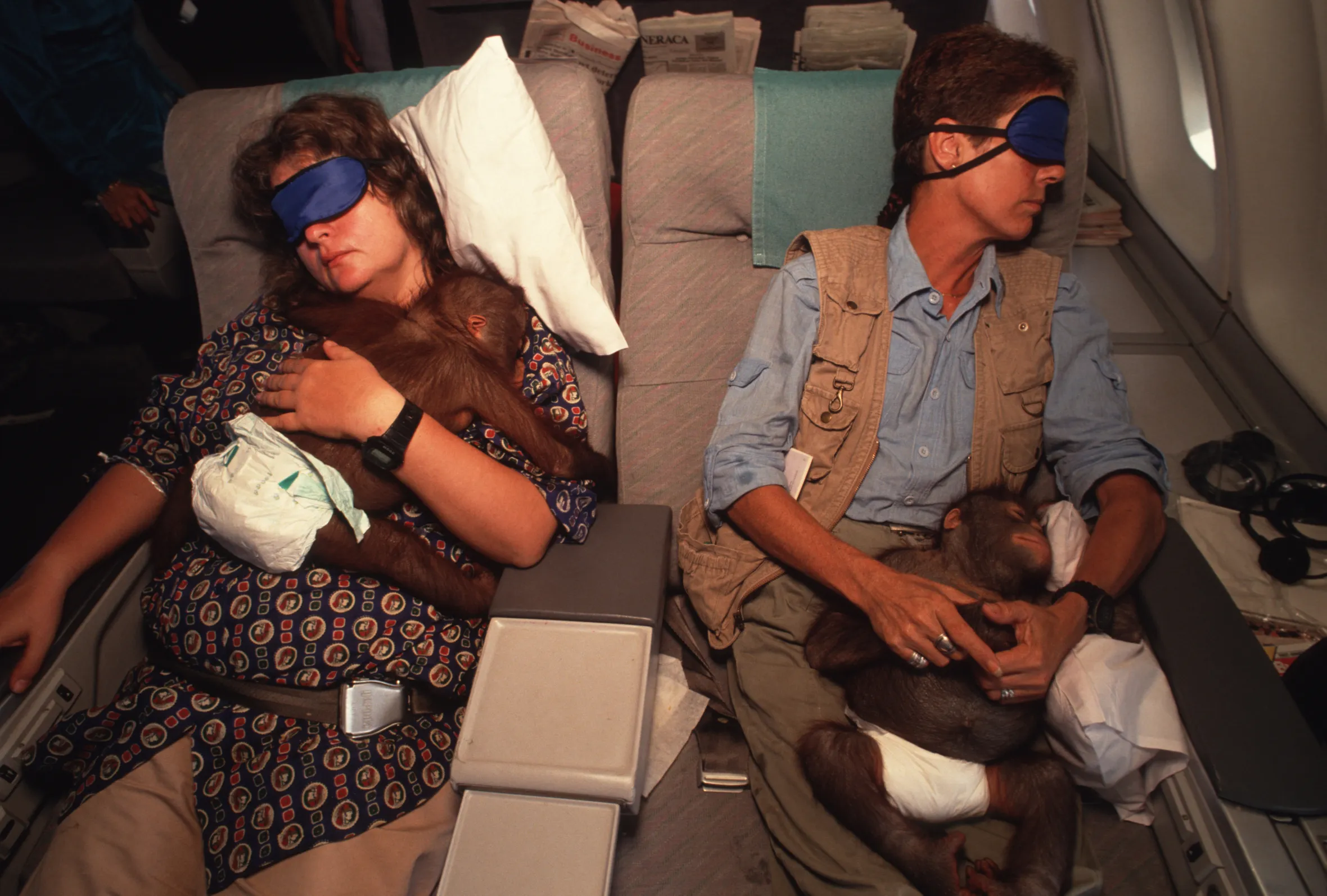 Galdikas, left, helps to return baby orangutans to Borneo after they were taken by smugglers and found in a crate at Bangkok airport in 2017
Her letters went unanswered, but Galdikas’s chance came in 1964 when the family moved to America and she studied natural sciences at the University of California, Los Angeles, completing a master’s degree in anthropology in 1969. It was there that the 22-year-old first met Leakey, who was giving a lecture on archaeological dating techniques. She recalled that he had lost most of his teeth, couldn’t walk without a cane and seemed initially uninterested in her passion for orangutans, but after some persuading Leakey agreed to obtain permits and funding as he had done with Goodall and Fossey, and on November 6, 1971, Galdikas was on a plane bound for Borneo.
In the late 1970s Galdikas and Brindamour divorced and she married Pak Bohap, a local Bornean who worked as a research assistant at Camp Leakey, in 1981. He predeceased her in 2022 and she is survived by their son and daughter, Jane and Frederick, as well as a son from her first marriage, Binti. All grew up in the rainforest.
In the 1980s Galdikas taught at universities in Canada and New Mexico, went “on tour” with Goodall and Fossey lecturing across North America and stepped back from jungle work to focus on conservation as the discovery of gold in and around the park flooded the area with open-pit mines and the exotic pet trade continued to flourish. When six infant orangutans were seized at Bangkok airport en route to the former Yugoslavia in 1990, the Indonesian government asked Galdikas to negotiate their return. They travelled home with her to Camp Leakey.
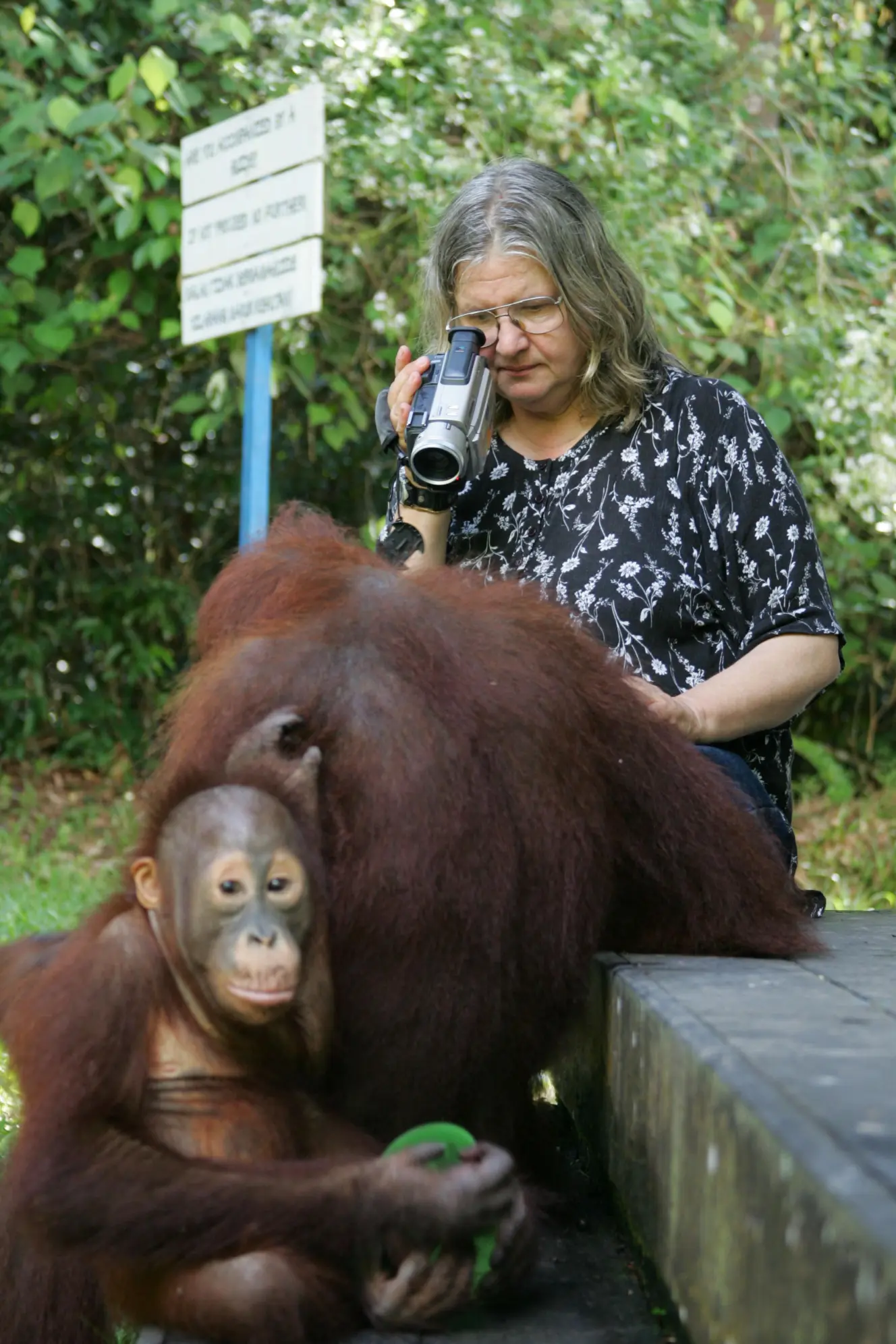 Filming at Tanjung Puting Orangutan Rehabilitation CentreAlamy
In 1993 Galdikas was presented with a United Nations environmental achievement award and met the American vice-president Al Gore, who added his voice to calls for orangutan conservation. She helped to designate Tanjung Puting a national park in 1982, set up the Orangutan Foundation International four years later with the American lawyer John Beal and wrote four books including Orangutan Odyssey (1999) and her autobiography, Reflections of Eden: My Years with the Orangutans of Borneo (1995).
Yet in later years, the Indonesian government grew wary of Galdikas’s campaigning. When she tried to renew her research permit in the 1990s, an official allegedly told her “20 years is enough” and several primatologists began to question her rehabilitation methods, in particular her close proximity to the orangutans: they argued that it impaired her scientific objectivity and led to the potential transmission of interspecies diseases. Some funders withdrew support, though Galdikas saw this as a warning from the loggers from whom she had received death threats.
Recent visitors to Camp Leakey reported that it was in disarray and when Galdikas returned in 2024, the orangutan population had dwindled to about 100,000, less than half of what it was a century ago. She continued to campaign for orangutans from her hospital bed after having lung cancer diagnosed, probably exacerbated by her efforts to combat wildfires in Borneo.
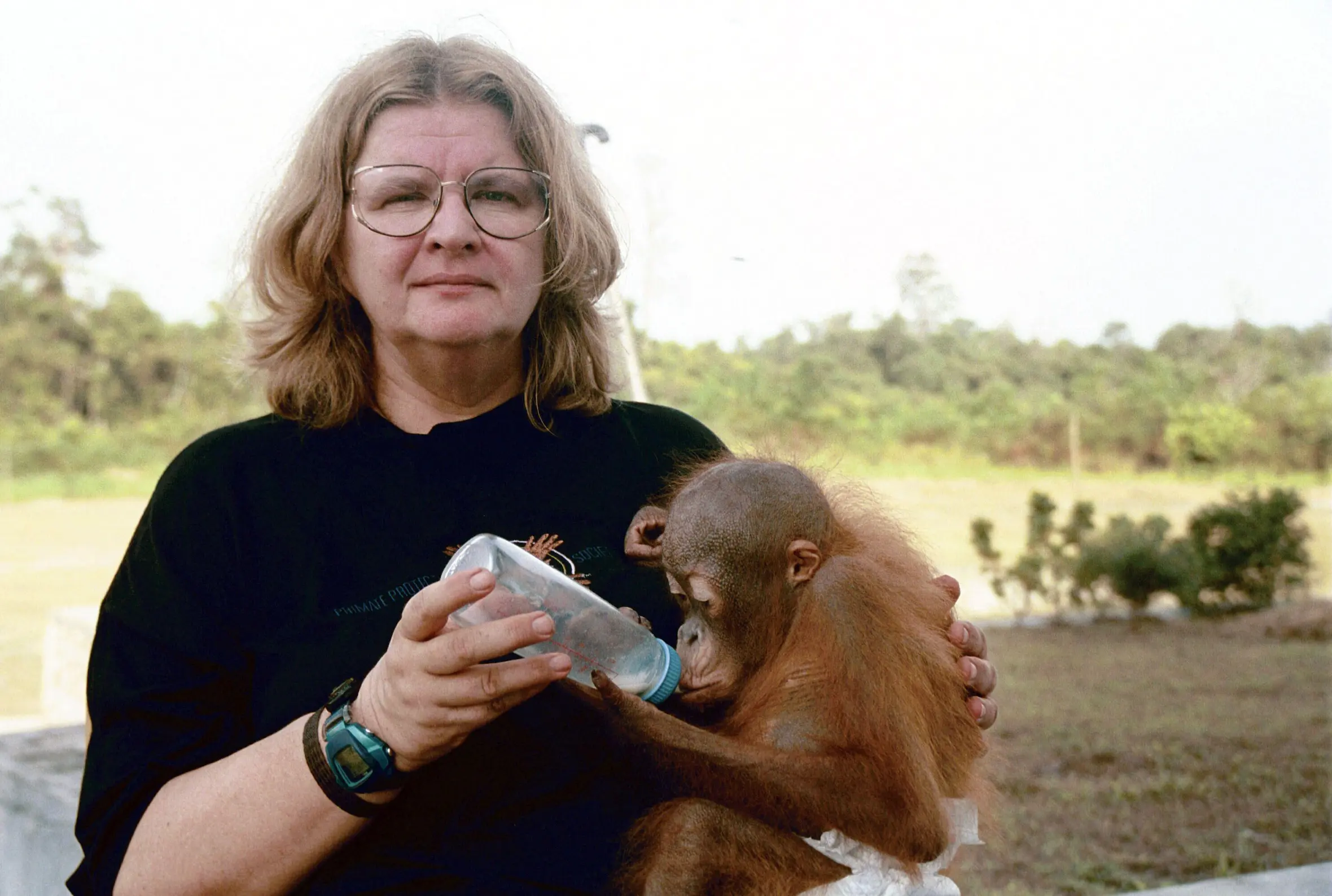 In Borneo in 2000 with an orphan at the Orangutan Foundation International Care CentreAlex Pitt/ZUMAPRESS.com/ALAMY
Galdikas is the last surviving Trimate: Fossey was murdered in her cabin in Rwanda in 1985 and Goodall died last year (obituary, October 1, 2025).
Before the women’s pioneering work, primates were often described as creatures of basic instinct, driven largely by the pursuit of food and reproduction. Like Goodall and Fossey, Galdikas’s greatest impact was to popularise the idea that they are individuals with personalities, friendships, rivalries and emotional complexities — like humans. She pointed out that, although orangutans weren’t close relatives like the African apes, they were “our mirror. When we look into their eyes, we see something ancient, something timeless, something that reflects who we once were.”
Biruté Galdikas, orangutan expert and conservationist, was born on May 10, 1946. She died of lung cancer on March 24, 2026, aged 79