
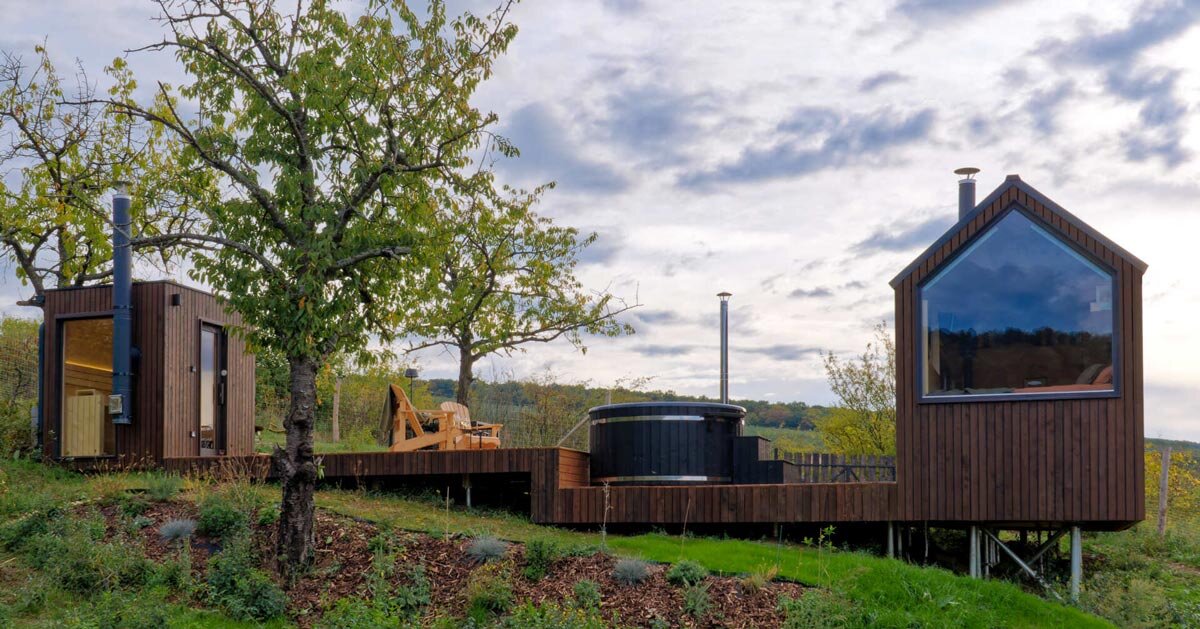
NestOff micro-retreat integrates compact living with landscape
NestOff is a 20-square-meter prefabricated micro-retreat located in the forested hills of northern Hungary, near Romhány. Conceived as a compact hospitality unit within a sloped, secluded landscape, the project examines how small-scale architecture can accommodate a complete program while maintaining a low-impact relationship with its surroundings. The cabin is positioned to respond to the site’s topography and extended valley views, which become a central element of the spatial experience. A large panoramic opening frames the landscape, establishing a direct visual connection between interior and exterior. The project also functions as a prototype for a replicable network of small-scale retreats, designed to be deployed across different environments with limited site intervention.
The spatial organization is based on efficiency and continuity. Functions including sleeping, sitting, cooking, and storage are integrated within a single, compact volume. Birch plywood is used throughout the interior to define walls, ceilings, and built-in furniture, creating a consistent material environment. The bathroom is minimized to preserve the openness of the main living space. The program extends beyond the enclosed volume through the addition of an outdoor terrace and wellness elements. A separate sauna structure and a hot tub are positioned adjacent to the cabin, while a larch terrace creates a platform for outdoor use. This arrangement expands the functional capacity of the retreat and establishes a sequence of spaces that support rest, bathing, and social activity.
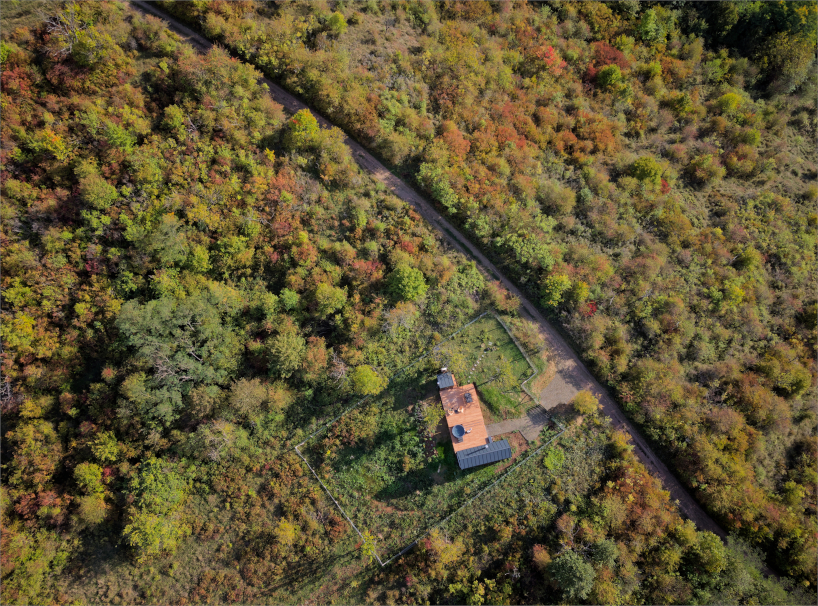
all images by György Endrész
Prefabrication and reversibility define Nestoff’s construction
NestOff cabin’s design by Peter Kotek and construction methods prioritize prefabrication and reversibility. The cabin was partially fabricated off-site to improve precision and reduce construction time and waste. It is supported by ground screw foundations, avoiding permanent concrete work and allowing for potential relocation with minimal impact on the terrain. Material selection focuses on durability and environmental performance. Timber serves as the primary structural and finish material, while high-performance insulation and energy-efficient openings contribute to thermal stability. A ventilated facade system supports long-term performance, and the compact footprint reduces overall resource consumption.
The project is defined by a balance between enclosure and openness. The interior offers a contained and continuous spatial condition, while openings and outdoor elements maintain a strong connection to the landscape. Through its combination of prefabrication, compact planning, and site responsiveness, NestOff proposes a model for low-impact, small-scale hospitality architecture.
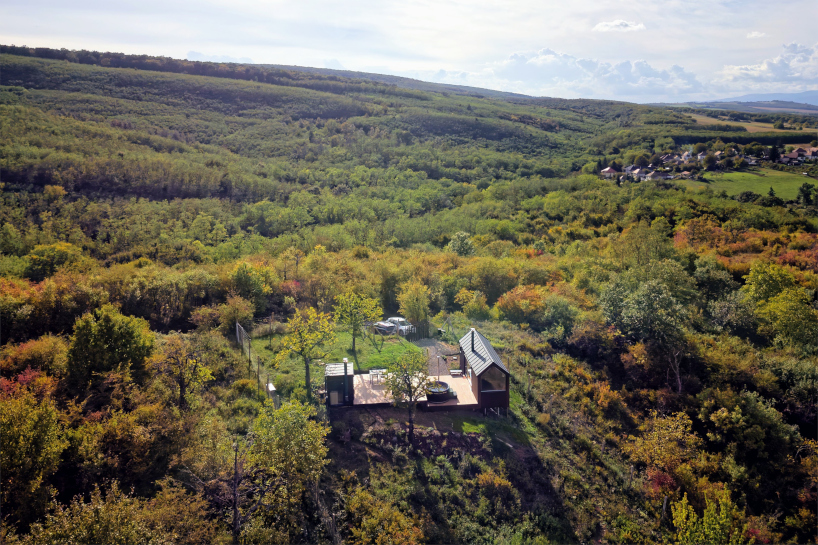
a prefabricated cabin sits within the forested hills of northern Hungary
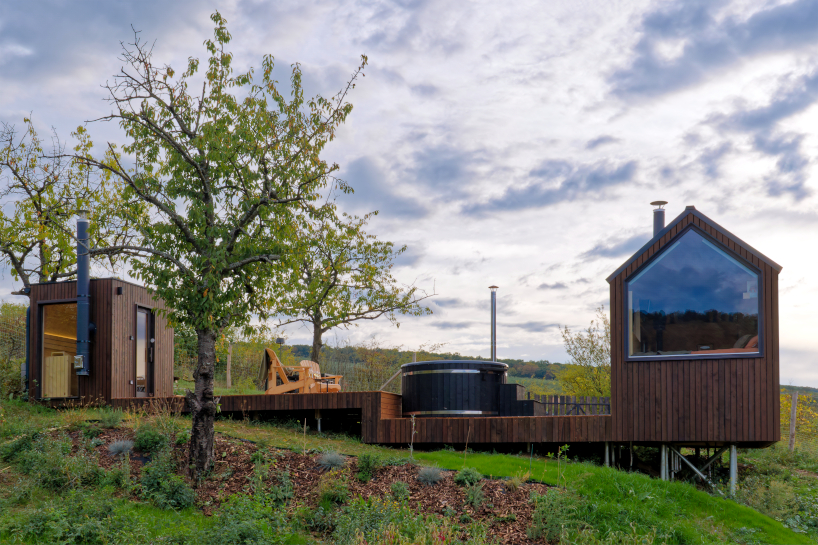
the compact volume is positioned along a sloped terrain near Romhány
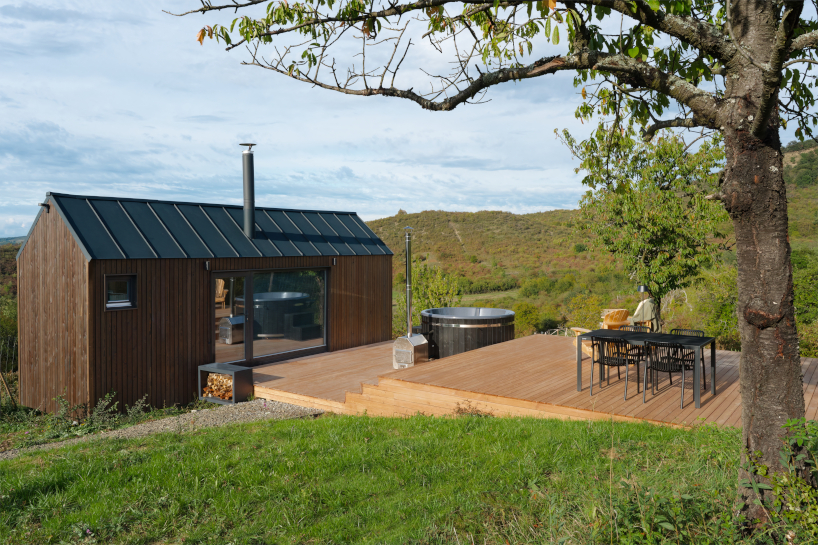
prefabrication and compact planning define the low-impact retreat