
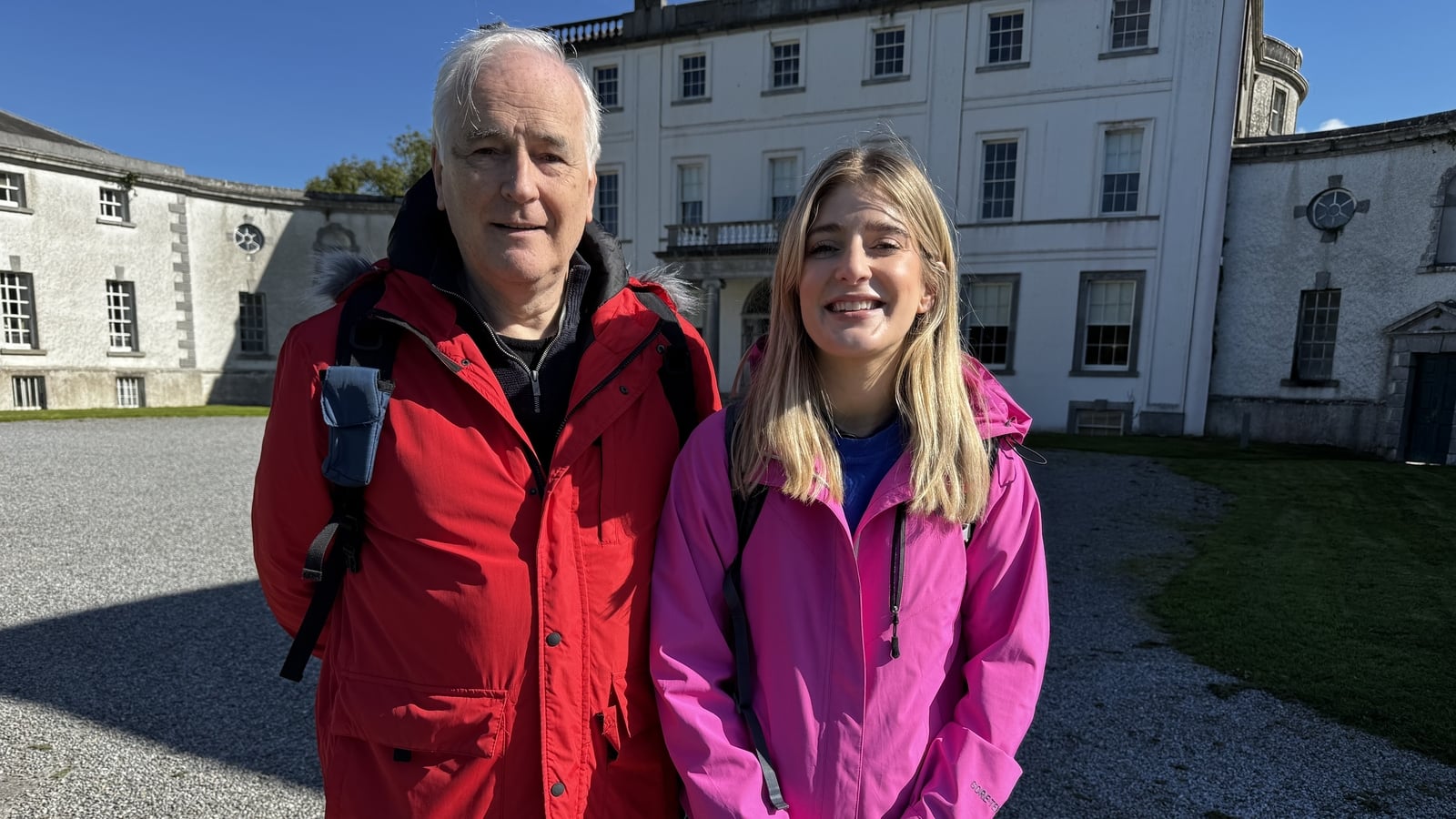
Historian, author, and RTÉ History Show presenter Myles Dungan features alongside presenter Doireann Ní Ghlacáin in the latest episode of the new series of Tracks & Trails, airing on RTÉ One and RTÉ Player on Friday 17th April – watch Tracks & Trails now via RTÉ Player.
The show explores the archaeology and mythology of Ireland’s landscape, the forgotten stories that lie hidden in our localities, and the benefits of walking and hiking for mental health.
Myles joins Doireann for a walk around Strokestown Estate in Co. Roscommon, including the National Famine Way and ancient royal site of Rathcroghan.
Below, Myles delves into the fascinating history of the Strokestown estate…
Strokestown House in County Roscommon, a Palladian mansion in a delightful tree-lined setting, sits today in a tranquil environment.
It is much visited because it houses the Irish Famine Museum curated by the Irish Heritage Trust and is a recent recipient of a sizeable sum of public money (€1.2m from Fáilte Ireland’s Regenerative Tourism and Placemaking Scheme) to enhance the woodland areas around the ‘Big House’.
As I explained while walking the grounds with presenter Doireann Ní Ghlacáin for the new series of Tracks and Trails, there are umpteen reasons why the nation’s primary Great Famine museum should be situated in Roscommon, rather than in one of the more obviously afflicted locations like Skibbereen in County Cork.
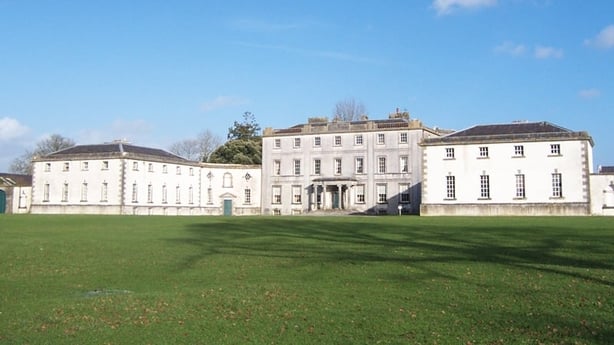
Strokestown Park House
The reason is the Strokestown landlord Major Denis Mahon.
In 1845 Mahon’s mismanaged Strokestown estate was essentially bankrupt. He had inherited debts of £30,000 on land where almost 12,000 souls were eking out a living on 11,000 acres. They owed Mahon £13,000. So even if they all paid up, the debts would not be cleared.
Mahon, to stem the bleeding, appointed the professional land management company (later a banking institution) Guinness and Mahon to run the estate. The new agent’s solution was to remove two-thirds of the Strokestown tenants and to ship them to Canada. Mahon baulked at the enormous cost (more than £20,000) despite being shown by his agent how maintaining his tenants in the local workhouse would be even more expensive. Instead Mahon proposed—from a safe distance, he was based in England in the winter of 1846/47—the eviction of a number of his more troublesome tenants.
Eventually Mahon bowed to financial logic and agreed to fund the passages of almost 1,500 of his tenants to new lives in Canada, with their arrears forgiven. However, he was not prepared to shell out to transport them from Roscommon to the Dublin docks. They were going to have to walk the 165 kilometres. This 1490 of them did, in May 1847, hopeful, but not optimistic that they were saying goodbye to their beloved Strokestown in return for a better life.
They were wise not to have been too optimistic.
Mahon had engaged four sub-standard (and therefore cheap) ‘coffin’ ships to transport his tenants to Canada. All told, 268 of Mahon’s tenants died at sea, while almost as many succumbed to disease after reaching north America. Dozens more—tenants who had opted to remain in Roscommon—died in the roadside ditches of the county, or the local Workhouse, in the winter of 1847.
Word that many of the Strokestown emigrants had not survived the journey quickly got back to Roscommon. Rumours abounded locally that one of the unseaworthy craft engaged by Mahon had sunk, with all hands. This was untrue, but did little to enhance the landlord’s reputation.
The fatal result of the mounting anger in Strokestown was the murder of Major Denis Mahon on 2 November 1847. The death of Mahon was greeted with bonfires and celebrations in Roscommon, but there were consequences. On 8 August, 1848 Owen Beirne and Patrick Hasty were hanged for the killing of the landlord. Two more victims of the Great Famine in Strokestown.
So that’s why the National Famine Museum, and the point of origin of the 165km National Famine Way, is located in Roscommon rather than in Cork or Mayo.
Tracks & Trails, RTÉ One, Fridays at 8.30pm – catch up afterwards via RTÉ Player