
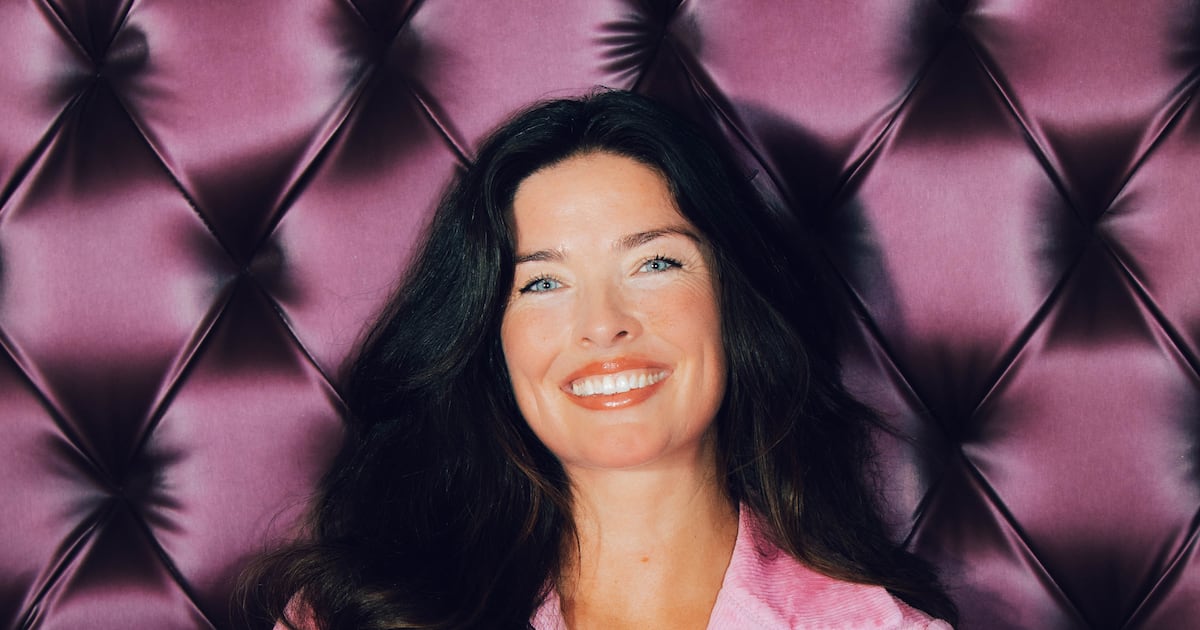
Jenny Keane has spent the better part of a decade doing something that still feels subversive in Ireland, even now. She stands on stages and in sold-out rooms talking to adults about orgasm, desire, body confidence, libido, arousal, vulvas, penises, menstruation, communication, pleasure, and the small practical misunderstandings that can shape intimate life – all with a warmth and comic timing that invites people to experience sex and desire not as serious, shameful or taboo, but fun, pleasurable and deeply human.
The 39-year-old Dubliner, dubbed “The Orgasm Queen”, has taught more than 20,000 women about orgasm through her live and online workshops, and she is now bringing her live show back on tour around Ireland, with dates in Cork, Kilkenny, Dublin and Galway in May. The growing appetite for her work says something not only about Keane herself, but about Ireland’s increasingly sex-positive attitude, where sex is something not to be stigmatised or silenced, but openly discussed, embraced and celebrated.
Irish audiences, she thinks, are often misread. “A lot of people ask me, are Irish people sexually repressed? I always say we’re absolutely not. No way,” says Keane. “We have an incredible capacity towards curiosity. We have a real willingness to lean into things that might feel a little bit off the wall.”
Our sense of humour helps, too. “Our ability to take the mickey out of ourselves is actually really good when it comes to learning about sex,” says Keane. “People come to the shows, thinking ‘This might be really embarrassing’, but then they find themselves laughing in a room full of hundreds of other people. There’s something very powerful about that.”
Keane began teaching sex education in Ireland in 2016 while working as a yoga instructor (yoga remains a major part of her life and her thinking about embodiment), when she hosted a workshop on the female orgasm. Word spread quietly through her yoga circles.
“It was very much … hush hush,” she laughs, recalling how women would sidle up to her to inquire about the workshops. The first group was just 12 women, then the numbers grew steadily, eventually reaching the maximum the room could hold.
She posted on Instagram that she was doing an online workshop and had a couple more places available. “They were snapped up in an instant,” she says. She ran another, and those places disappeared just as quickly. “Within the next couple of months, I went from selling out 100 participants to selling out 3,000. So it was really, really fast.”
That boom coincided with lockdown, when many people were living in closer proximity to themselves and their partners, navigating stress, boredom, desire, and the long-standing gaps in their own knowledge. Keane became, for a great many people, the person answering questions they had been carrying for years, sometimes decades. Since then, her workshops have covered orgasms and self-pleasure, finding and stimulating the G-spot, oral sex tips, keeping the spark alive in a relationship, and various aspects of kink. Her website, Oh!Moment, offers advice, as well as selling sex toys for women and couples.
 Irealand is experiencing an increasingly sex-positive attitude, where sex is something not stigmatised but openly discussed. Photograph: Bryony Coles
Though very aware of the responsibility that comes with the platform she has ascended to, Keane is careful about referring to herself as an expert. “I don’t really think I’m an authority in this space,” she says. “I think I’m someone that has a voice at this moment in time.” She describes herself instead as “a forever student”, driven by curiosity about all aspects of sex, sexuality and relationships.
That curiosity began in her early 20s while living in California, where yoga and women’s circles introduced her to conversations about menstruation and the body she had never encountered before. “These were the first steps into sex education,” she says.
Sex education was the thing that gave me the most empowerment I’ve ever experienced
— Jenny Keane
Being able to discuss the female body was not an abstract concern for Keane, who had long dealt with menstrual pain and PCOS (polycystic ovarian syndrome). She describes how she went from feeling like a passive participant in her own body, to understanding that knowledge could alter how she lived in it.
“It’s the basis. It’s also what propelled me to keep going… When there’s a lack of sex education, you grow up thinking that if something’s wrong with you, you just have to put up with it. When you get education, you not just understand how to have a relationship and a connection with your body again, but how you can actually thrive in that relationship. For me, sex education was the thing that gave me the most empowerment I’ve ever experienced. It still does to this day.”
Keane also credits her parents for creating a home environment where sex and bodies were discussed openly and without shame. She recalls her mother taking her to a bookshop and insisting she choose a book on sex education. It made an impression that has stayed with her. “It was the very first time I had seen a diagram of a vulva with all the parts named.”
That memory of learning basic but often silenced facts about anatomy still informs the way Keane works, where she is often speaking to adults who do not know the names of their own body parts; adults who have never looked properly at their vulva; adults who do not understand the difference between arousal, desire and libido; adults who are carrying body insecurity, shame or simple inexperience into relationships and into their own sense of self. A great deal of what she teaches is foundational, and the reason it lands so powerfully is because that foundation was never built.
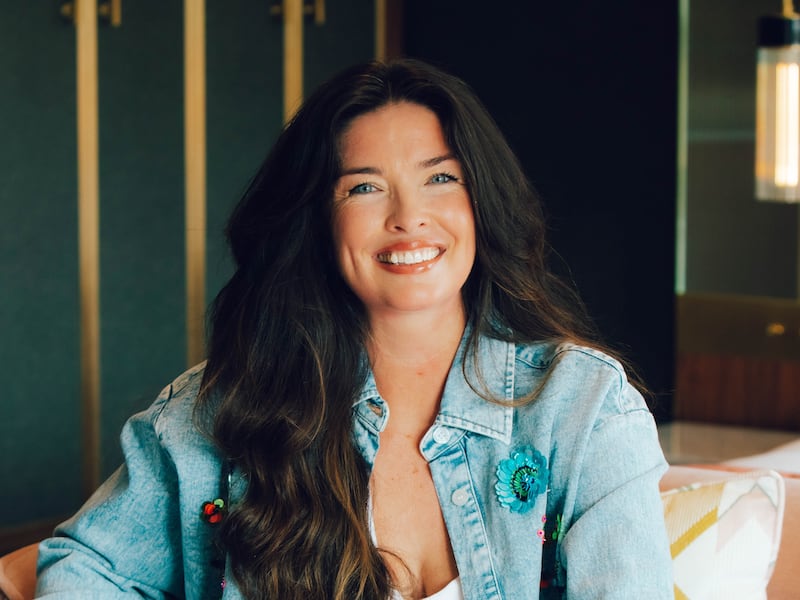 Jenny Keane is passionate about clear, informed education because that was integral to her own journey. Photo: Bryony Coles
Keane does not teach sex education for children, but adults often come to her asking how to speak to their own children. Her answer is simple: “Just allow yourself to be open to talking about sex as if it’s any other form of conversation around the dinner table, like the way you talk about sports or finances, and make that conversation part of everyday language. Because even if your children aren’t engaging with the conversation with you directly, they are listening to the fact that the conversation is allowed and permitted in the space.”
This matters even more now, she says, because children and teenagers have such easy access to the internet. “If you aren’t talking to your children about sex, somebody else is.”
Mainstream porn is not meant as a source of education … It’s actually designed for quick arousal
— Jenny Keane
That “somebody else” can take many forms, from peers to pornography to the online misogyny that increasingly shapes how young people come to understand relationships, power and intimacy. Keane mentions the recent discourse around Louis Theroux: Inside the Manosphere, a documentary examining online communities that promote misogynistic and anti-feminist ideologies, and says adult understanding of that landscape is crucial.
Much of the misogynistic messaging around gender, sex and relationships promoted in the manosphere is terrifying. Myron Gaines, who was featured in the documentary, has said that “Women’s vaginas are disgusting … it’s a woman’s job to please a man, not the other way around … a woman’s ejaculation is irrelevant. Most women get off on getting you off, that’s the truth. A guy getting his girl off is elective.” Rhetoric around “body counts” and judging a woman by her sexual history is rampant, as are statements about all women enjoying domination, even violence, during sex.
Such harmful misinformation circulates much more easily on social media than careful education does. Sex education content is frequently caught in social media moderation systems designed to police explicit material; sex educators often have to alter their language to not trigger draconian restrictions, commonly replacing the word “sex” with “seggs” and “rape” with “grape” – an indication of how even the most basic language around sex and consent is censored. Keane’s own Instagram account has been blocked, limited or “shadow banned” (whereby the visibility of a user’s content is restricted without notification or explanation).
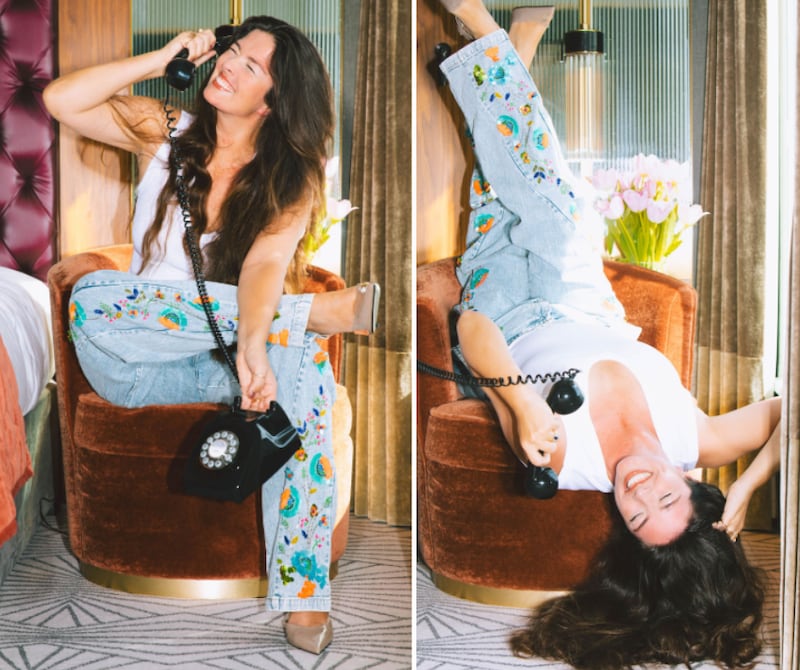 Jenny Keane says she is passionate about clear, informed education because that was integral to her own journey. Photograph: Bryony Coles
The week we meet, Instagram deleted Bellesa, a sex toy shop that has become one of the largest sexual health communities on the platform with 700,000 followers, providing women and LGBTQ+ people with accessible, stigma-free education. Meta cited “sexually explicit language”, including the use of anatomically correct terms like “clitoris”.
Keane is especially concerned about the way some sexual practices migrate from mainstream pornography into ordinary sexual lives without context, discussion of risk, or education that would allow for safe, consensual exploration. Practices such as choking or strangulation, rough penetration, or impact play frequently appear in mainstream porn.
[ Sex education to be taught at earlier age under new primary school curriculumOpens in new window ]
“Mainstream porn is not meant as a source of education … It’s actually designed for quick arousal. That’s the purpose of it,” she says. “When we get educated on practices that can cause harm and can hurt people, then we understand what we’re actually getting involved with, that there is actually proper protocol practices, safe words and whatnot that are included in participating in these practices safely, so that people are not coming away from these experiences hurt and in pain but in fact finding pleasure in them. Even the simple things like spanking your partner’s bottom,” she says. “I’m extremely passionate about anyone doing that having the correct skills, techniques in place.”
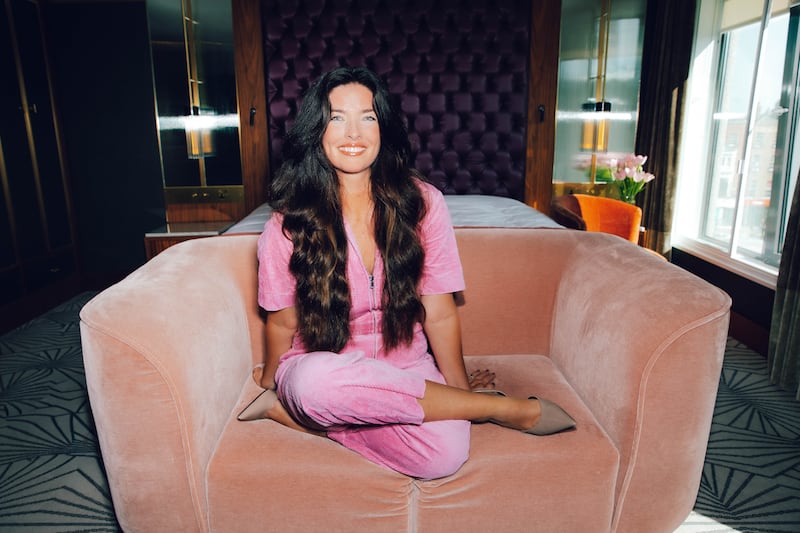 Jenny Keane has undertaken what she describes as a wide gamut of vocational training, from oral sex skills workshops to somatic therapy. Photograph: Bryony Coles at The Fitzwilliam Hotel
Keane doesn’t personally teach kink or BDSM, but in her workshops and live shows, she works with guest educators and practitioners who are experts in these spaces, such as “a dominatrix for skills on bondage, spanking, sensation play, and a professional shibari artist that teaches rope tying skills”.
“I give people an opportunity to dip their toe into different things where the emphasis is on exploration, fun and really just having a laugh, to learn, ask questions, and figure out what feels right for them in a space that can otherwise feel quite daunting to enter. It’s entry-level, beginner-friendly tasters for people.”
She’s passionate about clear, informed education because that was integral to her own journey. In California, someone in a women’s circle answered one of her questions about female ejaculation by directing her to Deborah Sundahl in San Francisco, whose workshop focused on the G-spot. That workshop became a turning point.
“I was so shocked that I had never been taught such basic information before,” she says. It changed her understanding of sex itself. “Up until that point, it would have been much more about performance,” she says, whereas the touch techniques she learned there were “gentle, tender, really about self-care and self-love”.
Motherhood … has made me even more energised to show people how a lifelong approach to sex education supports our wellbeing
— Jenny Keane
She went on to do what she describes as a wide gamut of vocational training, from oral sex skills workshops to somatic therapy, trauma training, self-pleasure education, consent work, and kink and BDSM, including some work as a “baby dom”. “It was about exploring my curiosities, answering questions I had.” She has also undertaken more formal academic study, including a master’s in psychology that she is in the process of completing.
She laughs a little at the challenge of narrating this succinctly. “I started this in my early 20s, and once I started, I never stopped.” What remains consistent is her appetite for learning and for finding “the best people to go to in order to learn more”.
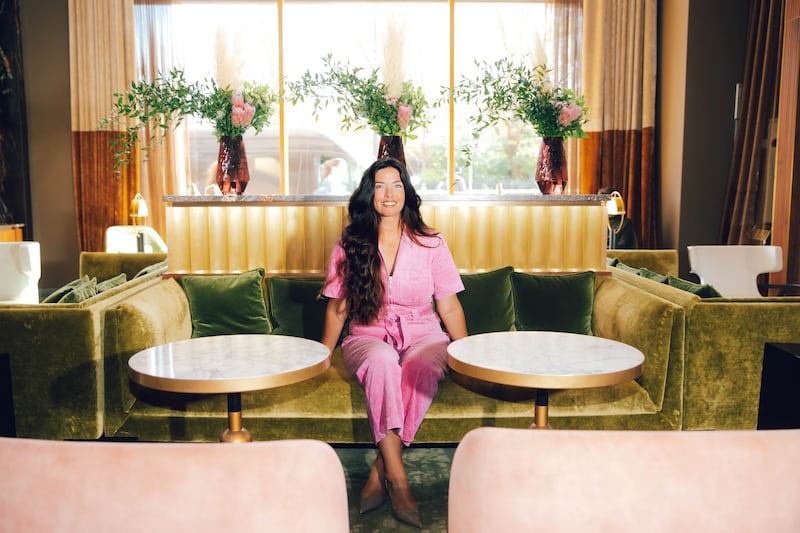 Jenny Keane is part of a growing number of Irish sex educators and therapists. Photograph: Bryony Coles at The Fitzwilliam Hotel, Dublin
Her public work has been fuelled by that personal appetite for learning, but she says she has also been led by her audience.
“The workshops in the beginning were tailored towards people who were having difficulty with orgasm; libido, so understanding the difference between desire, arousal and libido; period power, so understanding your cycle and how to engage with your cycle.”
Over time, as people learned the fundamentals, they began asking more questions about “sex skills”, and the realm of her work expanded. A workshop on women on top grew from repeated questions about body confidence and pleasure in those positions. She is attentive to her own boundaries and limitations, and to what she is and is not best placed to teach which is why when questions around BDSM came up, she chose to bring in guest practitioners.
She also maintains tight boundaries between her professional and personal life, but she is happy to mention that she has recently had her first baby. “Motherhood … has made me even more energised to show people how a lifelong approach to sex education supports our wellbeing. That might look like understanding concepts like matrescence [the physical, emotional, psychological and identity-based process of becoming a mother], to having tools that support body confidence as our bodies change, staying connected to ourselves, and navigating evolving relationships.”
She has held workshops on sex for pregnant and postpartum women. The most common questions are around comfort, how to move, what positions feel good in later stages, and how to stay connected to your body as it changes. “We talk about using pregnancy-safe lube,” she adds, noting that “often for people experiencing pregnancy for the first time, it’s the first time women are having to consider lube in their sex life – then looking at practical sexual aids that can support them to experience pleasure as their bodies grow.”
Her menopause workshop is also a mix of education and skills, understanding what’s happening during the transition, how hormonal changes can impact desire, arousal and comfort, alongside practical self-pleasure techniques (a large study conducted by the Kinsey Institute last year suggested self-pleasure can help support peri- and post-menopausal symptoms by increasing blood flow, maintaining vaginal health, and supporting sensitivity).
“With menopause, we talk about self-pleasure techniques using sex toys as part of supporting arousal and sensation,” says Keane. “That’s part of why I started my online sex toy shop. I kept seeing a gap where people were buying products but didn’t know how to use them effectively. The focus with the shop was creating a destination that is not only for body safe sex toys, but on combining products with education, so people can maximise pleasure and feel confident using them in whatever circumstances they choose, solo or partnered.”
Her upcoming Orgasm Tour, which stops at venues including the 650-seat Everyman in Cork and Dublin’s 1,200-seat Ambassador Theatre, promises tips on how to stimulate the clitoris, some “do’s and don’ts” of sex positions, a deep-dive into penis pleasure, surprise guests, live audience interactions and a whole lot of laughter.
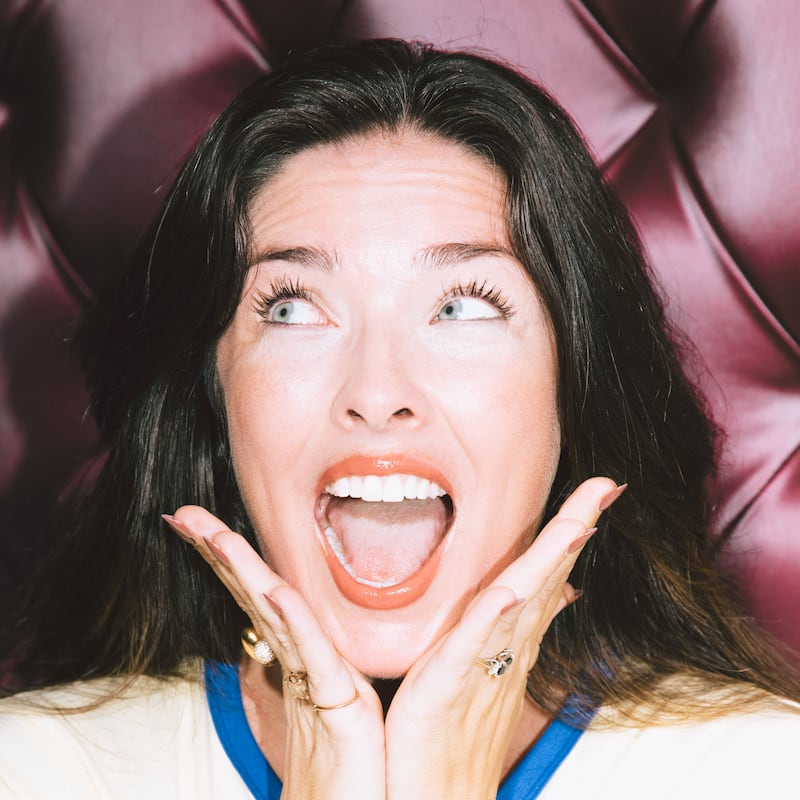 Irish audiences for her sex workshops, she thinks, are often misread. Photograph: Bryony Coles
While Keane thinks her online workshops are a great way for people to “dip their toe in” in the privacy of their own home, she is effusive about the energy of the live shows. “Part of what I do is teaching anatomy and teaching science and talking about research. Part of it is clinical, but it’s all told through the lens of storytelling and comedy.” Laughter, she says, removes awkwardness, but it also does something more connective. “It’s a real signifier of we are all together in this moment.”
For all her lightness, she is clear that this work is political.
If I need to stand on a stage in a vulva outfit with my friend beside me in an inflatable penis costume, I will do that!
— Jenny Keane
“When you’re talking about sex education and educating people about their body, that is extraordinarily political from the offset.” What she means is not party politics but power: who gets taught to understand their body, whose pleasure is taken seriously, what kinds of knowledge are treated as legitimate, and what is still dismissed as shameful, indecent or unimportant.
In Keane’s framing, to teach adults about desire, anatomy, consent, menopause, fertility or pleasure is to push back against a culture that still leaves many people uninformed about their own bodies while allowing misinformation, misogyny and silence to flourish.
Asked about the future, she says she is increasingly drawn towards research. Talking to thousands of people over the years about their sexual lives has exposed her to patterns that she believes deserve closer study, and sexuality research itself remains, in her words, “still such a young field”, particularly where women’s health is concerned. (She mentions the recent 3D mapping of the clitoris by researcher Ju Young Lee, and the fact that similar penile mapping was done more than 30 years ago. “There’s been a lot of surgeries being performed on women and even the transgender community without this really vital knowledge.”)
“Research has always been fascinating to me as an educator because I see how people respond to it and how it plays an important role in validating experience,” says Keane. “My interest is on the intersection of embodiment, education, and sexual wellbeing, to understand how we can better bridge the gap between theory and lived experience. I am already developing research in this area so it’s exciting to see where it will lead.”
But how she’ll present that work will remain open. “I’m also totally shameless,” she says, laughing. “If I need to stand on a stage in a vulva outfit with my friend beside me in an inflatable penis costume, I will do that!” she laughs. “Anything if I think it’s going to help people.”
Who are Ireland’s sex educators and therapists?
Jenny Keane is part of a growing cohort of Irish sex educators and therapists who are expanding how people access information, support and conversation around sex and intimacy. Accredited sex and relationship therapists work with individuals and couples, while others are moving beyond traditional clinical settings, offering workshops, courses and one-to-one sessions that prioritise openness, accessibility and real-world application.
In Galway, Shawna Scott, owner of the pleasure boutique SexSiopa.ie, also runs workshops that take an informal, hands-on approach. Her sessions cover everything from sex toy basics to pleasure and disability, often in small, conversational settings designed to demystify products and practices that can feel intimidating. Her focus is on giving people the space to ask questions, learn at their own pace, and approach pleasure without embarrassment.
For those looking for a blend of education and coaching, Grace Alice Ó Sé offers one-to-one sessions and group programmes focusing on desire and libido. She runs RSE & Me, delivering sex education courses for secondary school students, while her work with adults includes individual and couples’ sessions, as well as courses such as Libido Unlocked and Sex Toys for Beginners. These programmes centre on helping women reconnect with their sexual selves through guided exercises, discussion and reflection, creating a space that sits somewhere between education, coaching and community. Her approach is rooted in warmth and humour, as demonstrated in her widely followed podcast, The G Spot.
For people seeking more formal therapeutic support, the College of Sexual and Relationship Therapists (COSRT) maintains a register of qualified practitioners in Ireland, setting clinical and ethical standards in a field that is otherwise lightly regulated. COSRT-accredited therapists work both in person and online, offering support with intimacy, sexual functioning, trauma and relationship dynamics.
Among them is Fidelia Idogho, who works with individuals and couples online, focusing on the intersections between sexuality, relationships and mental health. Her sessions combine talk therapy with practical psychoeducation, supporting people with issues such as desire, intimacy, compulsive behaviours and communication, while remaining attentive to how culture and lived experience shape sexual lives.
Aoife Drury also works at the intersection of trauma, intimacy and relationships, supporting individuals and couples navigating areas often left out of mainstream discussion, including sexual trauma, fertility journeys, LGBTQ+ identities and subcultures such as chemsex. Her work is grounded in a trauma-informed, sex-positive framework, with an emphasis on unpacking shame and building safety and understanding.
Jenny Keane’s advice on bringing sex toys into the bedroom
If you’re thinking about bringing a sex toy into your sex life, Jenny Keane’s first instinct is to slow everything down. “Baby steps first,” she says.
“Often when we think about sex toys, we go to the big things first, or the viral things promoted heavily on social media. People jump straight in because it feels exciting, but then when they’re in the bedroom with their partner, they have no idea what they’re doing.”
Instead, she suggests widening the definition of sex toys to include “pleasure products”, which offer “really simple ways to include novelty into the bedroom without it feeling daunting”. A good starting point, she says, is something like nipple arousal balm. “It’s a really fun way to introduce nipple play into foreplay. When we arouse the clitoris, the cervix and the nipple area, they all light up in the same area of the brain, so people may find it easier to experience more sensation, or even orgasm, or intensify it.”
Start simple … something that feels easy to include, rather than something that feels like a big deal
— Jenny Keane
Conversation is part of the process. “Something like date night cards where you’re asking each other questions about your sex life… even asking your partner, do you like the lights on or the lights off, can say a lot about what your partner needs,” she says.
When it comes to toys themselves, she recommends starting small. “A finger vibrator is great because it’s small, it’s inconspicuous, it’s not a thing that’s going to cause anyone a bit of panic. It can be an extension of your own body.” For heterosexual couples in particular, she adds, “around 18 per cent of women will orgasm through penetration with a partner, whereas if you add clitoral stimulation, that number goes up to 70 per cent.” The key is to keep it manageable. “Start simple … something that feels easy to include, rather than something that feels like a big deal.”
Her workshops often include guidance on how to use different toys and products in a way that feels fun, empowering and unintimidating.
For information on Jenny Keane’s Orgasm Tour and online workshops, see Oh-Moment.com. Photographs taken by Bryony Coles at The Fitzwilliam Hotel, Dublin.