
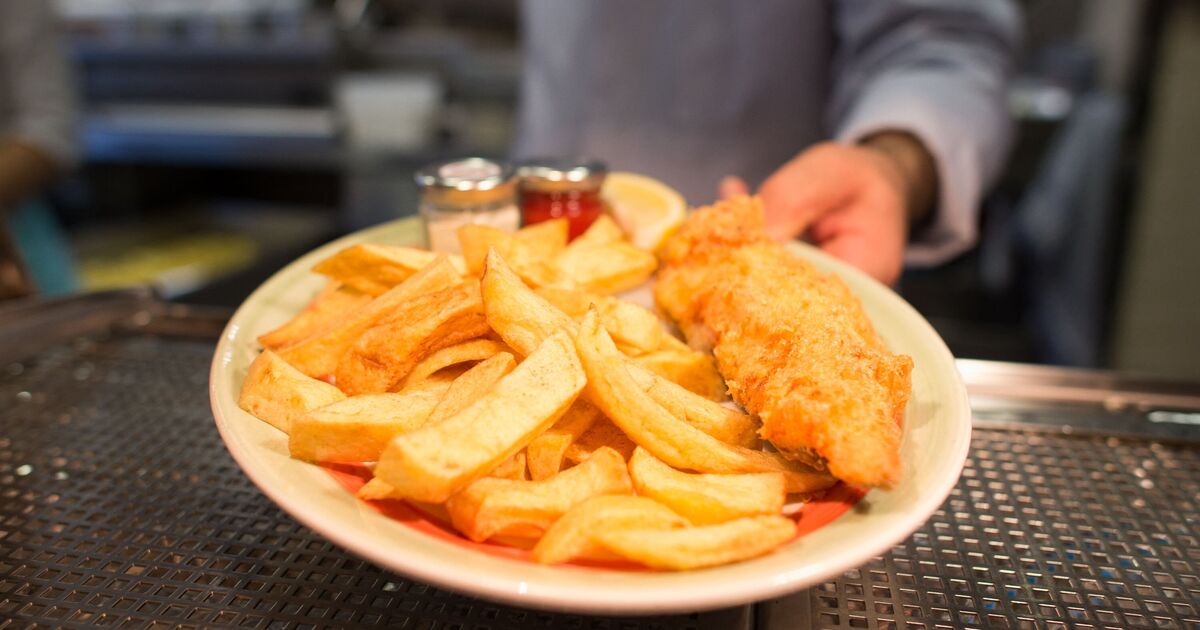
If the crisis continues, the price of fish will rise, experts warn (Image: AFP via Getty Images)
The cost of fish and chips is set to soar as British fishermen get battered by rising diesel prices. The fishing fleet at Britain’s biggest fishing port, Brixham, Devon, has been pictured moored up as the Gulf crisis continues. Andrew McLeod, who fishes out of Brixham, said six weeks ago it would have been £10,000 to £11,000 to fill his boat for a week at sea, whereas now his last fuel bill was £20,500.
Mr McLeod said: “Six weeks ago it was 55p a litre for red diesel, last week it was £1.05. That’s an awful lot of fish you have to catch just to tread water and not make a wage.” He added that if the cost of diesel continued to rise or remained at the current price an awful lot of boats will stop fishing and have an early refit.
He said this would have a huge knock-on effect to everyone involved in the industry from hauliers to boat suppliers. Fisherman Brian Tapper added higher coasts would mean higher fish prices.
He said: “The fuel increase will cost us on average an extra £500 a week on my crabber and over a £1,000 a week on my scalloper.
READ MORE: Fish and chip shops have been keeping something hidden about vinegar
READ MORE: I tried UK’s best fish and chips in pretty village to see if it deserves title
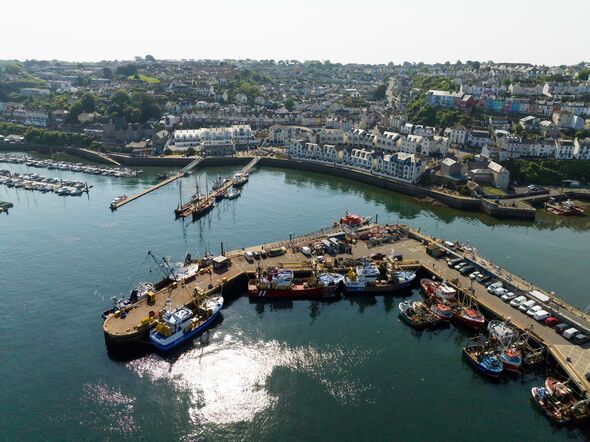
Brixham is the UK’s largest fishing port (Image: Getty)
“It’s very fine line at the moment.
“If it goes another up by another 15p a litre we will be tying the boats up.
“There’s nothing we can do to save fuel other than not go out.
“The engines work regardless of what we catch or price of fuel so only way to combat it is not go at all.”
And he added that if the crisis continued the price of fish will rise as costs would be passed onto customers.
Barry Young from the Brixham Trawler Agents said the cost of fuel was astronomical which was leading to some fishermen “not wanting to go to sea because they’re not catching enough fish to cover the fuel”.
He added that some of those who were continuing to fish were trying to find ways they can tow with the tide rather than against the tide to burn less fuel on a daily trip.
Juliette Hatchman of the South Western Fish Producers Organisation said: “The current fuel crisis is pushing parts of our fleet to the point where going to sea simply isn’t viable.
“When already high operating costs are compounded by fuel prices that outstrip the value of the catch, vessels have no choice but to tie up.

Juliette Hatchman, Chief Executive of the South Western Fish Producers Organisation (Image: Juliette Hatchman)
“And when boats stop fishing, the impact is immediate and widespread – markets, processors, transport operators and entire coastal communities feel the strain.
“Fishing is uniquely vulnerable to global fuel volatility.
“As a pure price‑taking industry, fishermen have no ability to pass rising costs on to the market.
“The widening gap between soaring fuel costs and market prices is now making operations unsustainable even for well‑run vessels.
“That’s why we’re requesting the Government introduce a temporary, targeted stabilisation measure to prevent avoidable tie‑ups and safeguard the coastal communities and supply chains that depend on our fleet.”
Chris Ranford, from the Cornish Fish Producers’ Organisation, said the fishing industry does not have the ability to reflect the increased fuel prices to its buyers or consumers because most fish and shellfish was sold at auction meaning the prices were “dictated by the buyer and demand”.
“We don’t set the price,” he said.
“There’s a real squeeze on profit margins for all parts of the industry now and there’s obviously a tipping point for that which we’re very much close to.
“Obviously we’re in a extreme situation and I think some of our towed geared vessels and the offshore ones are more than £1,000 extra per day just for basic running costs to get to sea and do their job.”
The Department for Environment, Food and Rural Affairs has said it was taking the situation “very seriously” and it was undertaking detailed work to assess the food sector’s exposure to rising fuel prices.