
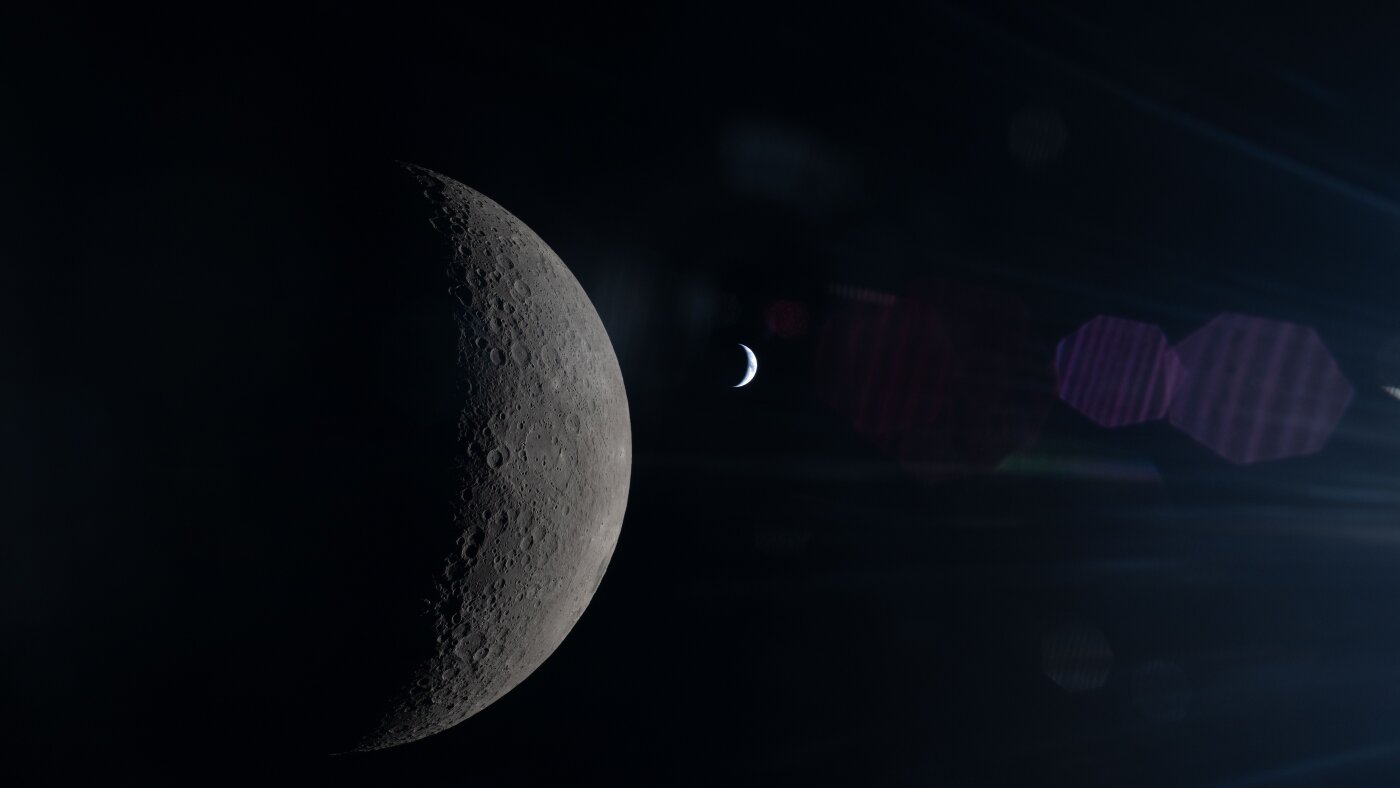
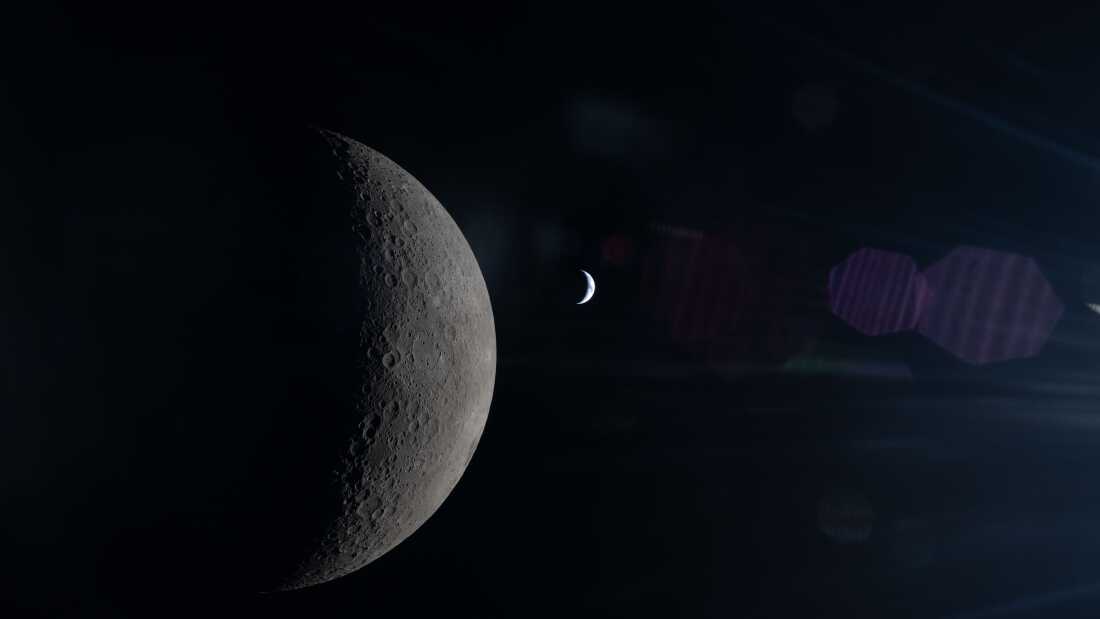
This photo, taken during Artemis II’s lunar flyby on April 6, 2026, shows the Earth in the background and its closest neighbor, the Moon, in the foreground. But where did that neighbor come from… and how do scientists know?
NASA
hide caption
toggle caption
NASA
Earth didn’t always have a moon. In the beginning of the solar system, when the planets were still forming, something happened that would change Earth’s night sky forever: The Moon was created! How did it happen? This episode, co-host Regina G. Barber searches for answers with planetary scientists. With co-host Emily Kwong, they discuss how the moon was likely made, how scientists know and what that might mean for where Earth’s water came from.
Check out Regina’s reporting on hydrothermal vents.
Interested in more planetary science? Email us your question at shortwave@npr.org.
Listen to every episode of Short Wave sponsor-free and support our work at NPR by signing up for Short Wave+ at plus.npr.org/shortwave.
Listen to Short Wave on Spotify and Apple Podcasts.
This episode was produced by Hannah Chinn and Berly McCoy. It was edited by Rebecca Ramirez. Tyler Jones checked the facts. The audio engineer was Kwesi Lee.