
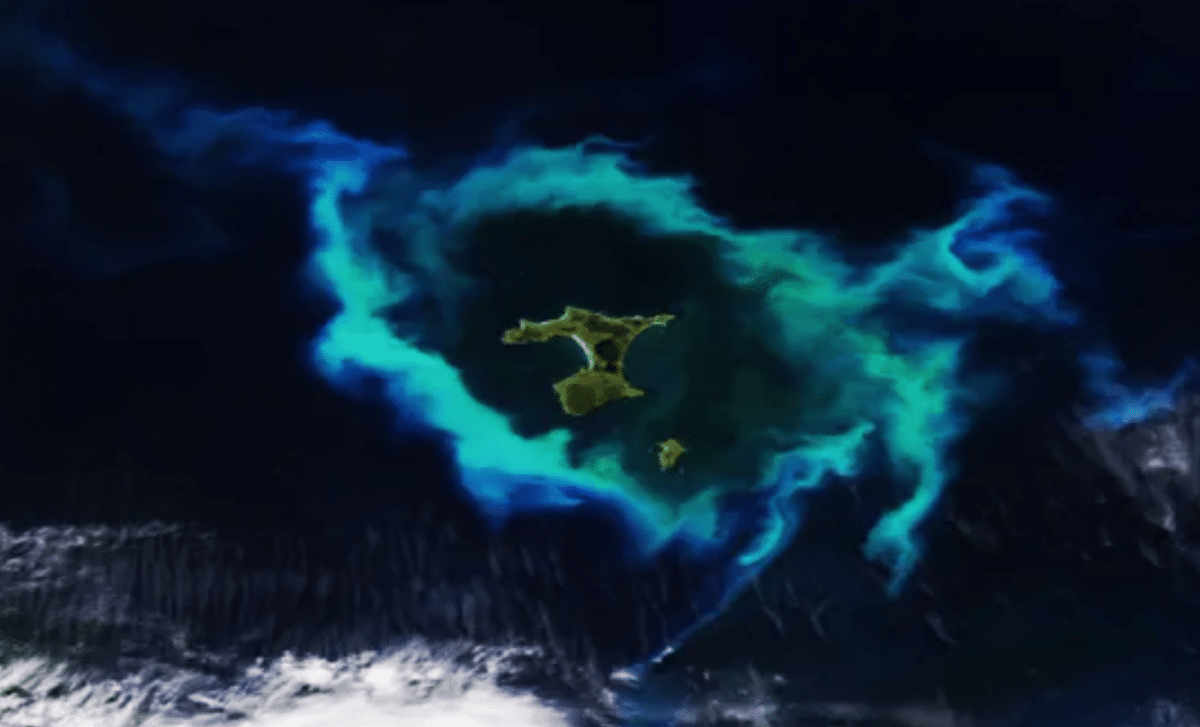
NASA’s Earth Observatory, a vibrant ring of glowing plankton has been discovered encircling the remote Chatham Islands of New Zealand. This dazzling natural phenomenon, visible from space, is not only a breathtaking spectacle but also a haunting indicator of a deeper, deadly mystery lurking beneath the waves. The striking display is linked to a dangerous underwater plateau that has been responsible for some of the deadliest whale strandings in the region’s history. As science continues to unveil the complexities of our planet’s ecosystems, this discovery reveals how interconnected natural structures can have both stunning and tragic effects on marine life.
The Mysterious Chatham Rise and Its Impact on Marine Life
The Chatham Islands, located in the South Pacific Ocean, are home to a dramatic natural structure known as the Chatham Rise. This underwater plateau extends hundreds of miles from New Zealand’s South Island and serves as a funnel for cold, nutrient-rich waters. During the warmer months, seasonal currents mix with these nutrients, creating an environment that is highly favorable for plankton blooms. The result is a remarkable display of nature that can be seen from space, a bright ring of phytoplankton surrounding the islands, glowing with hues of blue and green.
While this phenomenon might seem like a symbol of marine prosperity, the hidden consequences of the Chatham Rise are far more sinister. The same underwater structure that supports such abundant plankton growth also contributes to the tragic disorientation and stranding of large marine mammals, including whales and dolphins. These creatures, often drawn to the nutrient-rich waters for feeding, can become lost or trapped in the shallow waters surrounding the islands, leading to devastating strandings.
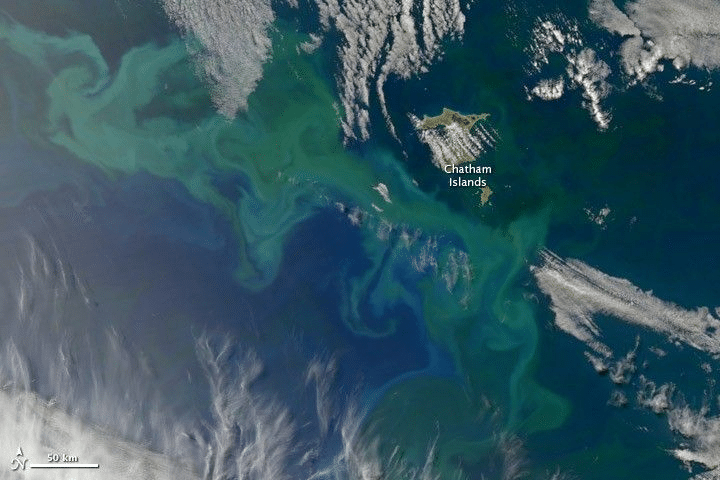 Phytoplankton bloom swirls around the Chatham Islands. Credit: NASA
NASA’s Earth Observatory Captures the Plankton Bloom
The glowing plankton ring was captured on January 10, 2026, by NASA’s NOAA-20 satellite, using a special near-infrared filter. This advanced imaging technology provided a vivid view of the plankton bloom, which was large enough to be seen from space. The plankton, predominantly coccolithophores, tiny, photosynthetic microorganisms, surround themselves with calcium carbonate armor, which likely contributed to the stunning visual effect observed by the satellite.
NASA’s Earth Observatory, known for its precision in tracking environmental changes, reported that this bloom is one of the largest recorded in recent decades. This impressive bloom showcases the immense power of the ocean’s ecosystems, yet it also highlights the delicate balance required for these environments to thrive without causing unintended harm to other species.
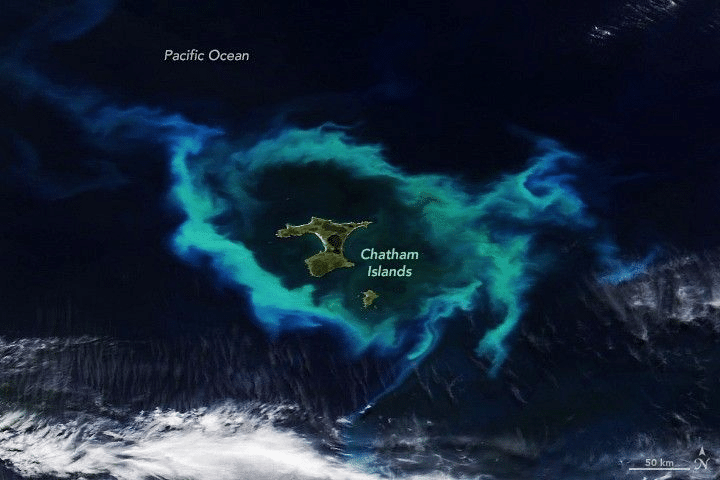 Credit: NASA’s Earth Observatory
Whale Strandings and the Chatham Rise
While the plankton bloom is a sign of ecological vitality, it is also intricately tied to a darker reality: the frequent whale strandings on the Chatham Islands. Pilot whales, in particular, are highly social and often travel in large pods. However, their reliance on group behavior can become fatal when one individual becomes disoriented, pulling the entire pod into danger. This phenomenon is frequently exacerbated by the shallow waters around the Chatham Islands, where the whales can become trapped during low tide.
Over the years, several major whale stranding events have occurred on the Chatham Islands. One of the most devastating happened in October 2022, when nearly 500 pilot whales washed ashore. Sadly, these creatures were euthanized after stranding, underscoring the tragic link between the underwater topography and the marine mammals’ fate. The Chatham Islands have also been home to the largest recorded whale stranding event in history, when over 1,000 pilot whales perished in 1918.
The Role of Phytoplankton in Marine Biodiversity
Despite the negative impact on cetaceans, the Chatham Islands and their surrounding waters are a hotspot for marine biodiversity. The plankton blooms serve as the base of the ocean’s food web, supporting a wide array of marine life, including seabirds, seals, penguins, and commercially important fish species such as cod and lobsters. These plankton are an essential food source for various species of fish, and in turn, for the animals that feed on them, from seabirds to marine mammals.
However, as the plankton blooms attract more and more marine life to the area, they can also unintentionally increase the risk of strandings. The region’s biodiversity is a double-edged sword: a source of life for many species, but also a tragic reminder of how delicate marine ecosystems can be when impacted by natural structures like the Chatham Rise.