
Sign up for our newsletter and get our latest content in your inbox.
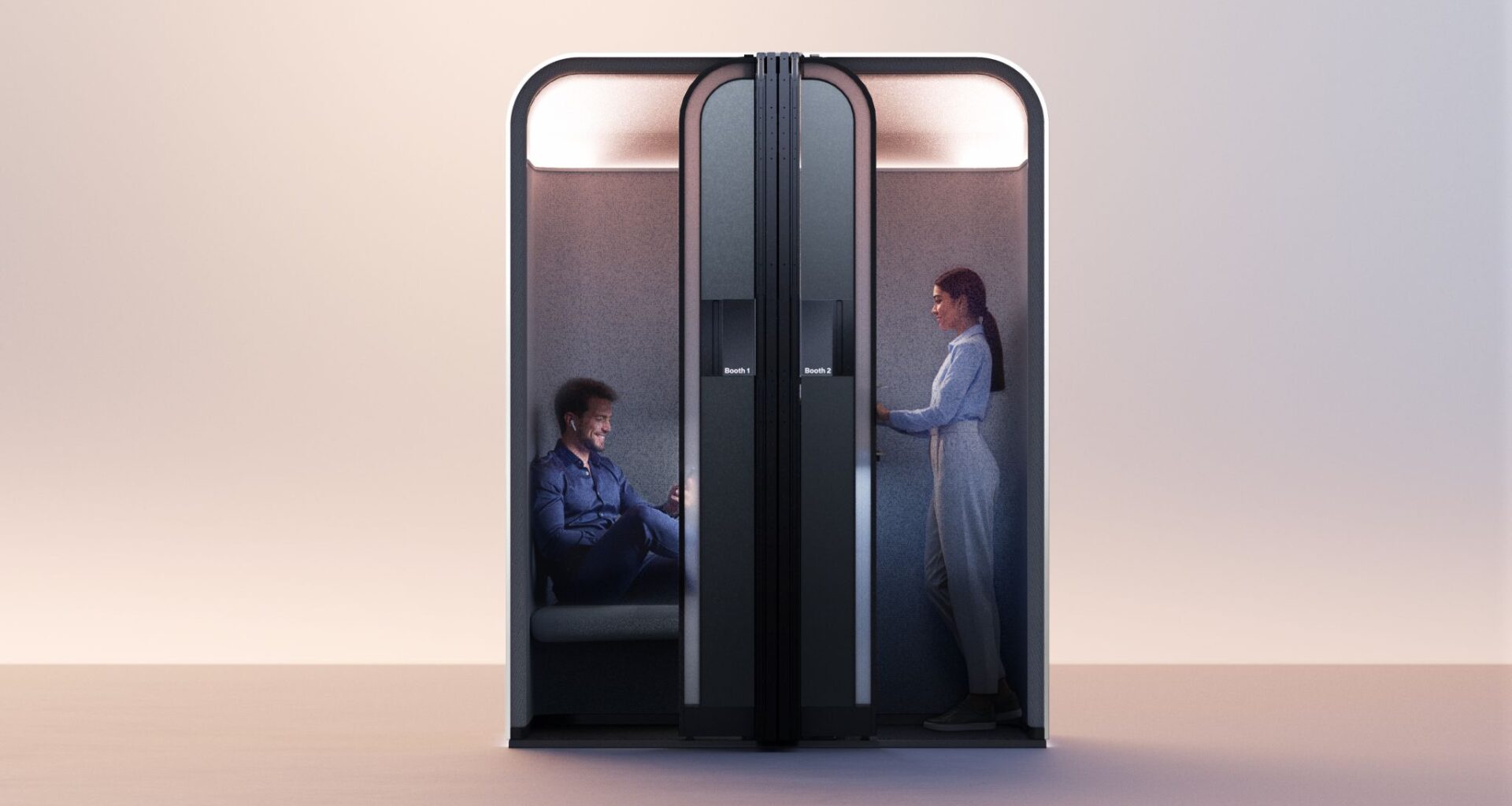
At this year’s Aircraft Interiors Expo 2026, Boeing quietly tucked one of its most intriguing future cabin concepts in a corner of its booth: a compact, enclosed work-and-stretch pod designed to give economy passengers a private space to escape their seats.
The concept was spotted on the show floor and briefly featured in a social media post by travel writer Arda İsmail Yalçın Say, while Boeing itself shared a short glimpse of the pod in an Instagram reel from the event.
The cabin concept reflects Boeing’s thinking on the potential of unused cabin space to improve the passenger experience on long-haul flights.
While it’s only an eye-catching display model for now, the pod might also serve as a phone booth for passengers who want to make voice or video calls, enabled by high-speed LEO satellite WiFi, without disturbing others.
Boeing explores private cabin pod concept for working passengers
Boeing’s pod concept explores new ways to use limited and valuable cabin real estate. It would fit in areas of the aircraft that are not suited for seats or functional zones, such as galleys and lavatories.
In the AIX mock-up, Boeing presents a small booth, complete with sound dampeners and privacy doors, and large enough for two passengers to stand upright or sit down.
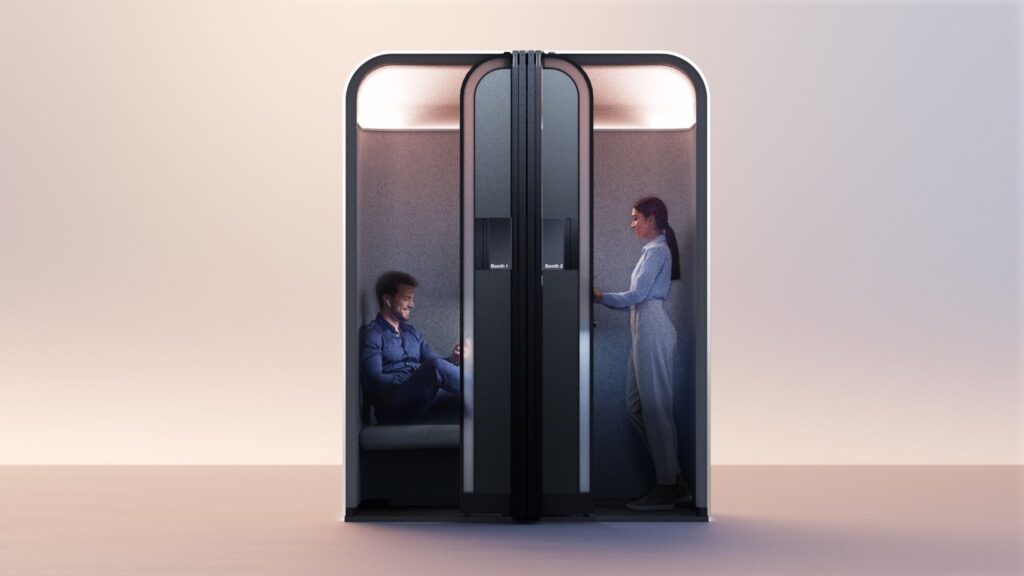 Photo: Boeing
Images that Boeing shared during AIX show one passenger standing inside the pod and another seated, as well as a passenger standing with a laptop, working.
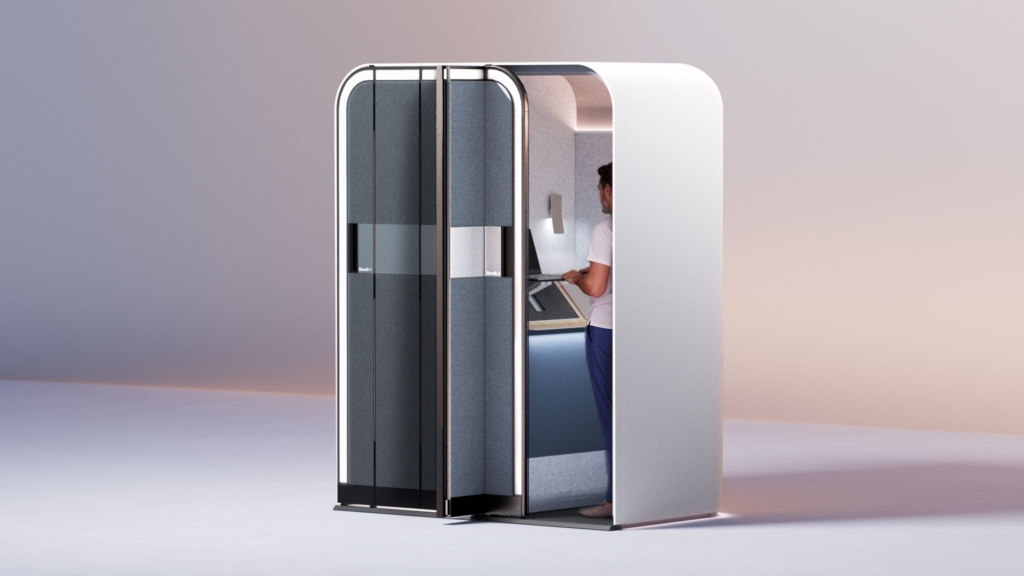
The booth could enhance productivity compared to trying to work in an economy seat. It offers a flat work surface to support a laptop for those who need a quiet space to catch up on email or perhaps want to participate in a video conference using in-flight WiFi.
The space also works as a wellness environment where passengers can stretch their legs, refocus and enjoy some quiet time.
LEO satellite WiFi could enable in-flight calls on commercial aircraft
As more airlines sign up for high-speed, low-latency LEO satellite in-flight connectivity, the technical limitations for in-flight calls are overcome. Since LEO satellites don’t interfere with ground mobile networks, regulatory restrictions that have prohibited in-flight telephony no longer apply.
As part of IAG’s fleet-wide contract with Starlink, Aer Lingus and British Airways have recently turned on their high-speed WiFi and will allow passengers to make voice and video calls on the service.
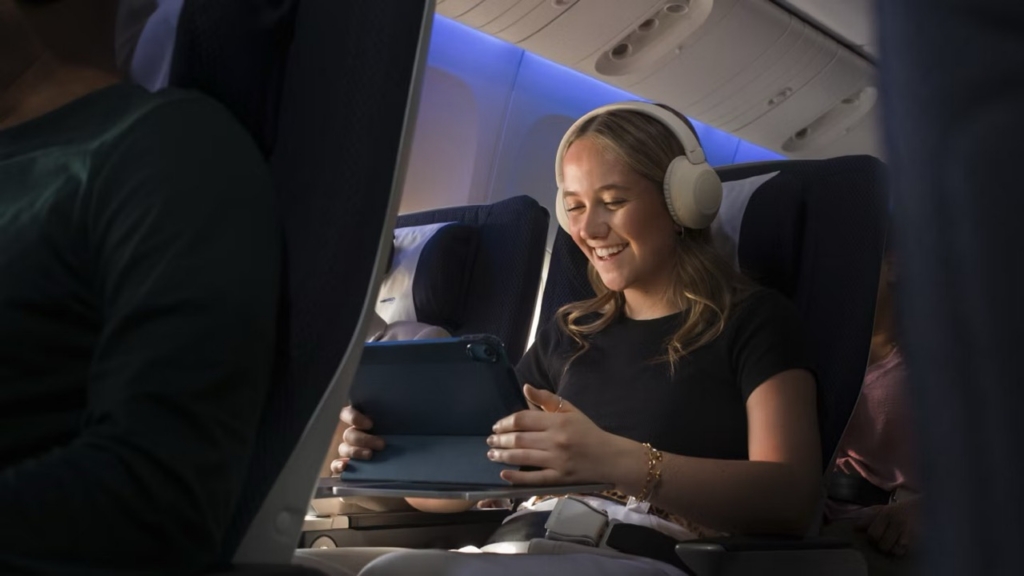 Photo: British Airways
Both airlines have asked passengers to be courteous, use headphones for calls and keep the noise down. However, for economy passengers in particular, having the person next to you on a 30-minute conference call mid-flight might prove annoying.
Installing a privacy pod that serves as an old-school phone booth would be an elegant solution, and Boeing’s concept could accommodate up to two callers at once.
Future aircraft cabin design could include flexible work and wellness spaces
There’s no indication yet that airlines will adopt the Boeing pod, but since they are offering free high-speed connectivity, airlines might even make a business case for passengers to hire the “flying phone booth” for a set time limit at a modest fee.
Air New Zealand is renting out its Skynest pods to give economy-class passengers better sleeping conditions on long-haul flights, and in-flight productivity (which includes telephony) is also valuable to economy passengers.
Airlines will need to embrace flexible cabin design in the decades ahead, with more passengers flying and more in-flight activities possible than ever before. Passengers want more freedom to move about the cabin, and airlines will benefit from cabin layouts that include dedicated zones where passengers can leave their seats for wellness, productivity and sleep.
Boeing’s little pod could be an early glimpse of a future quiet cabin. The pod is not quite a Tardis (it’s definitely not bigger on the inside), but it could still travel back in time, borrow from the popular phone booths of the 1950s-1970s and significantly improve flying.
Featured Image: Boeing
Sign up for our newsletter and get our latest content in your
inbox.