
Analysis: Research shows how wildlife and soil ecosystems respond to environmental disasters, rewilding and the absence of human activity
By Alexandre de Menezes, University of Galway
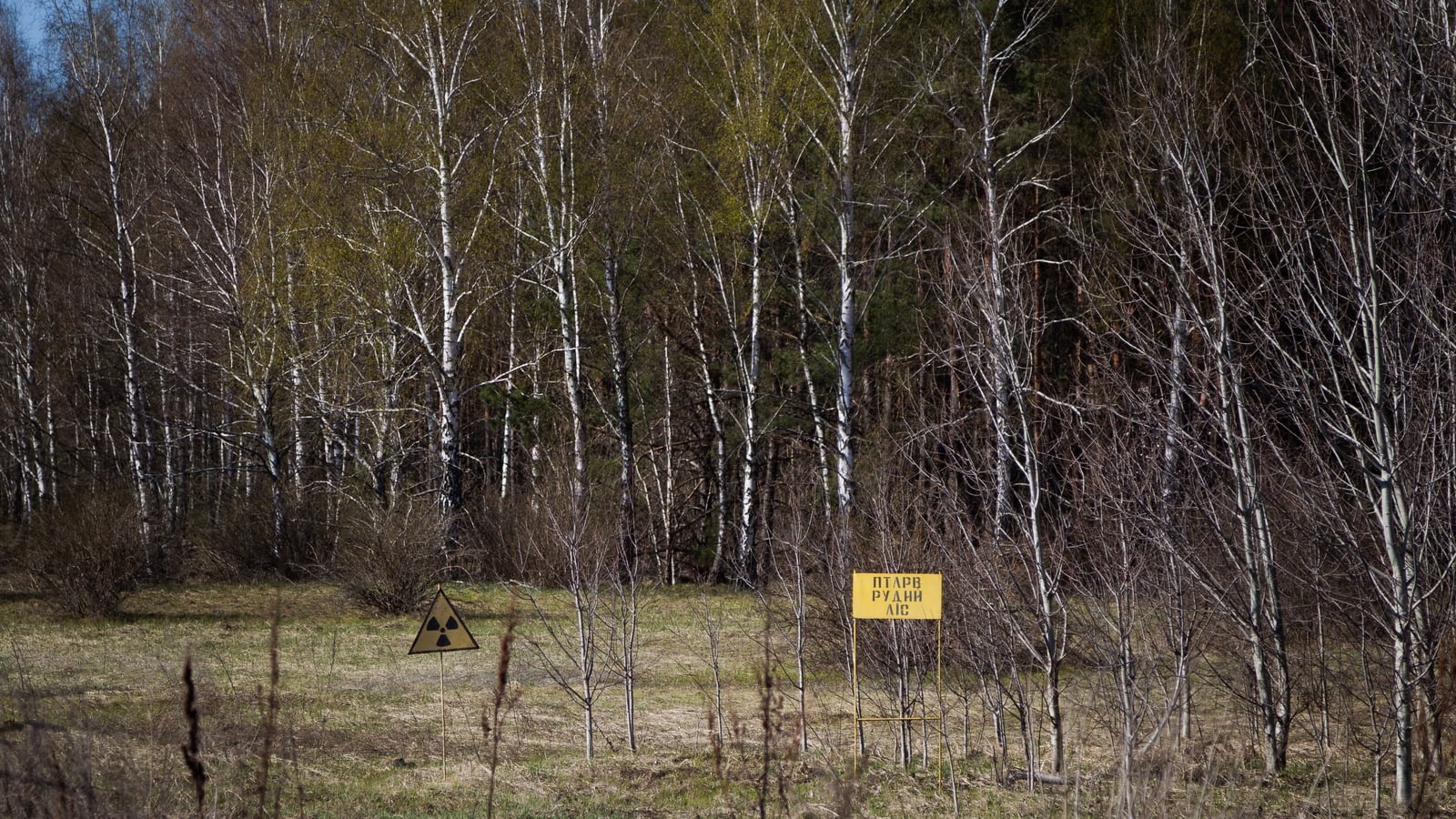
40 years ago this month, the explosion of Reactor 4 of the Chornobyl power plant lead to the largest accidental release of radioactivity to the environment to date, with an area nearly two times the size of the island of Ireland being contaminated with high radiation levels. The radiation contamination led to the abandonment of an area of 4,800 km2 and to the creation of the Chornobyl Exclusion Zone (CEZ), which is the world’s most anthropogenically contaminated terrestrial environment.
But the isolation of the CEZ from human activity means it has become an exceptional example of rewilding, with animals such as bears and wolves making a comeback in the area. It offers an unparalleled opportunity to observe and study how ecosystems and animals cope and even thrive in high-radiation environments.
We need your consent to load this rte-player contentWe use rte-player to manage extra content that can set cookies on your device and collect data about your activity. Please review their details and accept them to load the content.Manage Preferences
From RTÉ Archives, Carole Coleman visits the Chornobyl Exclusion Zone for RTÉ News in 2000
The 40 years since the explosion have seen a large body of research being generated from the CEZ. While some research shows that radiation had a significant impact on local plants and animals, other research points to nature in the exclusion zone being largely resilient to the still very high radiation levels in some CEZ areas.
For example, recent studies using motion-activated cameras found that mammal species detection was not related to radiation levels. In another study, tree frogs in the exclusion zone were found to have darker dorsal skin compared to frogs from outside of the CEZ, which may be an adaptation to the high radiation levels, since melanin is believed to counteract the oxidative stress caused by ionising radiation 4.
But what about the invisible members of the ecosystem? Since 1986, the soil microbes in the CEZ have been exposed to high levels of radiation, creating a unique opportunity to investigate how natural microbial communities adapt to radiation.
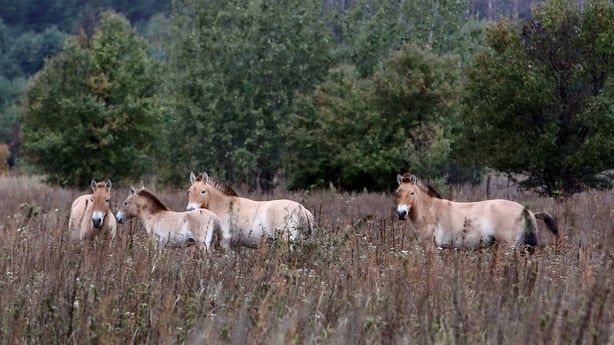
Przewalski’s horses inside the Chornobyl Exclusion Zone in Ukraine. Photo: Getty Images
This is where my research came in. I am interested in understanding how microbial communities carry out ecological processes that are essential for life, such as the cycling of key soil nutrients, carbon sequestration, soil health and the breakdown of pollutants. These processes can be called ecosystem services, because without them, life on the planet would come to a halt.
Imagine, for instance, what would happen if there were no microbes breaking down organic matter? Leaves, twigs, tree trunks and other types of waste would accumulate and choke every ecosystem! And there are many other ecosystem services that rely on microbes in just about every ecosystem we can think of. In Chornobyl, we can see how resilient microbes are to chronic radiation stress and discover if radiation stress makes the microbes more sensitive to further disturbances, such as droughts and forest fires.
In 2017, I had the opportunity to join a team lead by the late Prof Nick Beresford and collaborators study how wildfires are interacting with radiation contamination in the CEZ soil microbiome, and the results were published in our 2024 study. What we found was that the soil microbiome in the highly radioactive areas of the CEZ appears to be largely resilient to radiation. Even though the radiation levels in certain local soils can be more than 10 times higher than the levels that significantly impact many lab bacteria, the CEZ soil microbiomes do not seem to be affected to a great extent.
From Salford University, report on the study on radiation exposure and effects undertaken within the Chernobyl Exclusion Zone
To my colleagues and me, this meant that selected microbes had good capability to deal with stressful conditions in general, inclding the harsh soil conditions in the CEZ with acidic and often dry soils with low organic matter. Importantly, we found no links between levels of soil radiation and the effect of fire on soil microbial diversity. It appears that radiation did not “weaken” the soil microbiome as far as resilience to forest fire is concerned. Our results also showed the importance for scientists to test their hypotheses by going to the field, where microbes deal with conditions that are very different from laboratory experiments.
The Chornobyl region remains a fascinating area to study how ecosystems respond to environmental disasters. Our results made me think about how microbes, with their fast growth rates and adaptability, may function as a buffer to ecological disturbances, providing essential ecosystem services even when the environment is substantially degraded.
The lessons the CEZ offers about ecological resilience can help us better understand and prepare for environmental issues closer to home
One question that remains to be tested in the CEZ is how the microorganisms living within plants and their roots can help them endure radiation stress. Unlike animals, plants cannot move, and they must adapt to stress to survive. Soil and plant associated microbes are known to play important roles in plant health, but how they support the plant community in the CEZ is unknown.
Unfortunately, the war in Ukraine has prevented my research in the CEZ from continuing. The ongoing war and drone strikes near the reactor raise a serious concern, especially for the local communities. With current tensions, research in the area has become very difficult. These days, my lab is investigating microbial processes related to soil greenhouse gas emissions and antimicrobial resistance here in Ireland. While we wait for more peaceful days in the CEZ, the lessons it offers about ecological resilience can help us better understand and prepare for environmental issues closer to home.
Follow RTÉ Brainstorm on WhatsApp and Instagram for more stories and updates
Dr Alexandre de Menezes is a lecturer in soil microbiology at the University of Galway.
The views expressed here are those of the author and do not represent or reflect the views of RTÉ