
President Catherine Connolly has signed the International Protection Bill and will not refer it to the Supreme Court.
It follows a three-hour meeting of the Council of State which was convened by the President on Monday to discuss the constitutionality of the legislation.
The Bill is tied to the EU Migration and Asylum Pact which will come into force across the EU in June and which the Government signed up to in 2024.
Minister for Justice Jim O’Callaghan had described the bill as the most signficiant reform of asylum laws in the history of the State.
It will standardise asylum decisions and time limits in which they are made. It will also see greater regulations around screening, tracking and reception conditions.
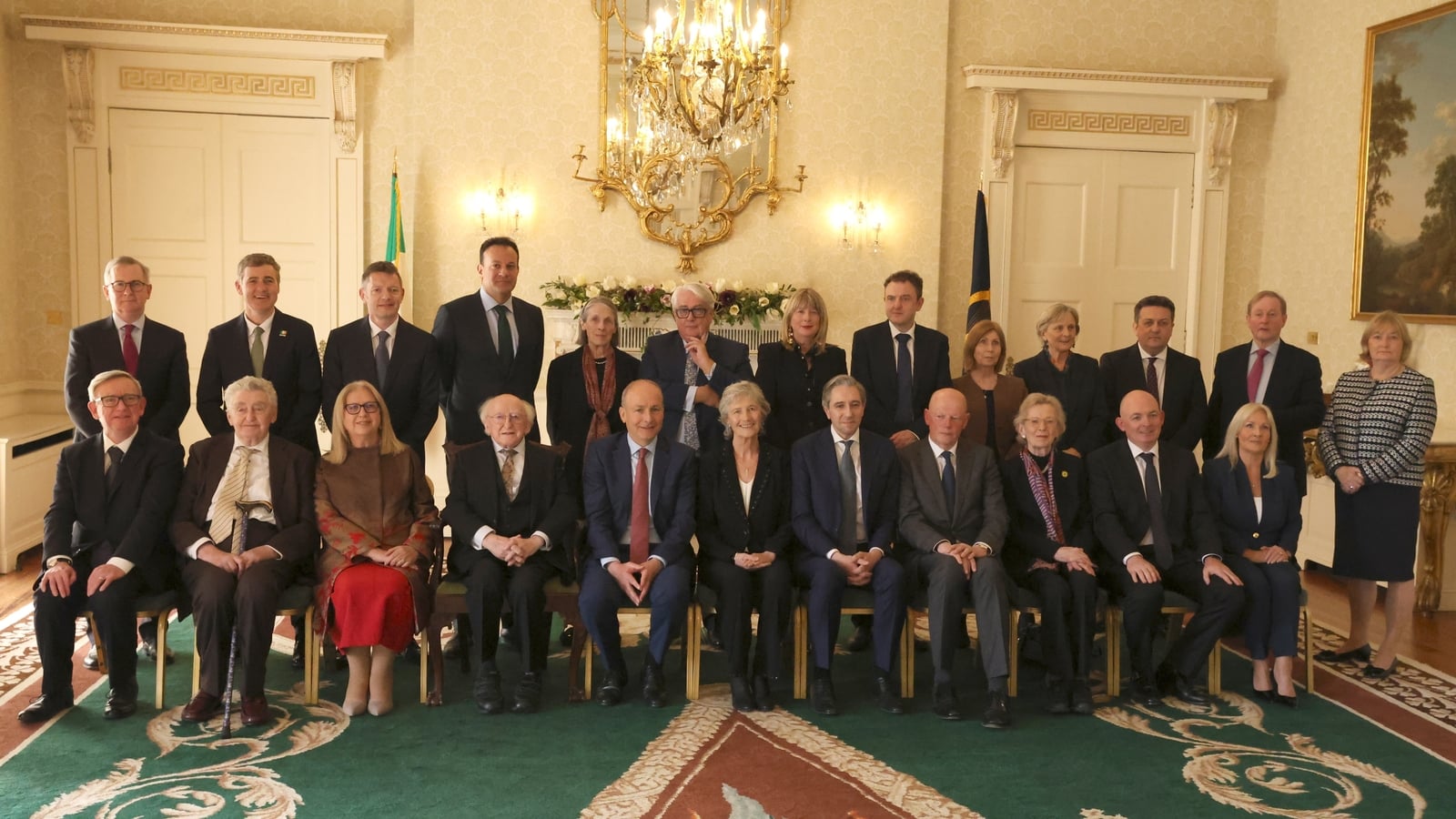
The Council of State is made up of current and former presidents, taoisigh, tánaistí and chief justices, as well as other ex-officio members and the President’s seven appointees.
Former presidents Mary Robinson, Mary McAleese and Michael D Higgins, as well as former taoisigh Enda Kenny and Leo Varadkar were among those in attendance at the meeting on Monday.
It marked the first meeting of the Council of State under Catherine Connolly’s presidency.
Former president Michael D Higgins invoked the power four times during his 14-year presidency.
‘Concerns that led to the President calling a meeting of the Council of State remain’
A statement issued by Áras an Uachtarán this afternoon said President Connolly followed the passage of this bill through both Houses of the Oireachtas and listened carefully to the debate and the issues raised.
It said she also considered the views expressed by the members of the Council of State on Monday regarding the constitutionality of the bill, and in relation to specific sections.
“The concerns that led to the President calling a meeting of the Council of State remain.
“However, when considering any particular piece of legislation, the President must be cognisant of Article 34.3 of Bunreacht na hÉireann, which provides that no court can question the validity of any legislation deemed constitutional following a referral by the President to the Supreme Court.
“In this context, the capacity of a putative litigant to take a case on the basis of facts rather than abstract grounds has to be taken into account,” the statement said.
It added that the President’s decision to sign the legislation “does not close off any actions sought by any person to challenge the provisions of the bill in the future”.
Read more
President convenes Council of State meeting on International Protection Bill
President to consider council’s views on new asylum laws