
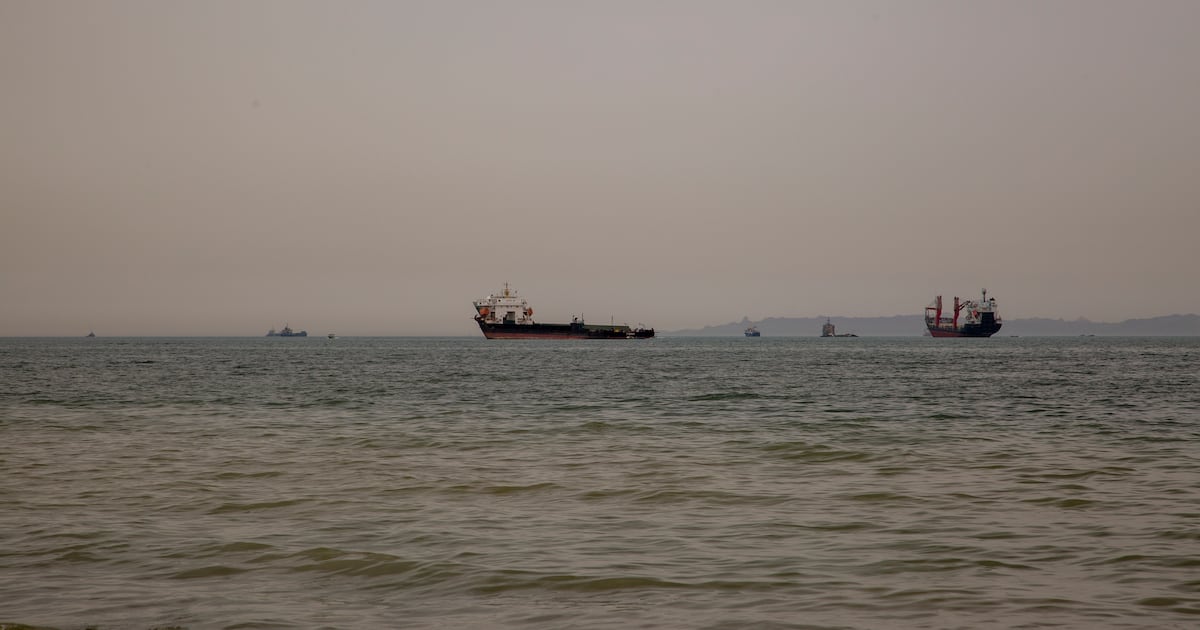
Iran seized two ships in the Strait of Hormuz on Wednesday, tightening its grip on the strategic waterway amid reports that peace talks could begin on Friday.
In a statement, Iran’s Islamic Revolutionary Guard Corps said the ships seized, which they identified as the Panama-flagged MSC Francesca and the Liberia-flagged Epaminodes, were detained for “operating without the required authorisation and for manipulating navigation systems” and were transferred to Iranian shores.
The Greek-operated Epaminondas reported being fired upon off Oman. It said it had sustained damage to its bridge and that no one was hurt in the incident.
The ship seizures represent a serious escalation in the Strait of Hormuz, where a battle for control of the vital waterway has emerged as a major stumbling block in negotiations to end the war.
Following US president Donald Trump’s decision on Tuesday to extend the ceasefire, a second round of US-Iran talks could take place as early as Friday, according Trump and Pakistani officials, cited by the New York Post. Sources in Islamabad on Wednesday spoke about the possibility of discussions within “36 to 72 hours”.
Trump said Tuesday’s extension of the truce was to allow the Iranian regime more time to create a “unified proposal” to end the war. A US source on Wednesday said Trump had not set a timeline for the extension.
[ Trump’s ‘one-man WhatsApp group’ diplomacy derailing Iran peace talksOpens in new window ]
Also on Wednesday night, US navy secretary John Phelan was fired, a source familiar with the matter said, in another wartime shake-up at the Pentagon. It comes just weeks after defence secretary Pete Hegseth ousted the US army’s top general.
The Pentagon said in a statement that Phelan was “departing the administration, effective immediately”, without providing further details. Reuters was the first to report Phelan was fired.
Trump has maintained a US navy blockade of Iran’s trade by sea. Iran has said that as long as the blockade continues it will not lift its closure of the strait, which has caused a global energy crisis.
United Nations secretary general António Guterres described the ceasefire extension as an important step towards de-escalation that will create “critical space for diplomacy and confidence-building between Iran and the United States”.
Iran’s foreign ministry spokesman Esmail Baghaei said Tehran is “closely monitoring developments” and will take “necessary and appropriate measures to safeguard Iran’s national interests and security”.
Iran’s nuclear programme will be central to talks. Washington wants Iran to give up highly enriched uranium and forgo further enrichment to prevent it from being able to develop a nuclear weapon. Iran, which says its nuclear programme is peaceful, wants an end to the war, the lifting of sanctions, reparations for damage and recognition of its control over the strait.
Elsewhere in the region, Israeli strikes on southern Lebanon on Wednesday killed Lebanese journalist Amal Khalil and wounded a photographer accompanying her, according to a senior Lebanese military official and Khalil’s employer, the Al-Akhbar newspaper.
There was no immediate comment from the Israeli military on Khalil’s death. Earlier, the Israeli military said in a statement it had received reports that two journalists were injured as a result of its strikes.
The death of Khalil (43) brought the death toll on Wednesday to five people.
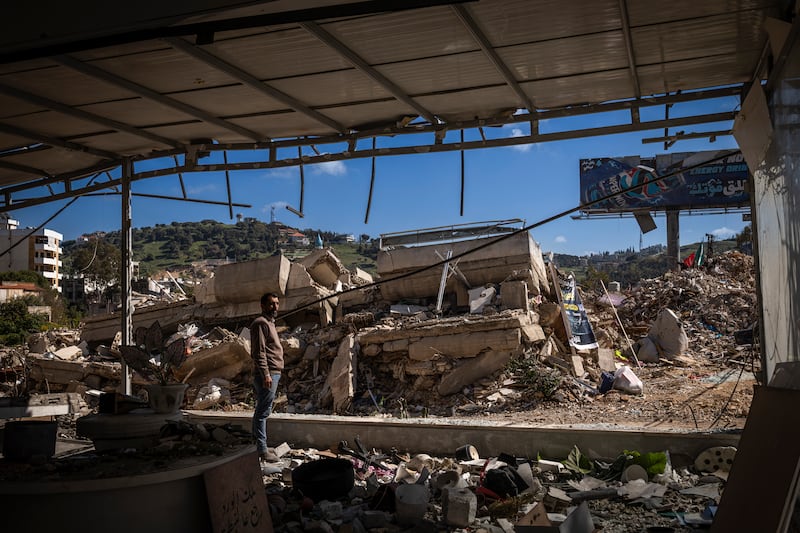 Abbas Haj Ali at his flower shop that was damaged before the ceasefire by shelling in Nabatieh, Lebanon, on Wednesday. Photograph: Diego Ibarra Sánchez/The New York Times
Khalil and freelance photographer Zeinab Faraj were covering developments near the town of al-Tayri when an Israeli strike hit the vehicle in front of them. They ran into a nearby house, which was then also targeted by an Israeli strike, Lebanon’s health ministry, the senior Lebanese military official and press advocates said.
Lebanese rescuers were able to retrieve Faraj, who had suffered a head wound, according to Elsy Moufarrej, who runs the Union of Journalists in Lebanon.
When rescuers returned to help Khalil, the Israeli military dropped a sound grenade, blocking their access to the damaged building, Moufarrej and the senior military official said.
Lebanon’s prime minister Nawaf Salam said the targeting of journalists and the obstruction of relief efforts constituted “war crimes”.
A second round of talks between Israel and Lebanon is due to take place at the White House on Thursday, with US secretary of state Marco Rubio in attendance.
Lebanon has said it will ask for an extension of at least a month to the 10-day ceasefire, which expires on Sunday. Beirut is also seeking a withdrawal of Israeli troops, the return of Lebanese detainees being held in Israel and a delineation of the land border.
Hostilities between Hizbullah and Israel reignited on March 2nd, when the Lebanese group opened fire in support of Iran. More than 2,400 people have been killed in Lebanon since Israel launched an offensive in response to the attack.
The Israel Defense Forces said two militants who crossed into Israel’s self-declared security zone inside south Lebanon were shot and killed and another man was killed in an Israeli drone strike in the Bekaa valley, in the latest violations of the truce. Israel also shot down what it said was a Hizbullah drone over southern Lebanon.
French president Emmanuel Macron said on Wednesday a French soldier in the Unifil peacekeeping force, wounded in Lebanon, has died from his injuries after an attack attributed to Hizbullah. Another French soldier was killed in the incident on Saturday.
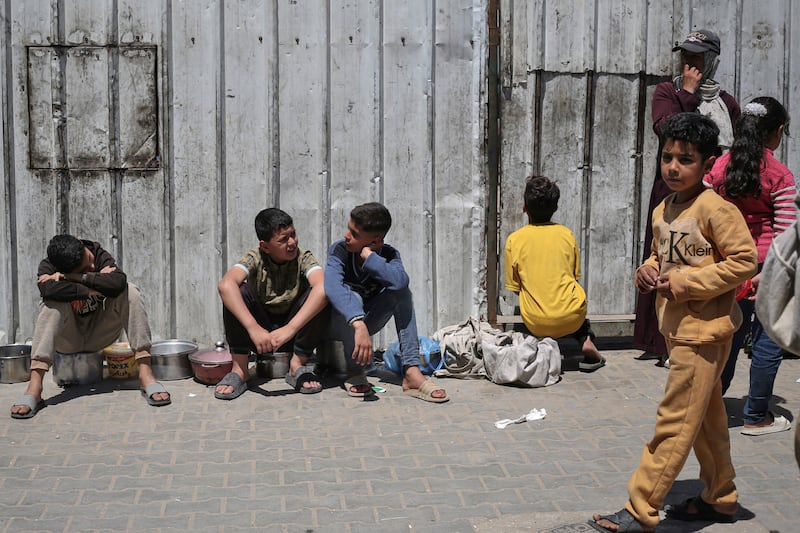 Displaced Palestinian children wait to receive food from a charity kitchen at the Nuseirat refugee camp in the central Gaza Strip on Wednesday. Photograph: Eyad Baba/AFP via Getty
Late on Wednesday night, health officials said an Israeli air strike killed five Palestinians, including three children, in the northern Gaza Strip.
Medics and civil defence officials said the five people were targeted by an Israeli strike near a mosque in Beit Lahiya, north of the enclave.
There was no immediate comment from the Israeli military.
More than 780 Palestinians have been killed since a US-brokered ceasefire deal took effect last October, according to local medics, while Israel says militants have killed four of its soldiers. Israel and Hamas have traded blame for ceasefire violations. – Additional reporting: Reuters