
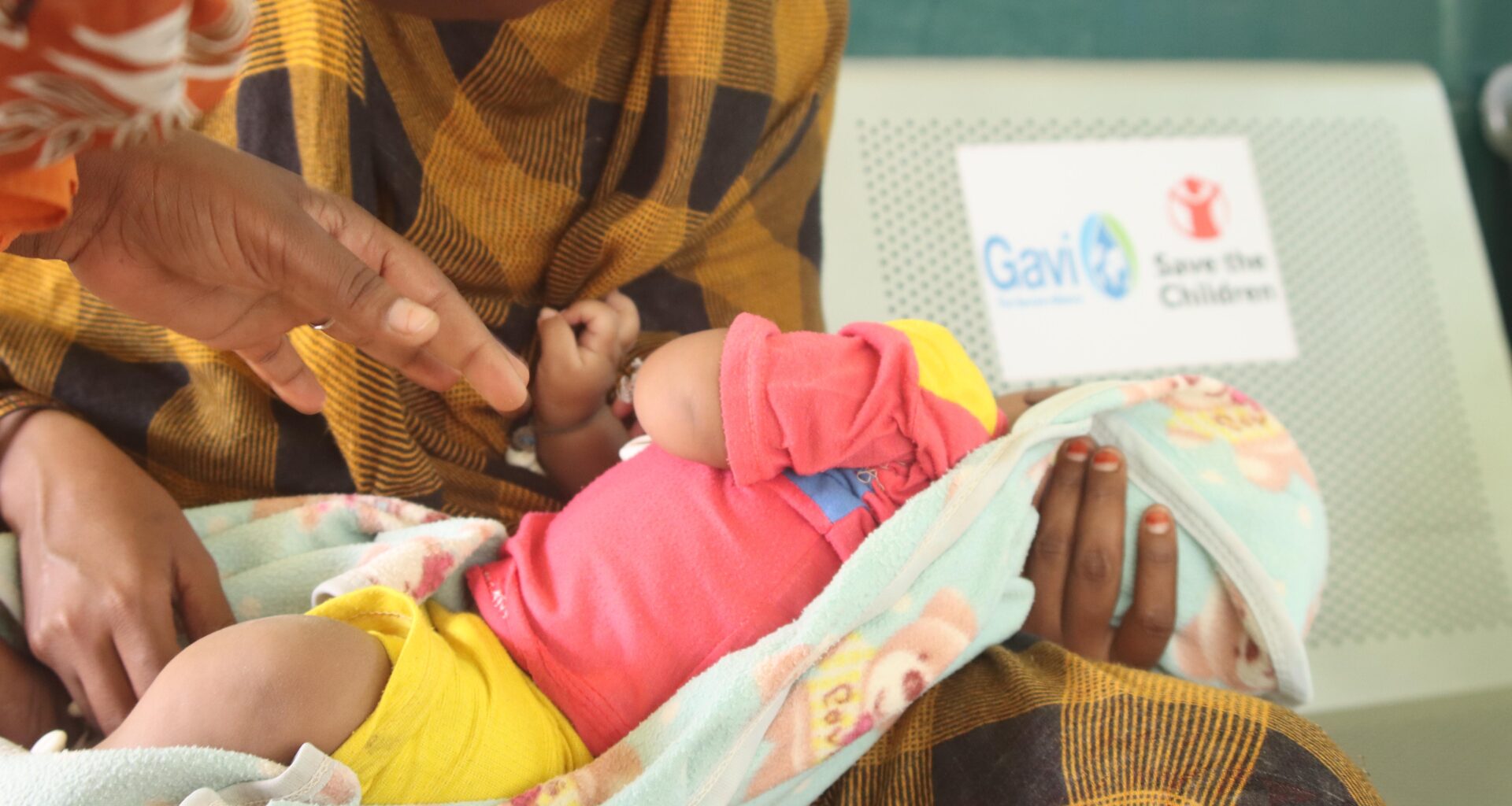
Photo: Anwar Adam/Save the Children
LONDON/GENEVA, 23 April 2026 – Cases of measles increased over 25% in conflict zones last year, with attacks on health care, aid cuts, vaccine misinformation, and disruption to health systems contributing to the worsening crisis, said Save the Children [1].
With World Immunization Week beginning this Friday, the aid agency is calling for renewed global efforts to help vaccines reach children and warns that already in 2026 more than 14,360 cases of the deadly measles virus have been confirmed across 15 countries facing conflict .[2]
Save the Children analysed World Health Organization data and found that in 2025, 18 countries in conflict recorded over 74,340 cases of measles, compared to about 57,800 in 2024 [3]. These countries, despite only representing 15% of the child population in the total number of countries reporting measles cases, accounted for 30% of global measles cases, showing how countries in conflict are disproportionately more likely to be impacted by a measles outbreak [4]. In addition, while these numbers are extremely high, the actual number of cases is estimated to be higher still due to underreporting from disrupted and destroyed health systems [5].
While two doses of a safe and highly effective vaccine provides an estimated 97% protection against measles infections, progress in immunisation rates has stalled or reversed in many countries, both conflict and non-conflict affected, amid aid cuts, vaccine misinformation, and disruption to health systems and service delivery [6]. Since it was introduced, the measles vaccine has saved millions of lives globally, including nearly 20 million in Africa alone since 2000 . [7]
In Sudan, three years of conflict have devastated the health system and disrupted vaccine and medical supply chains, fuelling repeated measles outbreaks. Reported cases quintupled between 2024 and 2025 to 7,644, with more than 1,000 additional cases confirmed in the first ten weeks of 2026 alone. [8]
In Nigeria, conflict has combined with disruptions in health services, vaccine stock outs, long-seated vaccine mistrust, and disinformation campaigns to lead to some of the highest numbers of under-vaccinated children in the world according to the UN [9] [10].
Iya Saheed*, 32, from Lagos state had refused routine childhood immunisations for her two children, aged 3 and 1, due to a deeply ingrained belief in her family that a special herbal concoction given to newborns could protect them against childhood illnesses.
After Save the Children community volunteers explained to Iya Saheed how vaccines work and addressed her concerns, she decided to vaccinate her children.
Iya Saheed said: “I should have done before what I am doing now. Had the community health worker not come to my house and taught me [about vaccines], my children could maybe have died by now.”
“I was not courageous enough to bring out my children’s immunisation card before but now, I boldly come out with it.”
World Immunization Week, which is led by the WHO and held annually during the last week of April aims to highlight the vital importance of vaccines in the fight against diseases.
Laura Cardinal, Save the Children’s senior health lead said: “We have known for decades that vaccinations are crucial for saving children’s lives, so it is deeply worrying to see that measles, a disease that is almost entirely preventable with just two doses of a safe and effective vaccine, is once again placing the lives of young children at risk.
“While measles cases are rising in many places, outbreaks in countries grappling with conflict are particularly concerning. In these countries health systems are often shattered, children’s immunity already weakened due to conditions such as malnutrition, and families are uprooted from their homes and unable to access basic health services, all of which makes children even more susceptible to diseases such as measles.
“Without lifesaving vaccines, outbreaks will continue to spread, paediatric wards will continue to fill, and children will lose their lives. We need to see urgent and sustained investment from all donors and governments to support the delivery of essential health services, especially in countries affected by conflict and crises, and concerted efforts from all Governments and partners to increase vaccine rates and protect children against infectious diseases.”
For more than 30 years, Save the Children has been a global leader in expanding equitable access to life-saving immunisation services, particularly in humanitarian, fragile, and low-coverage settings where health systems face significant constraints. We prioritize reaching zero-dose and under immunized children by working in partnership with Ministries of Health and local stakeholders.
Notes to editors
*Name changed for anonymity
[1] Save the Children compared data on the number of confirmed measles cases from the WHO dataset on Provisional Monthly Measles and Rubella Cases, which is published each month here, looking at total number of cases in 2024 (57,825 confirmed cases) and 2025 (74,343) across 18 countries in conflict, calculating the percentage increase in cases between the two years across the group of countries (28.5%). The list of countries in conflict was determined using the 2026 UN OCHA Global Humanitarian Overview (GHO), which was published in 2025 and identifies countries where current conflict is a driver of humanitarian needs. The countries with conflict reporting the most confirmed cases of measles in 2025 include: Yemen (32,448 cases), Nigeria (19,225), Sudan (7,644), Democratic Republic of the Congo (4,320) and Cameroon (4,139).
[3] See methodology note 1.
[4] There were 254,384 confirmed measles cases globally in 2025, of which 74,343 (29%) were in conflict countries. The total population of all countries reporting confirmed measles cases in 2025 is around 7.7 billion of which the population of conflict countries with confirmed measles cases is 804.7 million (10%). The total child population in measles reporting countries was 2.3 billion of which 337.8 million (15%) are in conflict-affected countries. All population data is taken from UN World Population Prospects.
[5] In November 2025, WHO estimated there were actually 11 million infections in 2024 (using modelled data), showing that estimates of actual cases are much higher than the number of cases confirmed each year due to under-reporting.
[9] https://www.gavi.org/vaccineswork/six-things-weve-learned-nigerias-efforts-reach-unimmunised
[10] WHO/UNICEF Joint Reporting Form on Immunization (JRF), % of children who received 2 doses of the measles vaccine in 2024 (latest data), https://immunizationdata.who.int