
Summary
Bambu Lab disabled OrcaSlicer’s direct cloud printing, forcing the use of the Bambu Connect bridge.
A developer forked OrcaSlicer to restore direct cloud printing, but Bambu Lab threatened legal action.
Bambu accused the fork of impersonation, auth bypass, terms violations, and reverse engineering; releases pulled.
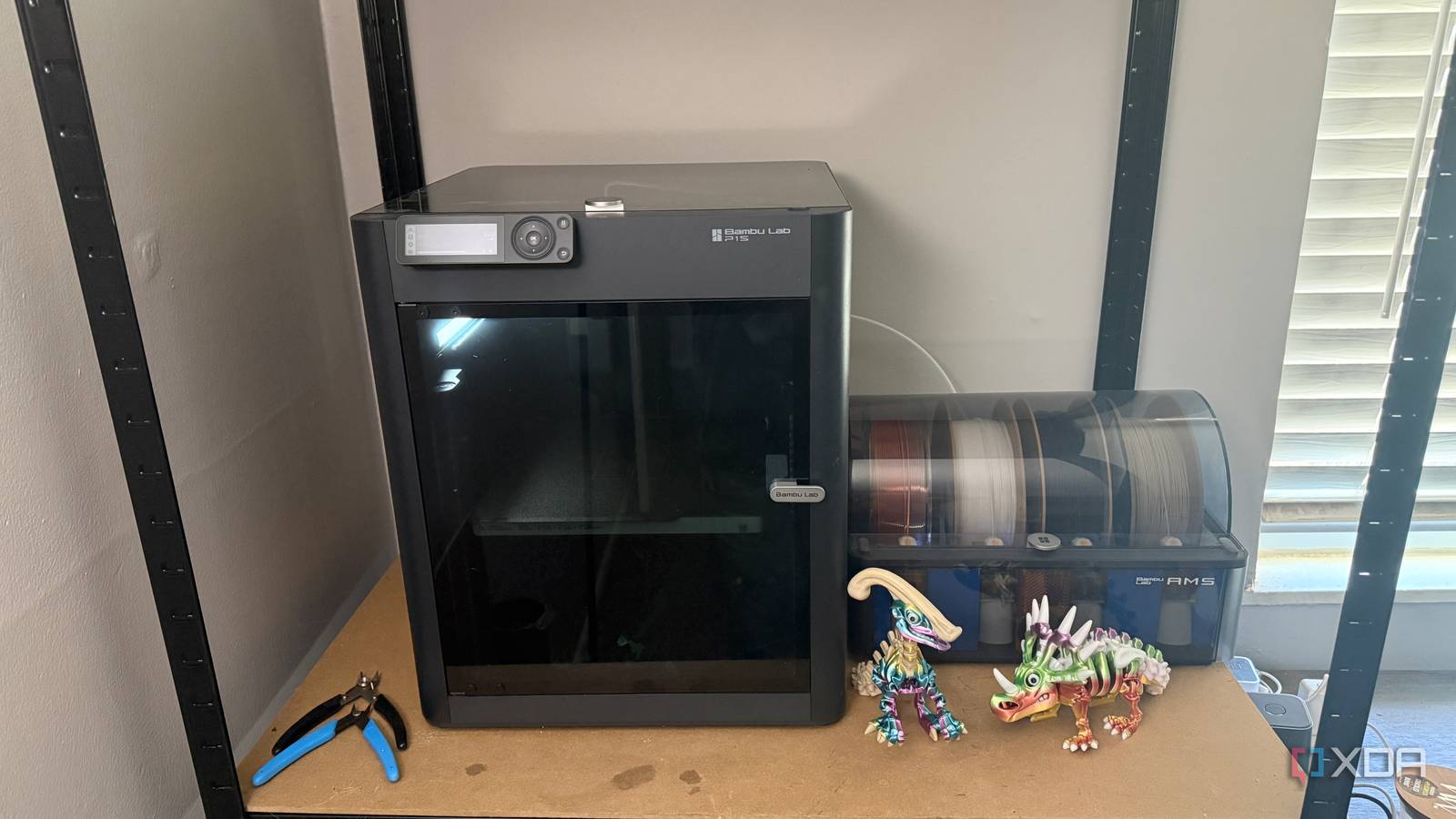
Back in January 2025, Bambu Lab cut off OrcaSlicer’s direct cloud printing feature. Previously, people could send their slices directly to their Bambu Lab printers; however, Bambu Lab wanted users to route connections through its standalone app, Bambu Connect, which acts as a bridge to its printers. Bambu Lab said that OrcaSlicer could use Bambu Connect, but the developers didn’t want to make a one-app solution into a two-app system. Users were stuck with a choice: to either update their firmware and lose OrcaSlicer’s printing feature, or stick with the old firmware and never receive updates again.
Developer Paweł Jarczak worked hard on a fork of OrcaSlicer to recover this lost feature, and finally succeeded with the OrcaSlicer-bambulab project. However, not long after it was published, all releases of OrcaSlicer-bambulab were removed after Bambu Lab threatened legal action, including a cease-and-desist.

Related
The X2D proves Bambu Lab understands what desktop 3D printing still gets wrong
The X2D directly addresses the biggest frustrations in desktop 3D printing, from messy supports to failed prints and constant calibration.
Bambu Lab legally threatened a workaround for OrcaSlicer’s direct cloud printing feature
The company accuses Jarczak of “reverse engineering”
Source: Bambu Lab
Over on the OrcaSlicer-bambulab GitHub page, Jarczak discusses what happened with the project. The app received several releases and allowed people to restore OrcaSlicer’s direct cloud printing tool for Bambu Lab printers. However, Jarczak claims that Bambu Lab got in contact, saying that it had a cease and desist letter ready and accusing the developer of the following:
impersonating Bambu Studio,
bypassing their authorization controls,
violating their Terms of Use,
reverse engineering their software,
enabling modified forks to send arbitrary commands to printers.
Jarczak claims they asked Bambu Lab for more information, but instead “received further broad accusations, including repeated references to “reverse engineering”.” As such, while Jarczak doesn’t believe that they did something wrong, they’ve voluntarily removed the app.
Jarczak’s counter against Bambu Lab’s accusation mentions that Bambu Studio uses the AGPL-3.0 license, and the plugin required for the cloud printing tool is “an optional component based on non-free libraries.” Jarczak therefore claims that their work doesn’t redistribute proprietary code, but instead builds upon the available Bambu Studio source code; a difference that they say is “important.”
People took to the Bambu Lab subreddit to air their grievances with the company, with one commenter calling it “the Nintendo of 3D printing.” Bambu Lab has yet to offer its own account of events. We’ve reached out for comment and will update this article if they respond.
Related
This open-source printer you can repair yourself is powered by a Raspberry Pi Zero W
You can help fund it real soon.