
A visual diary by Design Editor Wendy Goodman.
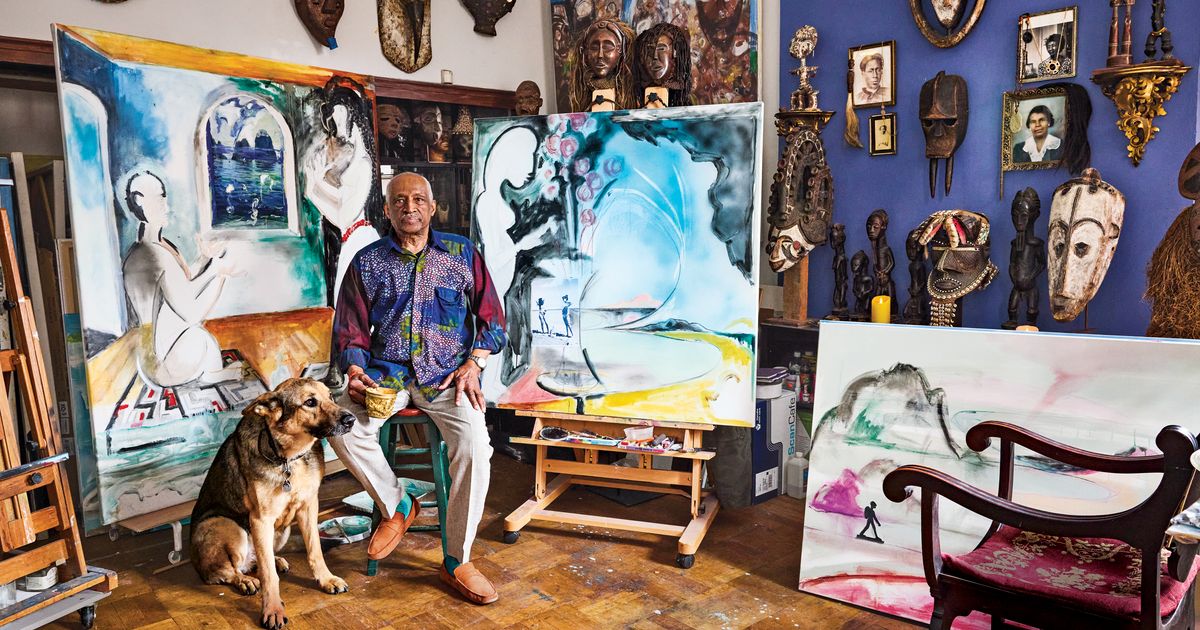
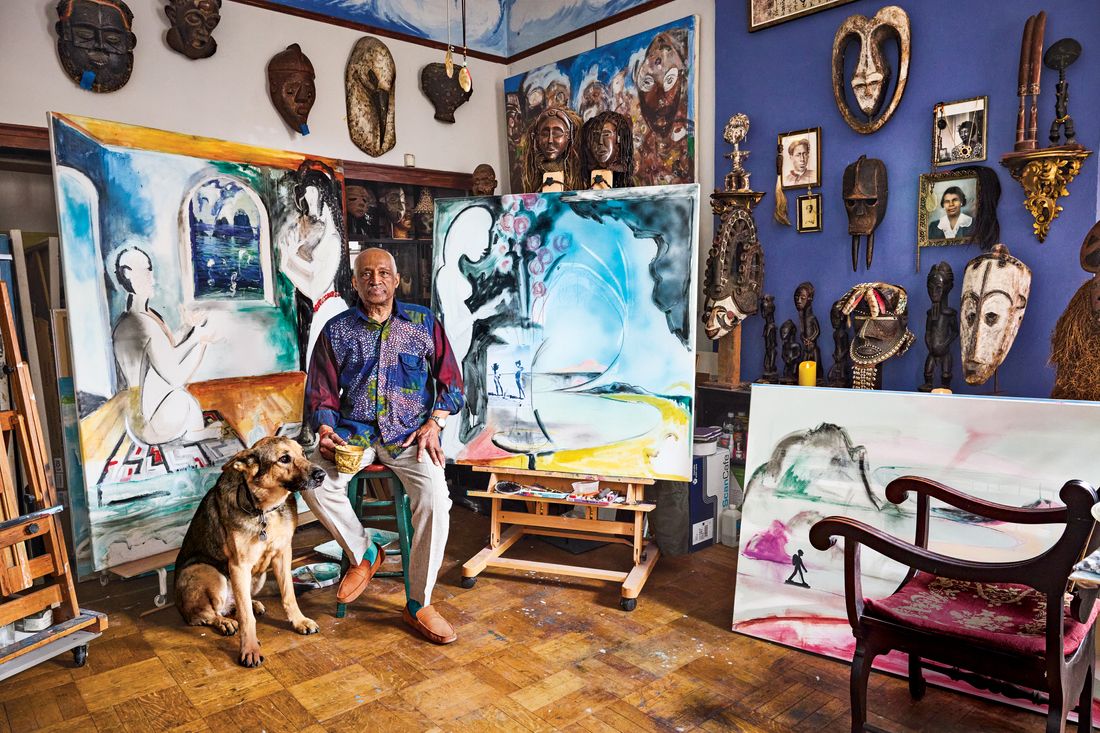
The Parlor Floor George Nelson Preston with his dog, Tecumseh, and his 2026 paintings (from left) That Was Then, This Is Now. Never Forget. Always Forgive; Fetiches et Fleur for Melanie and Lulu at South Beach and Beyond; and Go Back and Find It, which will be part of a solo exhibition at Ryan Lee gallery next year.
Photo: Jeremy Liebman
The artist George Nelson Preston sometimes can’t believe the characters he has crossed paths with in nearly nine decades of living in New York. Growing up in Sugar Hill in the 1940s, his neighbors included icons from the Harlem Renaissance such as Lena Horne, Count Basie, and Paul Robeson.
“This whole neighborhood was full of Black luminaries,” says Preston. “We had salons on the weekends. We’d meet in someone’s apartment, and there would be music and people would bring food.”
His parents, Mildred and John Lee, the latter a musician, encouraged an early interest in painting, and Preston attended the High School of Music & Art. Later, while studying at City College, he taught at Camp Woodland in the Catskills and met Pete Seeger and the percussionist Babatunde Olatunji. They introduced him to the burgeoning Village scene, where Preston hosted poetry readings at his storefront loft on East 3rd Street. It was called the Artist’s Studio, and Beat poets such as Allen Ginsberg, Amiri Baraka, Gregory Corso, and Frank O’Hara were regulars. A photograph of Jack Kerouac performing there in February 1959 captured the mood of the period. “The thick of it went on for two years,” Preston recalls. “Every Sunday afternoon.”
Preston’s next-door neighbor at the loft was the sculptor Claes Oldenburg. “I may have been the first person to see the hamburgers,” he says. “I came home from school, and he was out on the street ready to ambush me so I’d check out his latest stuff. I looked at it, and, honestly, I didn’t know what to think.”
Preston would go on to become a prominent scholar in African art, as well as a curator, after receiving a Ph.D. in art history and archaeology from Columbia. He is 87 and now lives in the Jumel Terrace Historic District in Washington Heights, just two streets away from his childhood home; his mother bought the property in 1987 to have him nearby. Every surface of the four floors in the 1896 Henri Fouchaux rowhouse is covered with a lifetime’s worth of personal history.
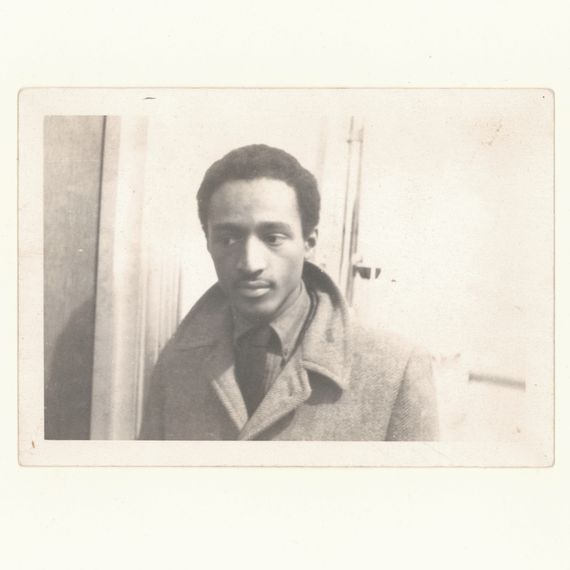
Preston, in 1956, photographed by Claes Oldenburg, his next-door neighbor in the Village.
Photo: Claes Oldenburg/Courtesy of the artist and RYAN LEE Gallery, New York
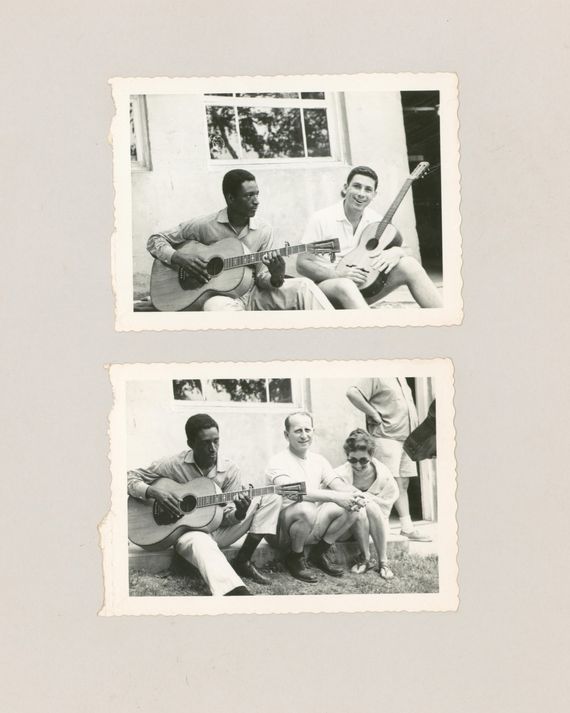
Preston at the home of City College of New York professor Florian G. Kraner in 1959.
Photo: © George Nelson Preston/Courtesy of the artist and RYAN LEE Gallery, New York
In the back room of the parlor, where Preston paints, he points to a portrait of his great-great-grandfather on a wall of family photographs. “It all started here with this man, a mule, and a plow. His ancestors were freed slaves who had bought property in Charleston, South Carolina, in an area they called Liberty Hill,” he says. “The reason I have all these photographs is to remind me of what it took for me to be here.”
Preston’s maternal great-uncle, a merchant seaman during World War II, collected African art, and it was all passed on to his mother and then to him. Preston kept adding to the collection, buying his first piece of tribal art in 1967 for $65 from the Abstract Expressionist and Madison Avenue dealer Merton D. Simpson. By the time he moved uptown in 1987, he had about 40 objects, and he picked up more masks, wood sculptures, and terra-cotta figurines on research trips to Ghana, Côte d’Ivoire, Nigeria, and Togo.
In 2006, he decided to open part of his home to the public as the Museum of Art and Origins, exhibiting the 600 objects he had accumulated over the years alongside a selection of work by contemporary artists. Is he still on the lookout for new acquisitions? “Well, never say never,” Preston says. “But I have pretty much sated my appetite.”
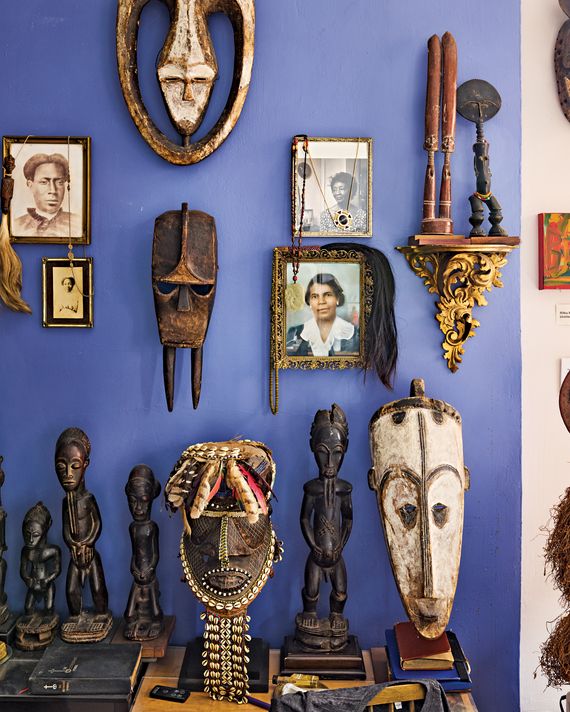
The Ancestors’ Room The portrait of Preston’s mother, Mildred, is draped with the medallion he was awarded as chair of the Brazilian Academy of Fine Arts. The other photographs are of four generations of maternal ancestors.
Photo: Jeremy Liebman
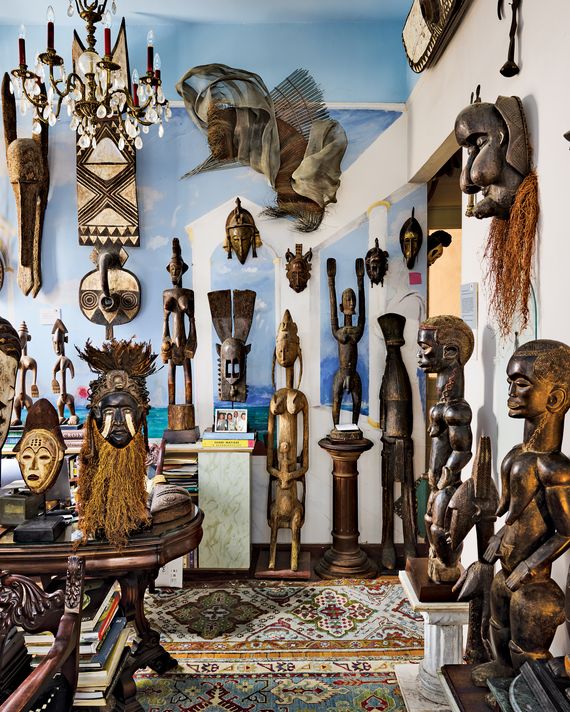
The Salon On the wall, table, and floor, masks and wood sculptures from Cameroon, Mali, Gabon, and Burkina Faso. The divination figures on the right are by the Bété people of Côte d’Ivoire. The copper and steel hanging work is by Rafala Green.
Photo: Jeremy Liebman
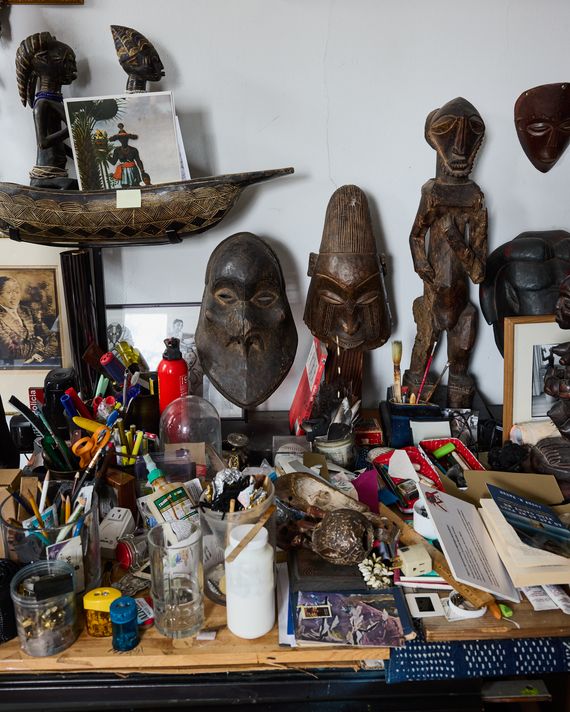
The Work Station Masks by the Hemba and Mangbetu peoples from the Congo. The Paul Robeson portrait on the far left is by the director and playwright Alexander Arkatov.
Photo: Jeremy Liebman
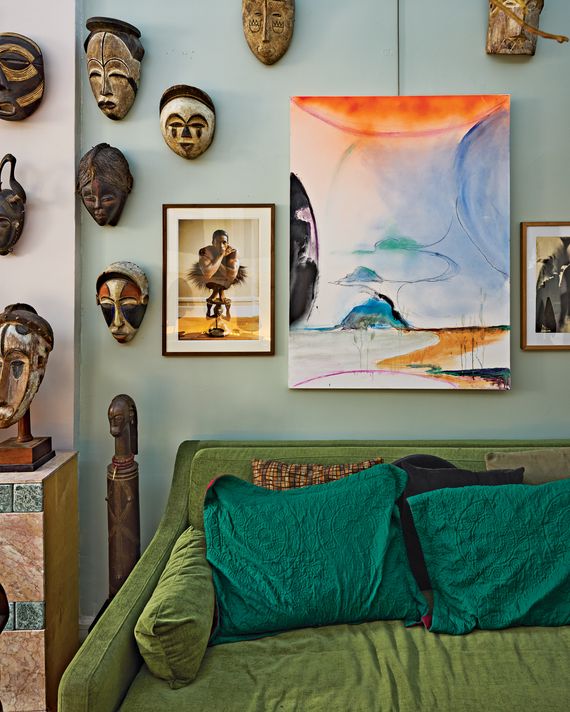
The Sitting Area Preston’s In the Four Moments of the Sun (2025) is above the sofa. The photos by John Edmonds (left) and Adger Cowans are under masks by the Fang people of Gabon.
Photo: Jeremy Liebman
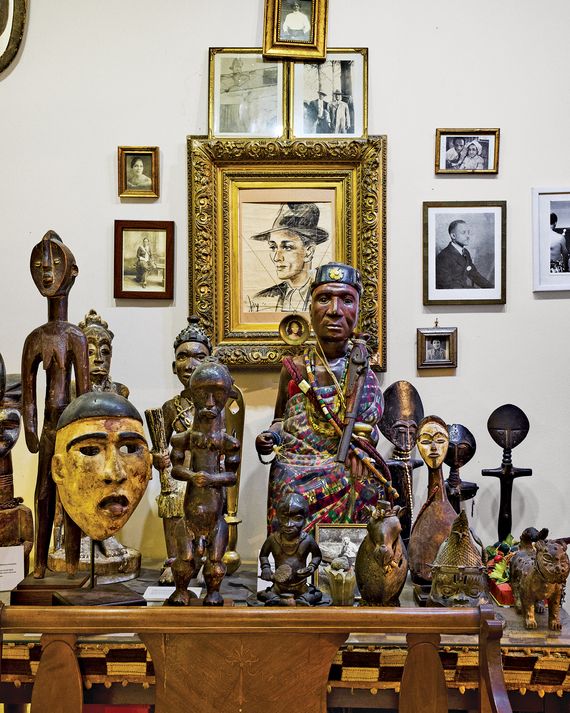
The Shrine A self-portrait by Preston’s father, John Lee, from the 1930s is surrounded by photographs of paternal relatives. The large sculpture of Preston’s likeness was carved in Ghana.
Photo: Jeremy Liebman
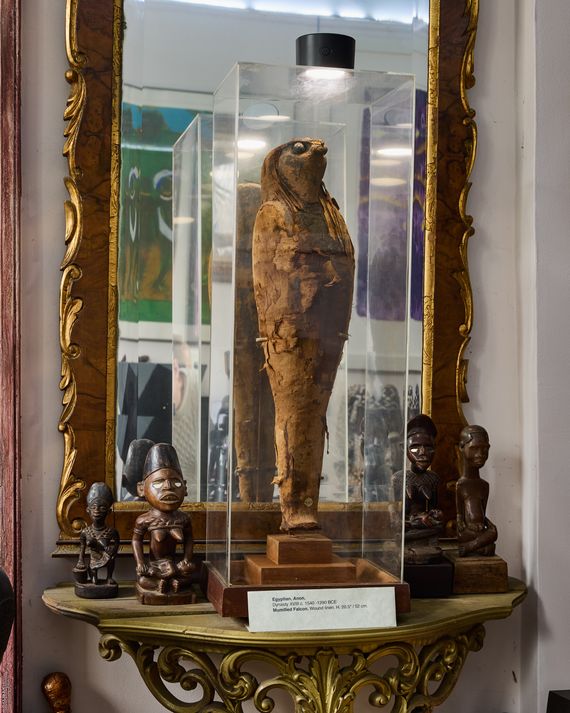
The Artifact A mummified falcon from the 18th Dynasty of Egypt, circa 1550, that Preston acquired in Cairo in 1968.
Photo: Jeremy Liebman
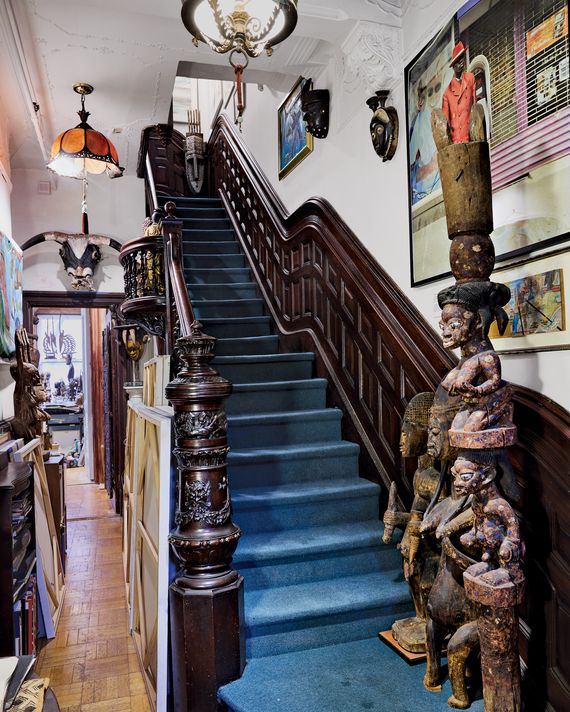
The Entrance The self-portrait on the left is by Tomás Esson. The limestone relief below is from Angola. At the foot of the stairs is a wood sculpture by the Yoruba people of Nigeria. Behind is a portrait of a Harlem dandy by Thomas Baccaro and a mixed-media piece by Ademola Olugebefola.
Photo: Jeremy Liebman
Thank you for subscribing and supporting our journalism.
If you prefer to read in print, you can also find this article in the April 20, 2026, issue of
New York Magazine.
Want more stories like this one? Subscribe now
to support our journalism and get unlimited access to our coverage.
If you prefer to read in print, you can also find this article in the April 20, 2026, issue of
New York Magazine.
Sign Up for the Design Hunting Newsletter
Design editor Wendy Goodman takes you inside the city’s most exciting homes and design studios.
Vox Media, LLC Terms and Privacy Notice