
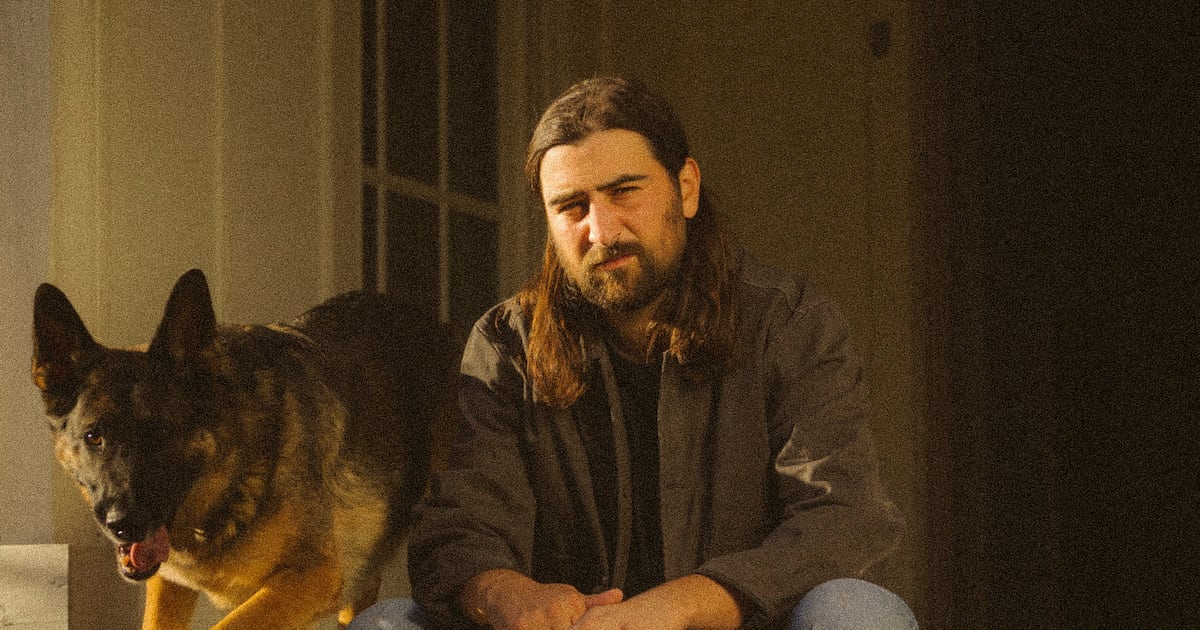
The Great Divide
Artist: Noah Kahan
Label: Mercury
The summer of 2026 is turning into the season of brooding dudes who sound as if they’ve just woken from a snooze. Dermot Kennedy has already attempted to pummel us into submission with a concept album about the trees at the end of his garden.
Now comes his transatlantic spiritual soul mate Noah Kahan, an outdoors type with a voice like a dozen rocks being chucked down a well and an obsession with songs about tree lines, county lines and the invisible lines that have divided him, a once-ordinary person, from the community he grew up with.
Kahan’s persona is of a regular guy from a small town with modest ambitions for his career and his life. Behind the scenes, however, the architecture that has made possible his rise from singer-songwriter obscurity has been thoroughly modern. He blew up on TikTok, where his wooden single Stick Season became a late-era lockdown sensation.
The outdoorsy guy who just wants to be left alone – more or less the theme of The Great Divide, his fourth studio album – has chosen to roll out the next phase of his career with Out of Body, a Netflix documentary produced by your friendly neighbourhood music promoter, Live Nation. This is like getting a recycling lesson from the people who want to tarmac your local park.
Nothing Kahan does is actively offensive, which is perhaps the problem. While plainly operating in the slipstream of Mumford & Sons (what if banjos were posh and annoying?) and Hozier (what if Jesus went to Trinity College Dublin and was really into open-mic nights?), he lacks the element of ludicrousness that sets those artists apart. He is also audibly indebted to Ed Sheeran, although he lacks Sheeran’s facility for a killer pop song. (Scorn Sheeran all you like, but the man can craft a banger.)
[ Live Nation and Ticketmaster had monopoly over major venues, US jury findsOpens in new window ]
Since becoming famous, Kahan has often said that it’s all quite overwhelming and he doesn’t much like celebrity. That hasn’t stopped him from thoroughly embedding himself in the corporate music business, of course: tickets for his three shows at 3Arena in Dublin in November top out at more than €200, which is going to buy him a lot of lumberjack shirts when he gets back to his cabin in Strafford, Vermont.
That message of aw-shucks humility is threaded through the album, although it never quite lands as authentic: the vibe of The Great Divide is more that of a fake antique churned out on a production line. The record – and the success of Kahan and his peers – is also a warning that life never turns out as you expect.
Back in the early 2000s it seemed that the most influential artists of the age would be cool rockers such as The Strokes and Jack White. But in fact the true historymakers have been the avant-garde folkies Fleet Foxes and Bon Iver, whose genuinely thoughtful, reflective music has become the blueprint for a generation of mass-produced acolytes, none more factory-fresh than Kahan.
The big idea behind The Great Divide is that Kahan is an Everyman among Everymen who, after all his success, just wants to get back to the hometown where it all began. Amid chirruping crickets, he’s out in the great outdoors, reflecting on the impermanence of it all. “Oh, everything you see out here will die,” he sings on the album’s autumnal opener, The End of August, which, to be fair, is not a line you’ll hear from Ed Sheeran.
A heavy haze of torpor lies over an LP that is crisply produced and rigorous about its hooks and choruses yet ultimately feels drained and lacking energy. Perhaps Kahan has stretched himself too far: a 17-track concept album about the travails of being both a bit outdoorsy and hugely famous is a lot.
That remains the case even when he tries to shake things up with the mid-tempo American Cars, which sounds a bit like a fake Bruce Springsteen song from a film that doesn’t have the rights to his music.
As The Great Divide plods to a conclusion with Dan, Kahan makes a vague swing at addressing the great political schisms of the United States in the 21st century, although he doesn’t spook the horses (or the shareholders) by saying something explicitly anti-Trump.
He instead rues that politics has driven a wedge between friends who should be living their best lives, cracking beers out in the woods (“fightin’ over politics / Sittin’ and rememberin’, young men from different sides”).
Kahan is clearly straining to sing about something bigger than the plight of being rich and famous and feeling that he ought to feel guilty about it (albeit not, apparently, to the point of lowering his ticket prices). It’s a spirited effort at pulling back the curtain and addressing more universal themes. Alas, it arrives too late on an album that finds the wobbly-lipped Stick Season singer stuck in a woebegone holding pattern.