
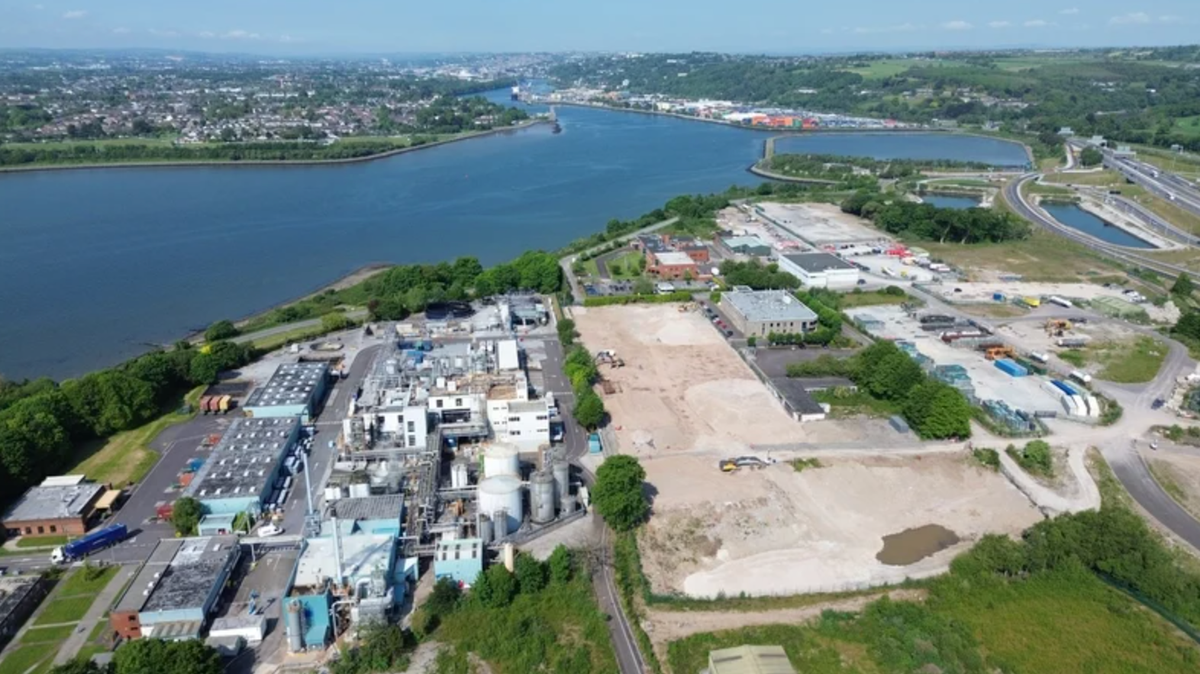
A major biomethane facility – Ireland’s biggest – is well underway at Little Island in Cork Harbour – and should be able to start converting ‘brown bin’ organic waste into gas to feed into our networks by the end of next year.
The €80m state-of-the-art facility is being built by Irish company Stream Bioenergy, and when completed in 2027, it will start processing tens of thousands of tonnes of domestic and commercial food waste – as well as garden and agri waste – into biomethane gas that will then be added to our gas network grid.
The facility will also produce biofertiliser products and food grade carbon for use in local industry including brewing. Construction has been underway since the beginning of 2025 and Stream Bioenergyy say the project is progressing well. The plant is expected to be fully operational by the end of 2027.
Stream BioEnergy is a leading developer of biogas plants in Ireland, and this new project represents a significant step forward in scaling sustainable gas production from organic waste. When operational in 2027, the new plant will process 90,000 tonnes per year of domestic and commercial food and garden waste to generate 80GWh annually of unsubsidised biomethane.
Kevin Fitzduff, Co-Founder of Stream BioEnergy, added: “We are proud to have started construction on one of Ireland’s largest biomethane facilities, a key part of Ireland’s decarbonisation journey, and welcome the strong support from our investors, commercial counterparties, Cork County Council, the local community and all our other stakeholders. Ireland’s biomethane sector is entering an exciting phase of growth, and this facility is a key part of that journey.
“Working with Centrica Energy ensures our output is professionally managed and brought to market efficiently, helping to establish biomethane as a reliable part of the country’s energy mix.”
More than 100 jobs are expected to be created during the construction phase, with over 20 permanent operational roles at the facility, alongside additional employment opportunities across the supply chain.
It will also make a major contribution to Ireland’s efforts to reach carbon emmission and renewable energy targets.