
On April 22, 2026, as countries marked Earth Day, a wave of new research and industrial projects highlighted how science is rapidly reshaping the clean energy landscape.
From turning polluted water into hydrogen fuel to recycling wind turbine blades and electric vehicle batteries, recent breakthroughs show how sustainability is moving from concept to real-world deployment.
Across laboratories and industrial plants, engineers are focusing on using what was once considered waste. Contaminated water, air moisture, plastic waste, and aging infrastructure are now being tapped as valuable resources.
These developments signal a shift toward circular systems that reduce emissions while extracting value from existing materials.
Hydrogen from wastewater
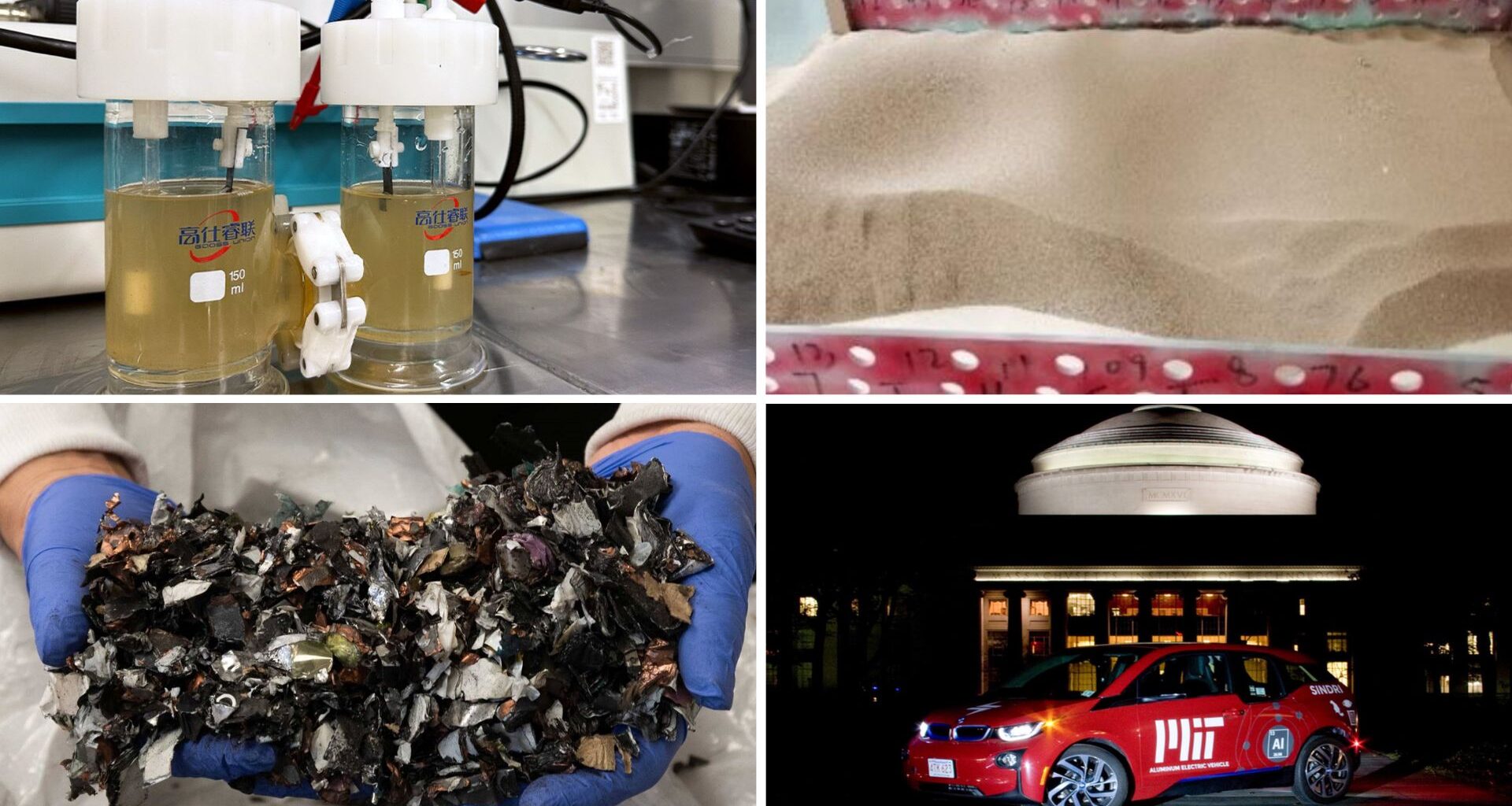
A team at RMIT University has built an experimental device that turns wastewater’s contaminant load into a catalyst for producing green hydrogen, offering a path toward sustainable fuel production without the need for freshwater.
The system captures metals such as platinum, chromium, and nickel already present in wastewater and uses them to drive the water-splitting process. Electrodes made from agricultural waste carbon absorbed the metals, which then formed stable catalysts.
In lab tests, the device ran continuously for 18 days with minimal performance loss, and the oxygen byproduct can be fed back into wastewater treatment plants.
Scrap aluminum and seawater as a fuel source
Separately, MIT researchers developed a method to produce hydrogen from recycled soda can aluminum and seawater. The new method reportedly emits merely 3.2 lbs (1.45 kilograms) of CO2 per kilogram of produced hydrogen, marking a nearly 90% reduction compared to conventional fossil-fuel-based methods.
The team demonstrated the process with a reactor the size of a water bottle that powered an electric bike for several hours. The researchers estimate the process costs around $9 per 2.2 lbs (1 kilogram) of hydrogen, competitive with other green hydrogen technologies.
Green jet fuel gets closer to takeoff
On the aviation side, LanzaJet’s facility in rural Soperton, Georgia, is expected to begin commercial sustainable aviation fuel (SAF) production by the end of the year.
The $200 million plant is the world’s first designed to produce commercial green jet fuel from ethanol, using patented Alcohol-to-Jet technology. The SAF works with existing aircraft engines and infrastructure, and the company says it can reduce an airplane’s contrails and particulate matter by up to 95%.
The facility is positioned as a potential model for decarbonizing aviation, which burns roughly 100 billion gallons of jet fuel per year globally.
Recycling plastic with just air
Northwestern University researchers have found a way to recycle PET plastics, which account for 12% of global plastic consumption, using only a molybdenum catalyst and ambient moisture from the air.
The process is both fast and efficient, recovering 94% of the possible terephthalic acid (TPA) within just four hours.
No harsh solvents are needed, and the method works on mixed and even colored plastics. When tested on real-world bottles and clothing, it still produced colorless, pure TPA that can be used to make new plastic.
Dead wind blades become desert walls
China has found a practical afterlife for retired wind turbine blades. Researchers at the Chinese Academy of Sciences found that recycled blade barriers are 14 times stronger than wood composite boards and can resist ultraviolet radiation, high temperatures, and constant sand abrasion.
The blades are cut into porous structures that trap sand while letting wind flow through in controlled patterns.
With millions of kilowatts of early-generation Chinese wind farms expected to retire over the next few years, the overlap of desert locations and wind farms creates a ready supply of material.
The world’s first fully recyclable wind blade
On the manufacturing side, Chinese energy company Ming Yang Smart Energy announced in January 2026 a 361-foot (110-meter) turbine blade it claims is the world’s first fully recyclable carbon fiber wind blade.
The blade uses a chemical degradation solution that works at ambient temperature and pressure, chemically dissolving the glue holding the blade together, so the high-value carbon fiber can be recovered and reused in new turbines or car parts.
The wind industry currently sends most retired blades to landfills, and researchers estimate the world will accumulate 47 million tons of blade waste by 2050.
Cleaner EV battery recycling
South Korean scientists at UNIST have developed a new electrochemical process to recover critical metals from old EV batteries without strong acids.
When applied to real-world nickel-cobalt-manganese battery materials, the method achieved 99.1 percent purity for nickel and 98.8 percent for cobalt, while maintaining recovery rates above 95 percent.
The technique uses a special solvent called ethaline that selectively binds different metals at different voltages, allowing precise separation. The process generates minimal hazardous waste, and the solvent can be reused, reducing both environmental impact and operating costs.