
NEED TO KNOW
A new study reveals that warming oceans are pushing great white sharks to their physiological limits
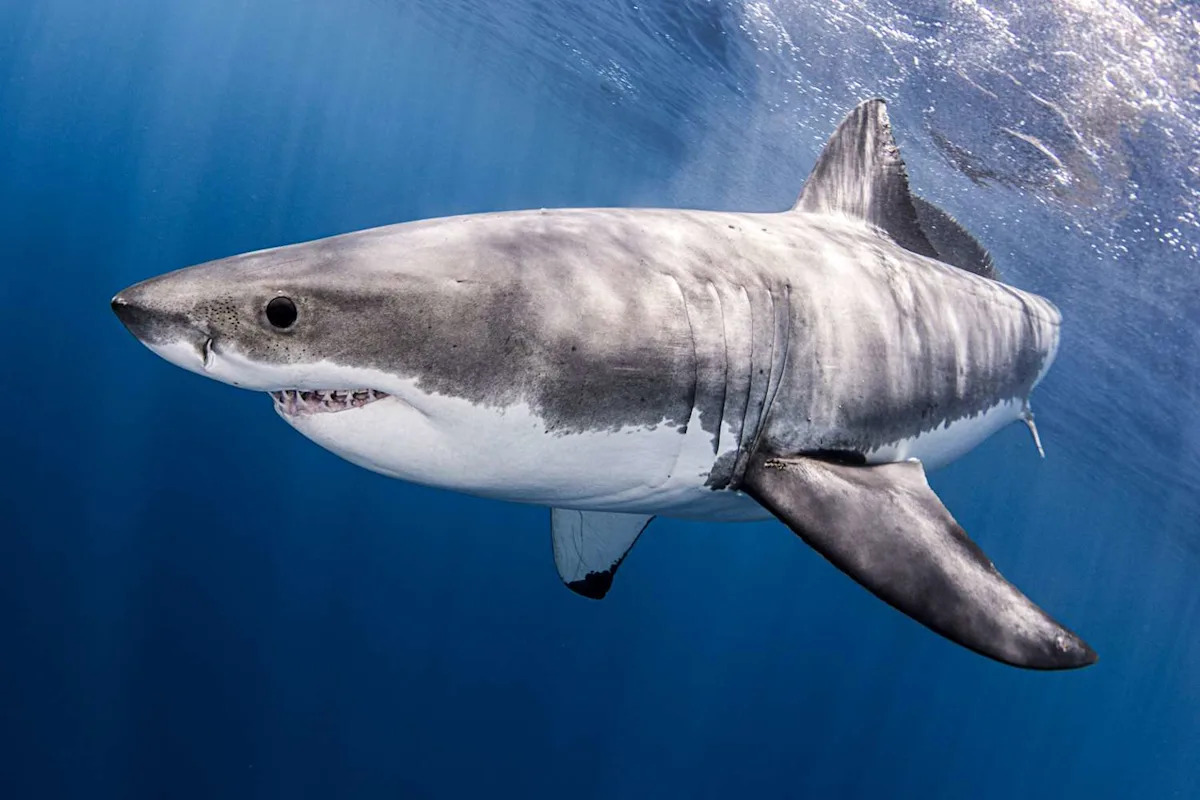
Partially warm-blooded shark species, like great whites, are at higher risk as they require more energy than cold-blooded fish
Experts are alarmed by the disappearance of great white sharks near South Africa, with no consensus on the cause
Great white sharks are feeling the heat.
According to a recent study published in Science, researchers at Trinity College Dublin, in collaboration with Edward Snelling, an experimental physiologist at the University of Pretoria’s Faculty of Veterinary Science, and other scientists, found that apex predators are being pushed to their “physiological limits” due to warming ocean waters.
The research suggests that warm-blooded fish species, which include great whites, shortfin makos and salmon sharks, burn about four times more energy than cold-blooded species and will increasingly be forced into cooler regions with less food. This group, representing 0.1% of all fish species, also includes basking sharks and some tuna species.
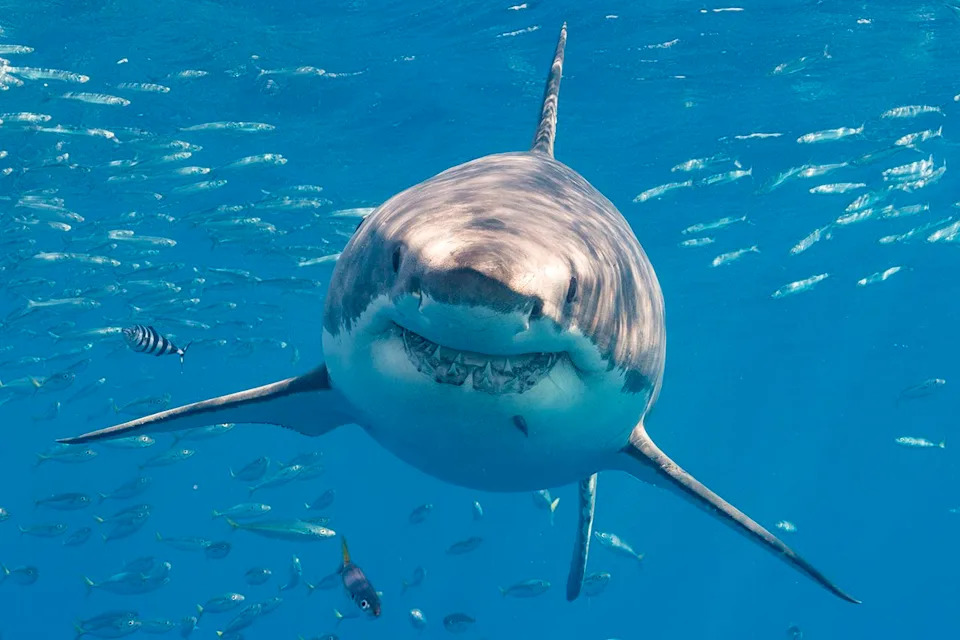
Head-on image of a great white shark swimming in blue water surrounded by fish
Credit: Mark Chivers/Getty
“This research shows that being a high-performance predator in the ocean comes at a greater cost than we previously appreciated,” explained Snelling in a statement. “As the oceans warm, these species are being pushed closer to their physiological limits, which could have consequences for where they can live and how they survive.”
Up Next: https://people-app.onelink.me/HNIa/kz7l4cuf
The research results also provide experts with an explanation for long-observed patterns in the oceans, where larger fish tend to inhabit cooler, deeper waters, often migrating seasonally to track favorable conditions. However, as climate shifts affect food supply, habitable ecosystems are becoming increasingly scarce.
Researchers in Africa are also concerned about the great white shark and have noticed a decline in their numbers along the coastlines, notably near Cape Town, South Africa.
“At one point, we were seeing 250 to 300 great whites a year,” professional shark photographer Chris Fallows told CBS News. “Today, you would see nothing.”
Biologists and experts cannot agree on the reasons for the decline in this area’s shark population. Some point to orcas hunting the fellow predator for their nutrient-rich livers, while others suggest human activity, such as fishing and “shark longlining,” is a potential cause.
While there’s no consensus, scientists across the board are highly concerned about what growing research is determining about the future of our natural ecosystems.
Marine biologist Enrico Gennari highlighted, “If we lose the white shark in South Africa, we lose a battle for all nature.”
Read the original article on People