
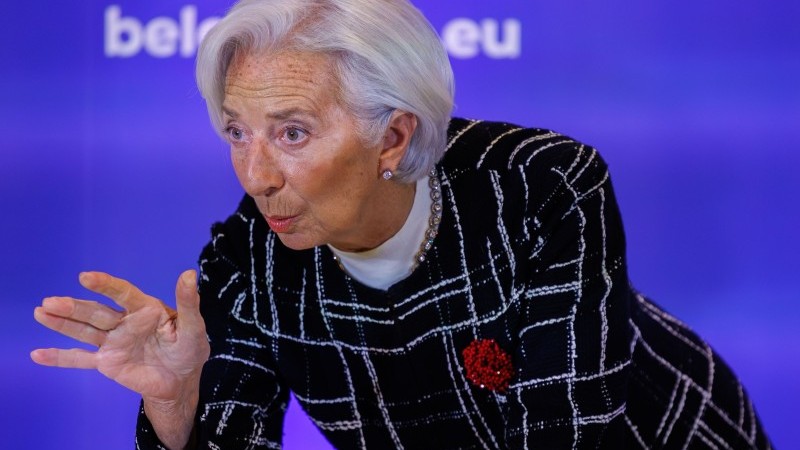
Imagine for a moment you’re a central bank boss here in Europe. Not a great role play right now, if I’m honest, given, well… *gestures at everything going on in the world right now*
You have the unenviable task not only of setting policy next week, but also of coming up with a coherent message about what you might do in June.
Let’s start with the bad news: having kept all your options open in March and intimated you’d have a better grip of the situation by April, the truth is quite the opposite.
The better news is that nobody else has a clue where the crisis is headed, either. Another week of contradictory headlines and stalemate in the Strait of Hormuz has made the situation, if anything, harder to forecast. Polymarket, to the extent that it is a reliable gauge of anything, is pricing a 28% chance of a permanent peace deal by the end of May, down from 74% a week ago.
Better still, markets aren’t expecting a rate hike this month, anyway. Not from the Fed, ECB or Bank of England. An “on hold” decision looks like a no-brainer.
Time is on your side, but perhaps not for long. Markets are pricing upwards of two rate hikes for the eurozone and UK by year-end. A June rate rise is near-enough fully priced.
Your central challenge is that the data isn’t proving to be much of a guide right now. Inflation is up, but so far only because of motor fuel. We’ll get new numbers out of Europe over the coming days, but they’re unlikely to tell us much about the knock-on impact on core or food inflation. That’s going to take time; it’s not clear you’ll be much the wiser by June, even.
Surveys aren’t proving to be much more help either. Consumer inflation expectations are up (especially in the UK). But confidence is down. And while surveys of corporates – including this week’s purchasing manager’s indices – are unsurprisingly showing higher input costs, there’s only limited evidence that this is translating into a rise in output prices.
The one thing you can at least point to is natural gas prices. The problem in 2022 was that it became both an oil and an electricity crisis, the latter being a particular issue for core inflation. So far, this has proven to be only the former. Natural gas prices are much more contained than post the Ukraine invasion, in level terms if not in percentage changes. That’s a powerful argument in favour of keeping rates on hold for now.