
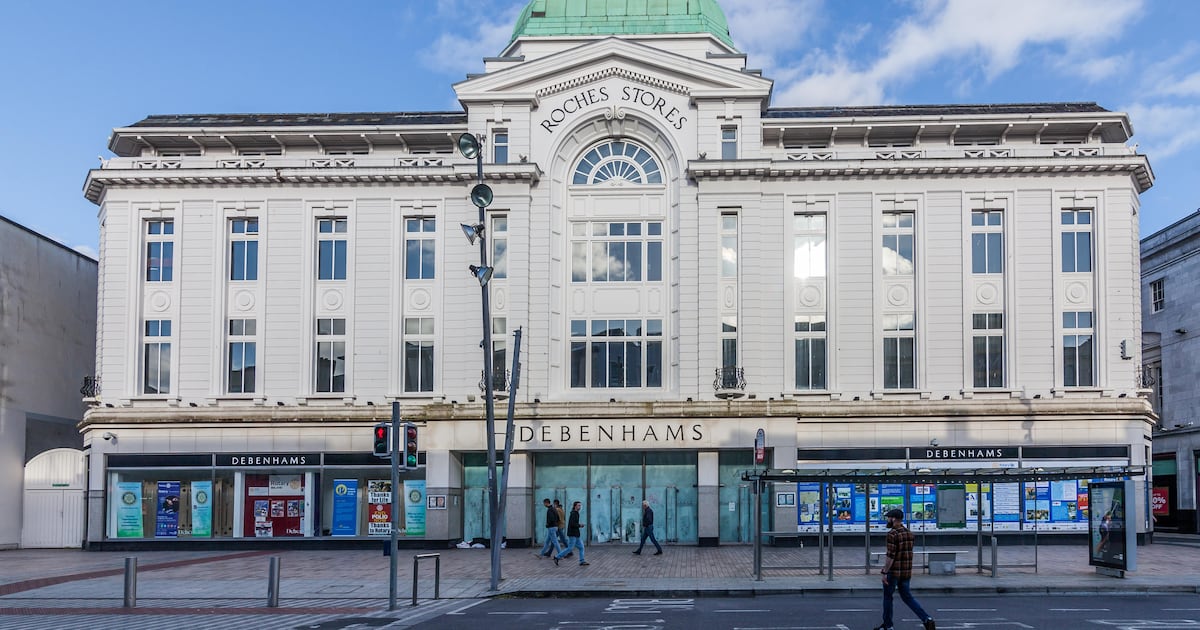
A former official at the Mandate trade union claims a leak to the media by its then general secretary sank a secret deal to pay more than €1 million to former Debenhams staff, who were “wrongly blamed” for the collapse of the proposal, High Court papers show.
Details of the allegation, made by former Mandate press officer Dave Gibney, are contained in legal papers filed in a separate dispute before the High Court on Friday.
In an April 2024 document, one of a number of alleged protected disclosures, Gibney wrote that a deal proposed by Debenhams liquidator KPMG would have seen payments to Mandate members worth more than €1 million, a one-third share in the profits of the sell-off of stock and 300 jobs saved.
At the time, more than a thousand workers were facing unemployment due to the closure of the department store group across Ireland and Britain – more than 750 of them represented by Mandate.
Gibney said he had been instructed to issue a statement to the media on September 4th, 2020, that a potential resolution was imminent and that full details would be published the following week.
The document setting out the proposed deal included a confidentiality clause, Gibney said.
 Kerry Group CEO on the impact of Middle East conflict, AI and drive to keep bread fresher for longer
“Following the issuing of the statement, I believe Gerry Light breached this clause … when the specifics of the proposal were given to RTÉ industrial relations correspondent Ingrid Miley,” Gibney said in his statement.
Gibney said Miley had made a series of posts on social media with “specific details of the proposals which would only be known to those who had seen the document”.
Later that day, KPMG issued its own statement stating that “no settlement has yet been agreed,” Gibney said.
Gibney said he tried to get in touch with Light repeatedly that day as he was fielding media requests.
He said that his line manager, Brian Forbes, then told him that KPMG had “potentially withdrawn the proposals” and that Light had “gone to ground”.
Forbes then said he was there when Light and Miley spoke by phone and that he had warned Light “not to give Ingrid further details”, Gibney’s document stated.
The following Monday, September 7th, Light confirmed to Mandate staff involved in the Debenhams process that “KPMG had officially withdrawn the proposal”.
“I asked why it had been pulled and what KPMG were going to say. Gerry explained to us that KPMG said they did not care who got the blame … and that Mandate could write whatever they wanted,” Gibney wrote.
It was later that night that former staff of Debenhams occupied a number of stores in Dublin and Cork, Gibney said.
The following morning, a KPMG statement was published stating that it had “formally withdrawn” support for the settlement deal in light of “the actions of certain people overnight”.
“Their statement blamed the occupations, when the Debenhams team within Mandate was informed the previous day that the proposal had already been withdrawn,” Gibney said.
The following day, Gibney wrote, divisional organiser Robert McNamara directed him to log into the back end of Mandate’s website and take down a document uploaded to the site.
The document was the original proposal from KPMG, Gibney wrote in his statement.
In the April 2024 document, Gibney wrote that he later learned on foot of a freedom-of-information request that the Department of Social Protection – another creditor in the liquidation – wrote to KPMG twice on September 4th referencing the RTÉ news report on the deal. One official sought the particulars of the agreement reported by RTÉ, according to the material quoted in Gibney’s document.
Another wrote that the department would issue no payments unless there was “confirmation from the joint liquidators that the redundancy and insolvency claims will not be impacted by any agreement with the workers”, the document stated.
Gibney wrote in the April 2024 document that any sum received by the workers could have led to some or all of the workers’ statutory redundancy payments from the employers’ insolvency fund being docked by the department.
“KPMG arguably had no legal right to make the proposals and now a senior creditor had been made aware of them by the RTÉ article that came about through the leak from Gerry Light,” Gibney wrote.
“It is my sincere belief that a number of our Debenhams members … were wrongly blamed for the collapse of the KPMG/Debenhams proposals,” Gibney wrote.
“Shop stewards were routinely lied to and even muted when attempting to make their points at meetings. Many officials refused to attend pickets or give any support to the strikers,” Gibney wrote.
He said it had caused “huge damage to the reputation of Mandate”.
Staff blockades of the shuttered stores delayed the removal of stock by the liquidators for more than 400 days until the pickets were broken up by gardaí in April 2021.
Gibney’s April 2024 document is dated subsequent to the commencement of proceedings seeking redress for alleged penalisation at the Workplace Relations Commission, first heard in November 2023.
His case was last listed for hearing before the tribunal in 2025, but did not proceed to public hearing – with the parties and their lawyers spending about five hours in talks at Lansdowne House in Dublin 4.
A member of Mandate’s national executive council, Lorna Langan, is pursuing separate legal action against the union and was granted an injunction at the High Court on Friday lifting her suspension, allowing her to stand for re-election next week.
The legal filings filed for her case contain Gibney’s April 2024 document – and state that a proposal by Gibney to “resolve his protected disclosure complaint at no or minimal cost was withheld from the NEC on multiple occasions”.
That, her lawyers submitted, contributed to the union incurring a legal bill of about €500,000, including fees and “settlement expenditure”.
Langan’s case is that she and other members of the NEC went to gardaí about the level of spending on settlements with former staff and legal fees, a communication she has advanced as a protected disclosure.
Her suspension, she claims, was penalisation for that disclosure.