
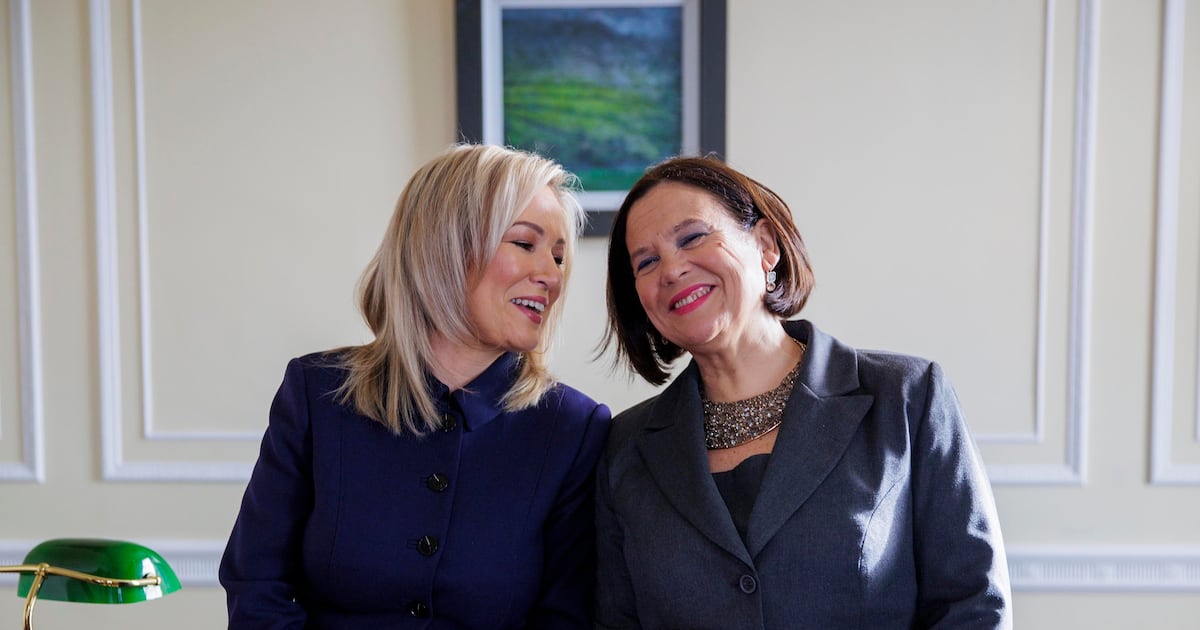
Sinn Féin members from across Ireland are meeting in Belfast this weekend for the party’s annual ardfheis. What are the five key issues facing the party?
Next month’s byelections
Vacant Dáil seats must be filled in Dublin Central and Galway West and it is the former where Sinn Féin will be feeling the greatest pressure.
This is party leader Mary Lou McDonald’s constituency, and it has chosen as its candidate long-term Sinn Féin Cllr Janice Boylan.
An unpredictable constituency with a strong anti-establishment vote – in 2024, it almost elected Gerard Hutch, head of an organised crime gang. If Sinn Féin fails to bring home a second TD, it will not only reflect badly on McDonald but also raise questions about the party’s capacity to position itself as the fulcrum of Opposition.
 Is there real pressure on Sinn Féin to win at least one seat in upcoming byelections?Fuel protests
Speaking of Opposition, this is Sinn Féin’s comfort zone.
It has long sought to position itself as the alternative to the Coalition. And what will have worried the party about the recent fuel protests is that the anger against Government did not translate itself into support for Sinn Féin.
Indeed, rather than being viewed as anti-establishment, in some quarters the party is seen as part of that establishment. There is a long way to go until the next general election, but if Sinn Féin is not seen as the solution for people who are angry at the Government, then it has a problem.
Cost of living
As the fuel protests demonstrate, times are difficult, and Sinn Féin has made tackling the cost-of-living crisis a key plank of its identity.
In Friday’s keynote speech at the ardfheis, Pearse Doherty attacked the Government’s record, saying “they do not understand what it means to choose between heating and eating”. He and called on it to introduce an emergency budget to help “the hard-working people who are struggling to get by.”
But Sinn Féin is not unique in this commitment to tackle the cost-of-living crisis. Almost every party emphasises what it is doing to make things better for workers and families – and this stance does not seem to have delivered increased support for the party.
Identity
This is really the question with which the party is grappling.
As with the fuel protests, the cost-of-living crisis, and other issues such as immigration, Sinn Féin is trying to figure out where it stands and what it stands for – especially if it can no longer rely on that antigovernment, anti-establishment vote.
Linked to this is the question of just how long McDonald will stay as leader, the lack of an obvious replacement and where exactly that replacement might take the party.
Is the way forward a left-leaning coalition, as was successful in the presidential election, but then how to woo more centre-right voters? This is the dilemma facing the party.
A united Ireland
If there’s one thing voters do know, certainly in the North, it’s that Sinn Féin is the party of Irish unity.
Yet even in Northern Ireland, in recent elections, Sinn Féin has sought to emphasise bread-and-butter issues – again, the cost-of-living crisis – over the unity question.
In the South, it knows it is not a vote-winner; in the North, where roughly 80 per cent of voters back parties which take a position on Northern Ireland’s constitutional status, it is self-evident.
Sinn Féin is keen to emphasise the momentum towards a united Ireland. On Saturday, the ardfheis will host three events on the issue – yet in media interviews this week, party vice-president and Northern Ireland First Minister Michelle O’Neill stuck to the schedule of a unity referendum by 2030, a deadline which is surely unachievable.
There is momentum there: the most recent Arins/Irish Times survey, in February 2025, demonstrated support for Irish unity was growing significantly in Northern Ireland, but there was still a majority for remaining in the United Kingdom.
The challenge for Sinn Féin is how to translate that into tangible progress.