
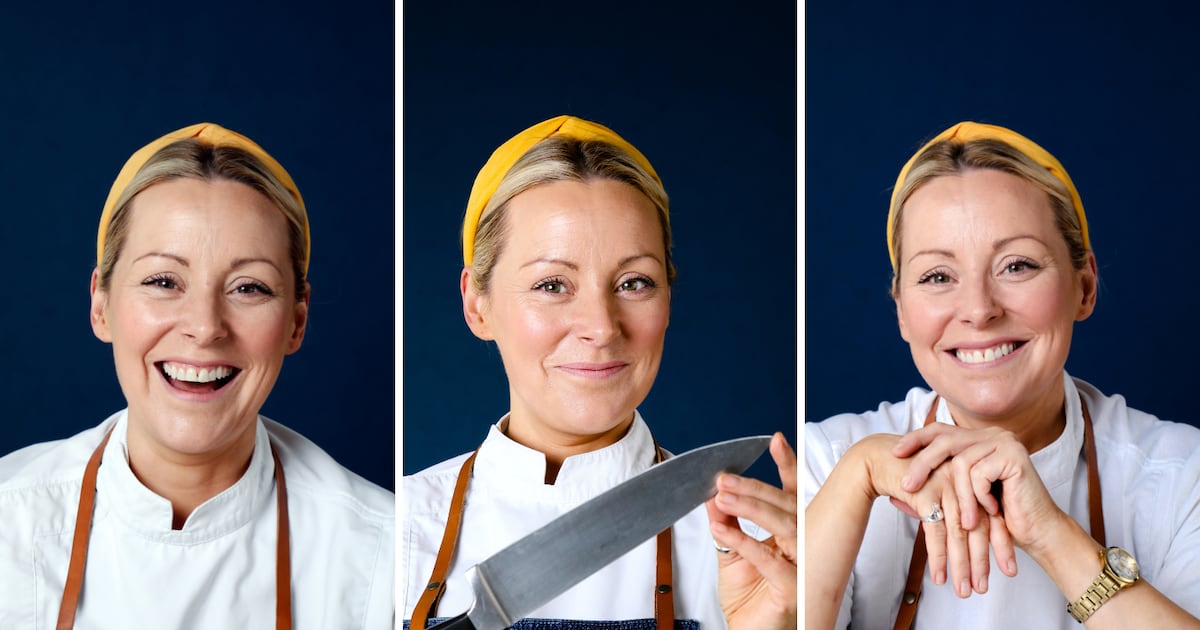
It was striking, watching the first episode of the brand new MasterChef on BBC this week, to notice the difference in stature between the two new presenters. At 5ft 2in, acclaimed Dublin chef Anna Haugh appears a good deal smaller than co-presenter Grace Dent, even though in reality the food critic is only a couple of inches taller. Dent’s backcombed hairdo adds another few inches.
Haugh admits to being “shocked” by some of the promotional photos for the series. “Did someone put her on stilts?” the Tallaght woman says on a video call from her home in London. “Because in everyday life I don’t see it, I am height blind.”
Haugh is only half-joking when she says she has a kind of body dysmorphia where she doesn’t see herself as in any way diminutive.
“I never felt a chip on my shoulder about my height, or that I’m a poor helpless girl,” says the chef-owner of Myrtle in Chelsea, who has been working in food for two decades now. “The truth is I think I freaked chefs out when I worked with them. They would always say, ‘you have to get out of Anna’s way’. I’d walk in, like a little bullet carrying a chopping board the same size as me. I don’t feel small, I feel tall.”
She says in the past, in her ascent through various Michelin-starred kitchens, that there were some people who might have been slow to promote her, fearful that she could not command respect. “But being a leader is about so much more than height. People have asked me how I managed it and my view is that where you physically stand, nobody else can stand there. So whether the person is 6ft 4inor 5ft 2in, you own that space. You have to speak to people like you own that space.”
Excellent advice for anyone of any height in a challenging workplace.
Speaking of challenging workplaces, Haugh comes to the MasterChef role, one of the highest profile gigs in cooking reality television, following a controversy the show’s publicist has already made clear Haugh is not keen to talk about. Presenters Gregg Wallace and John Torode were both dropped from the show last summer after investigations by the producers Banijay UK. Those reports upheld allegations of inappropriate sexual language and unwelcome physical contact against Wallace, while Torode was axed having been found to have used a racist term.
How does it feel to be hosting the new series, in the wake of such a controversy? Haugh is well prepared, deflecting the question without addressing the Wallace-shaped elephant on the call: “You know, MasterChef is a well-oiled machine,” she says. The BBC series, in which amateur chefs compete against each other in a series of cooking challenges, has been running since 1990. “There’s a whole team of people that work so hard to make this show what it is. So when Grace and I joined, the directors, the editors, the camera people, the sound people, all of them worked together to get the best out of us. There was a real focus on us trying to be the best version of ourselves, we’re not trying to be anybody else.”
I try another tack. Was there added pressure taking on the role considering the behaviour of her predecessors? “No,” she says. “When you’re in an environment where you’re safe, you’re allowed to fulfil your potential. So all of the stress or any of the worry was taken on the chin by the people who were behind the cameras. And I feel eternally grateful for that. I couldn’t believe how much they allowed Grace and I to be who we are … it was very much ‘you have the potential, we’ll give you the environment to fulfil that potential’. And it was really, really hard work, but, my God, very satisfying to do.”
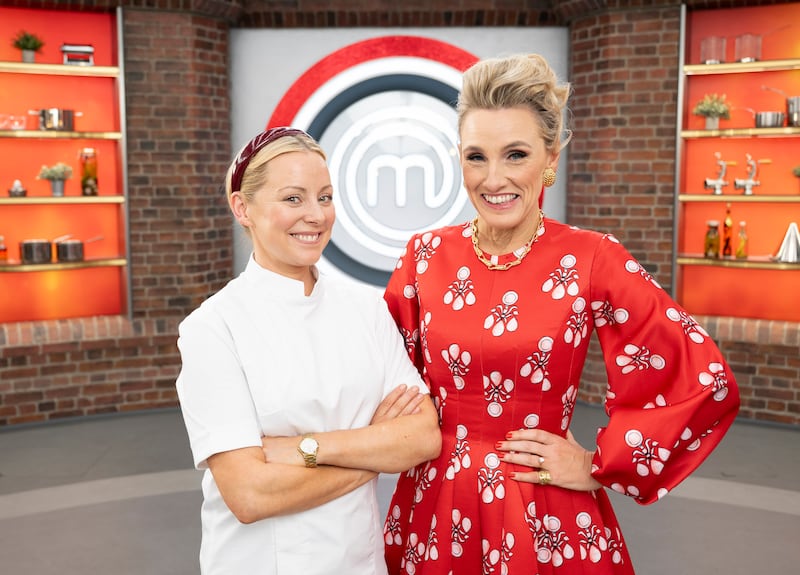 Anna Haugh and Grace Dent are the new judges for the BBC’s MasterChef. Photograph: BBC/ Shine TV/PA Wire
I ask if anything surprised her about being on the set of MasterChef. She says she was taken aback by how much the show meant to the lives of the amateur contestants. “I wasn’t prepared for that, I could see it in the whites of their eyes. These people who love cooking, love food, love throwing dinner parties were wondering ‘could this be my job? Is this what I should do with my life?’ and that blew me away. Even to get through a couple of stages of the contest is life-changing for them.”
Did it bring her back to her own start, when she was discovering herself as a chef? “It made me feel privileged that I figured out what I wanted to do so early on.” Had she not been firmly set on a career in food from an early age she knows: “I’d be just like one of those contestants, I’d be trying to dip my toe in.”
As chef owner of Myrtle, a fine dining restaurant with an Irish edge in London’s Chelsea, Haugh is bringing the same passion and eye for detail to her role as judge. She is already familiar to viewers having appeared on various iterations of the show assessing both amateur cooks and celebrity contestants, memorably stepping in for chef Monica Galetti as a guest judge on MasterChef: The Professionals. Last year she presented her own BBC show, Anna Haugh’s Big Irish Food Tour, which took her around Ireland.
When she thinks back on her own food journey, she recalls her mother’s home-made meals using produce from the back garden. “She used good ingredients but was always against salt, fat and sugar … I’m so grateful for it now but I didn’t appreciate it as much as I should have at the time.” Family holidays involved her dad driving the family – she has two sisters and a brother – around various European countries eating and enjoying unfamiliar food. “Then we would take food home. We were always known as the weird house on the street because we’d have jars of charred octopus or strange vinegars and pickles. It was always looking at food through the lens of delight.”
It was a friend’s mother, Liz Dunne, who suggested she might try to cook for living. “She saw something in me, she pointed out how something changed in me when I was in the kitchen, she sowed the seed.” (Much later, in 2024, Haugh dedicated her cookbook Cooking With Anna to Dunne, “the woman who saw the chef in me before I was one”.)
In my belly I just knew. I said to myself: I belong here. I belong here
— Anna Haugh
At school in Presentation College Terenure, when a teenage Haugh broached the idea of being a chef with a teacher, she laughed.
“She laughed until tears came out of her eyes. She was actually slapping her thigh. She said ‘you’ll be sick of cooking when you get married, Anna.’ That was the guidance for my career. Get married and cook.” A Home Economics teacher Haugh asked about culinary colleges didn’t have any guidance either. “It seems insane now,” she marvels, “they didn’t know about any professional courses.” That same teacher did give her a pamphlet for Ballymaloe Cookery School. Haugh brought it home to her mother who said: “I’m sorry, sweetheart, I don’t think we could afford that.”
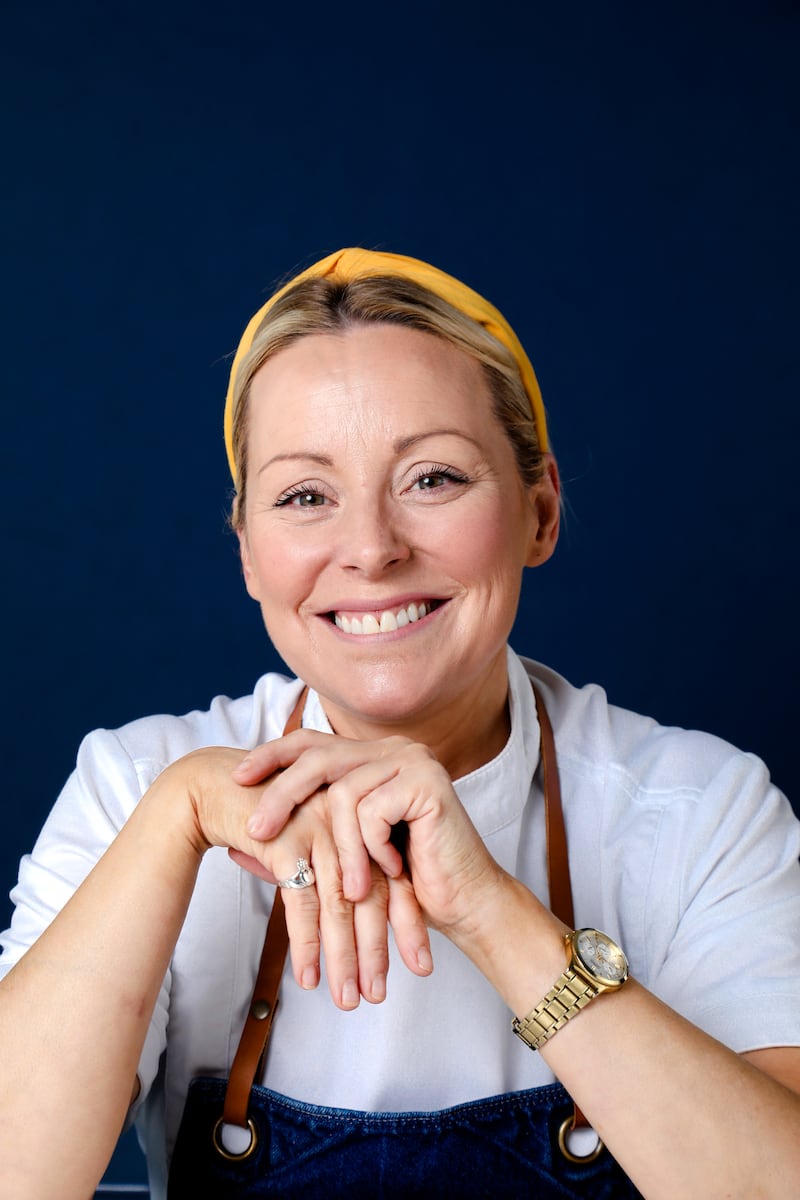 Anna Haugh says she has loved every kitchen she has worked in and every head chef. Photograph: Joanne O’Brien
That might have put the kibosh on her culinary career, except for a summer job on Jersey when she was asked to go into a restaurant kitchen to open tins of fruit cocktail. “The kitchen was empty, there was no fun to be had, no passion and roaring, just an immaculate kitchen with pots of boiling stock.” She stood in the empty kitchen, “and in my belly I just knew. I said to myself: I belong here. I belong here.”
She went on to train in Cathal Brugha Street, working in an Eddie Rockets to support herself and then in the Salthill Hotel in Galway, “mostly opening packets”. She credits the head chef there for encouraging her to go to a restaurant where everything was home-made. Taking his advice, she worked for a formative period at Derry Clark’s L’Ecrivain, alongside many accomplished women chefs, and eventually to kitchens in Paris, learning from renowned Italian chef Gualtiero Marchesi. After a brief stint back in Dublin she went to London, honing her craft in some of that city’s most respected kitchens. She raves about her experiences under two Michelin-starred chefs, Shane Osborn in Pied a Terre, and Philip Howard in The Square. Later, she secured a role at the Savoy under Gordon Ramsay, impressing with her elevated Irish dishes, and taking on both head chef and general manager responsibilities.
The dream, though, was always to open her own restaurant. Following a stint at Bob Bob Ricard in Soho, she nearly secured a site, but walked away due to high rents and had to start the search again. She now runs Myrtle in Chelsea, serving up fine dining with an Irish edge, and the Wee Sister Wine bar next door.
Her restaurant is named for Myrtle Allen. While she never ended up training at Ballymaloe, she says the Allen family are a significant inspiration, because of how much they have done over the years to champion Irish food.
In a notoriously tough business, Haugh says she has loved every kitchen she has worked in and every head chef. “They were very challenging environments. I thrived in those environments, but not all people did. The chefs I worked for were good people. Not all head chefs are good people. It gets chaotic and crazy and if somebody at the top is purposely terrorising people, it’s very different from somebody getting stressed and then shouting.”
Was she surprised to read allegations of abuse by Noma founder Rene Redzepi? “No.” How come? “You look at the sous chefs. and you can always tell. If the sous chef is like a skeleton, and gaunt, and not laughing with their eyes, you can tell when somebody is in an environment that is not healthy.
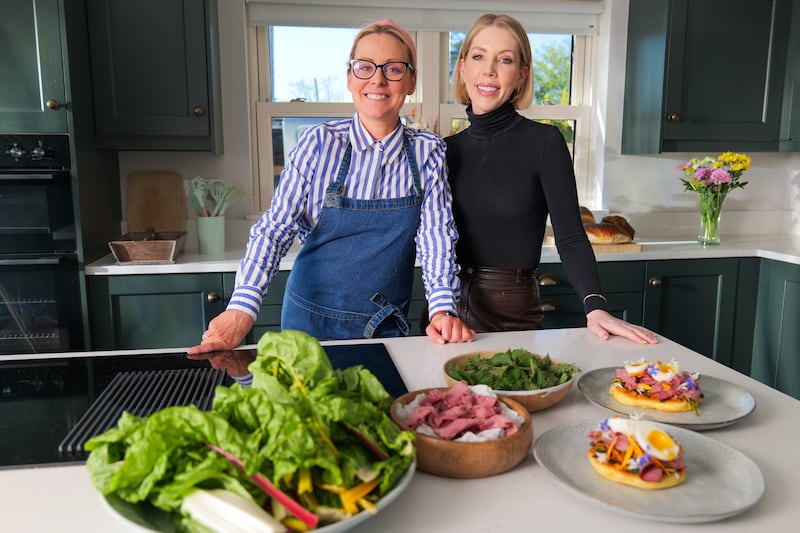 Anna Haugh and Katherine Ryan cooking in the kitchen on Anna Haugh’s Big Irish Food Tour. Photograph: BBC NI/Below The Radar/Conal Hughes
“I always say to any young chef that asks me for advice, you think when you go to a restaurant that they are trialling you, but you should be trialling them. If you see somebody being mistreated, you’re next on the list.”
She gets a bit teary when she talks about her father, who worried for years about her working in kitchens, fearful for his daughter in what he viewed as an insecure industry. “My father saw kitchens as being for people with no other options in life, a job where you had no prospects. He wanted the best for us, a job that required a degree, with a pension and holidays and worker’s rights. And back then, notoriously, in lots of kitchens you didn’t get days off or holidays, so he wasn’t wrong.”
The tears threaten again when she recalls his apology to her one day when she had flown home from London for a visit. “My dad goes ‘sit down’ and I was like all right. And he goes ‘I want to say I’m sorry. All those years when you were working in restaurants I thought they were taking advantage of you, but I realise now they were teaching you skills that you couldn’t learn in a university. It’s like you were getting a degree in those restaurants. I’m sorry I couldn’t see it and I’m glad you stuck with it’.
“What a beautiful example of what an apology should be,” Haugh says, smiling now. “A good apology is for the person giving it, not for the receiver. He felt it in his heart. He’s so proud of me. What a legend.”
I love coddle. And anybody who says they don’t like coddle, I want to make it for them because it’s so delicious
— Anna Haugh
He makes a decent sandwich too, apparently. You get the sense that Haugh could talk about sandwiches for hours and it would never get dull. Growing up in Tallaght, the humble snack was a serious business. “In my house they were made with purpose and intention,” she says. Her current sandwich of choice comes on “really good bread, no butter, mustard on one side of the bread, some excellent mature cheddar, three or four anchovies laid across the cheese …”
Sandwich assembled, she then chops it into eight pieces to be eaten, controversially, “like a delicious canape”. The anchovies must be “the best you can find.” Haugh gets through a tin of anchovies a day and is almost evangelical in her conviction that the small, salty fishes elevate everything, especially the humble sambo.
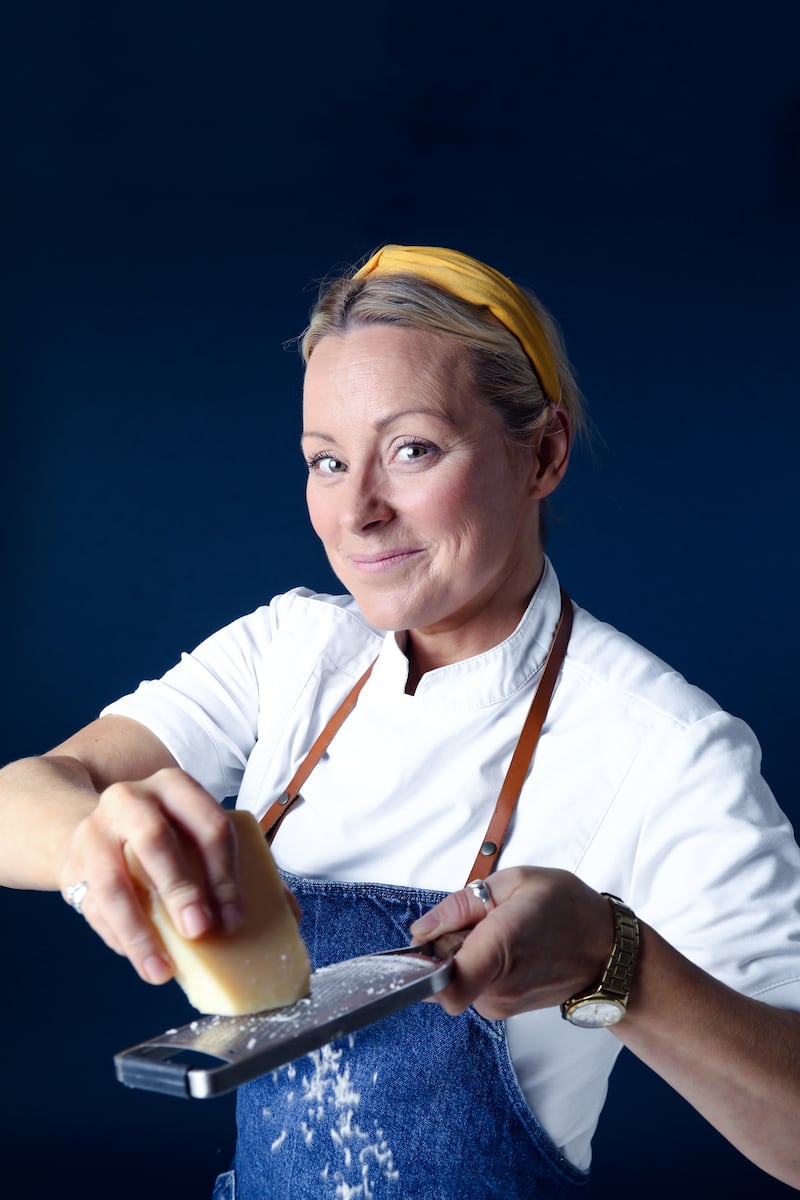 This is classic Haugh. Taking a humble Irish dish, refining it but preserving its soul. Photograph: Joanne O’Brien
She says being a chef came naturally, it never felt like a choice, just as using Irish ingredients does not feel like a choice to her. “It was like a whisper in my head from when I was young, when I saw my mother cooking.”
What was her favourite of her mother’s meals? “Coddle,” she says with no hesitation. Haugh won’t have a bad word said about the Dublin dish made from boiled sausages and rashers.
“I love coddle. And anybody who says they don’t like coddle, I want to make it for them because it’s so delicious.” She has since served up coddle in many fine dining establishments, including for Gordon Ramsay. “They just didn’t know it was coddle.” This is classic Haugh. Taking a humble Irish dish, refining it but preserving its soul, “so when you eat it, you still have all the flavours and the feeling”.
Away from the kitchen, 45-year-old Haugh has spoken about the challenges of fertility treatment. She spent seven years trying to conceive before having her son Oisin, who is now four. “It was obviously very hard, but really worthwhile at the same time. I love my job but my God, being a mother is the bees knees. I can barely remember the journey of IVF, now. I couldn’t believe that it was possible that I was going to have a little one … so many people aren’t as lucky as me.” She was going through that at the same time as trying to set up a restaurant. “And people thought I was crazy. They were like, ‘oh, you want to open up a restaurant and have a child at the same time?’ And I was like, yeah, I’m betting on both horses because I mightn’t get to have either.”
Sometimes the media depicts Tallaght in one light, but like everywhere it is a multifaceted place
— Anna Haugh
Her attitude towards balancing parenthood with the demands of a high-end restaurant and a thriving career in broadcasting is as pragmatic as her approach to most things. She sees solutions, not problems. “While I was expecting Oisin, the manager’s partner was expecting and the sommelier’s wife was expecting and everything was fine. It’s possible, basically. You just need to find solutions, and also, sometimes you might drop a ball, and that’s okay, as long as the ball’s not the kid.”
She is no longer with her son’s father and is philosophical about the relationship ending. “We’re all on a journey, and when you’re on the right path, you’re on the right path, and if something feels like it needs to be addressed, well, then you have to address it because happy parents end up with happy children. That was very important for me, I wanted Oisin to have the best example of who I am and who his father is, and that was the decision that we made. And he’s a really content little boy. Happy in his whole skin.”
[ I love my job. But I have to push aside the guilt loaded on to women like meOpens in new window ]
Haugh is bright and vivacious company, as self aware as she is grounded. There’s a hint of mischief in her conversation, and occasional flashes of steel. Here she is on the perils of ultra-processed food: “Your ready-meal was made by a person who does not like that ready-meal. I don’t believe we should ever eat food that is touched by hands that hate the job. Intentions matter.”
How does she hope the all-new, all-woman MasterChef is received? “What I want is that when people who watch the show see me as a chef that gives good advice, and Grace as a food critic who’s really looking for the best in the food. I want people to watch this show and see us as two people who’ve put decades of work into our careers … that is what I hope people look at. And Grace’s dresses of course.” While Dent’s telly outfits will be head-turning, Haugh says she remains in her chef’s whites for the whole series, with only an occasional change of headband.
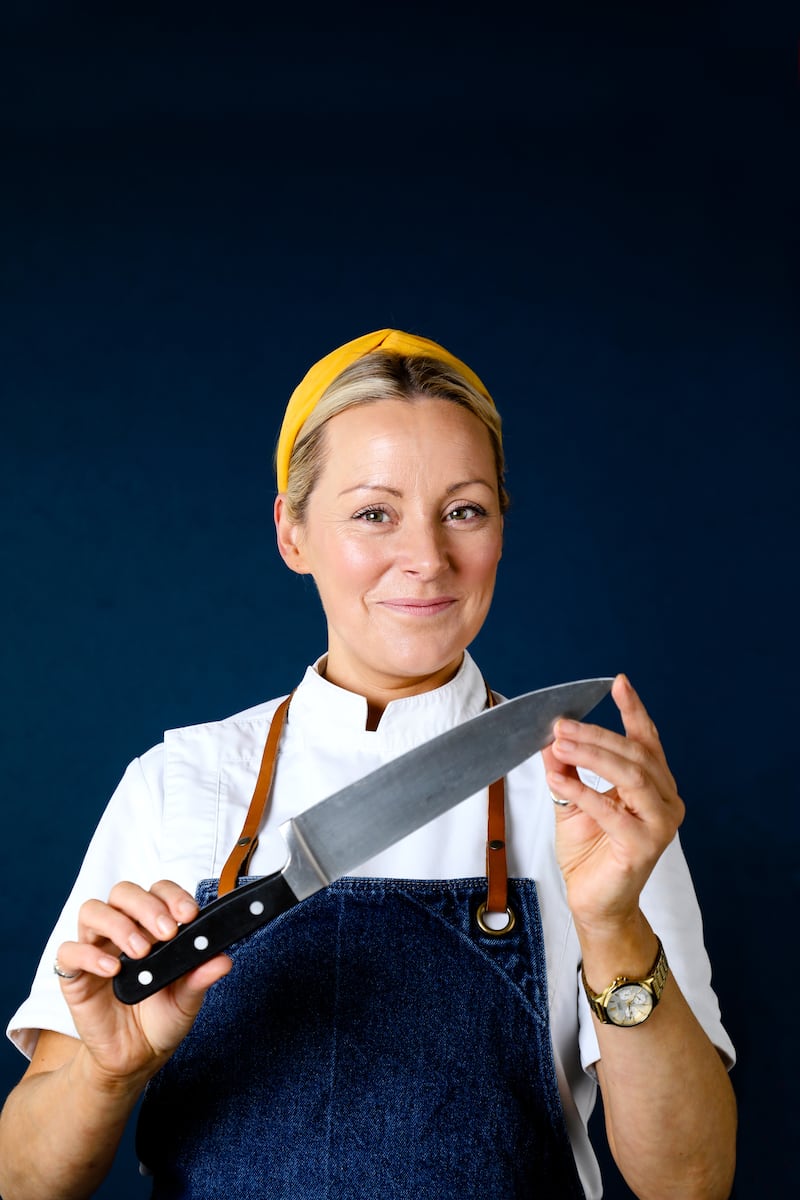 Anna Haugh: ‘I want people to watch this show and see us as two people who’ve put decades of work into our careers.’ Photograph: Joanne O’Brien
“If I had my way, I’d live in chef’s whites morning, noon and night,” she grins.
When she’s home in Dublin, she loves trying out new restaurants and one of her favourites is Craft Restaurant in Harold’s Cross. Despite all her years away, she retains that gorgeous Dublin accent. “I am Tallaght to my bones and I know absolutely tonnes of wonderful people from Tallaght. Sometimes the media depicts Tallaght in one light, but like everywhere it is a multifaceted place. There are lots of versions of Tallaght and I’m really proud I come from there.”
She thinks back to when she appeared on a celebrity edition of The Weakest Link quizshow earlier this year, hearing herself say “I’m Anna Haugh, from Dublin, Ireland” was a heady moment. “My brain was fizzing … nobody in my life, including myself, ever thought that little Anna Haugh from Tallaght would be on The Weakest Link. Never mind, MasterChef and all the other wonderful shows that I get to be on. It was a real moment.”
Does she feel conscious of representing Dublin and Tallaght on the new series? “I’ll be honest with you. I’m very conscious of that. I’m extraordinarily proud.”