
The Centers for Disease Control and Prevention (CDC) and public health officials in several states are investigating a multistate outbreak of Salmonella illnesses linked to contact with backyard poultry.
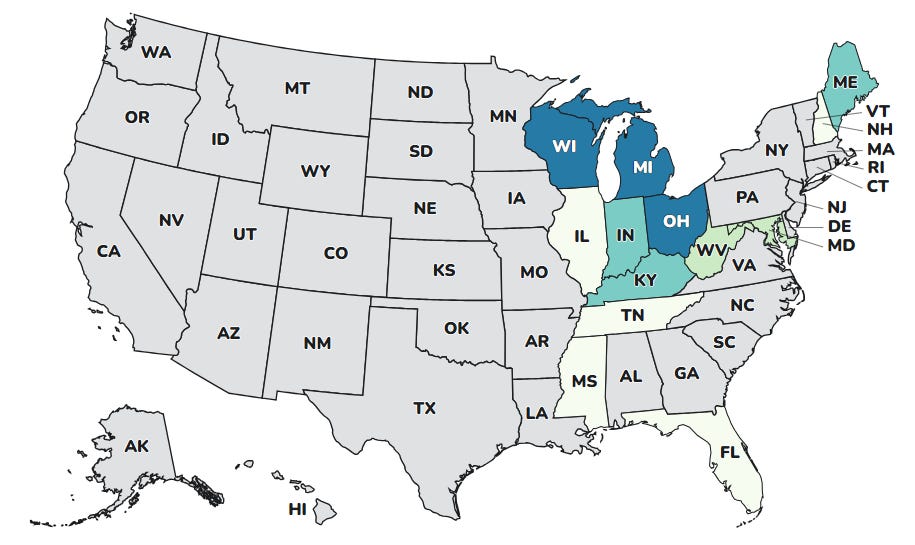
As of April 13, 2026, a total of 34 people infected with the outbreak strain of Salmonella Saintpaul have been reported from 13 states- Michigan (6), Ohio (5), Wisconsin (5), Indiana, Kentucky, and Maine with three each; Maryland and West Virginia with two each; and Mississippi, Florida, Illinois, New Hampshire, and Tennessee with one each.
Illnesses started on dates ranging from February 26, 2026, to March 31, 2026. Of 27 people with information available, 13 have been hospitalized. No deaths have been reported.
Health authorities do emphasize that the true number of sick people in an outbreak is likely much higher than the number reported, and the outbreak may not be limited to the states with known illnesses. This is because many people recover without medical care and are not tested for Salmonella. In addition, recent illnesses may not yet be reported as it usually takes 3 to 4 weeks to determine if a sick person is part of an outbreak.
State and local public health officials are interviewing people about the animals they came into contact with in the week before they got sick. Of the 29 people interviewed, 23 (79%) reported contact with backyard poultry.
Backyard poultry, like chickens and ducks, can carry Salmonella germs even if they look healthy and clean. These germs can easily spread to anything in the areas where the poultry live and roam.
You can get sick from touching your backyard poultry or anything in their environment and then touching your mouth or food and swallowing Salmonella germs.
Most people infected with Salmonella experience diarrhea, fever, and stomach cramps.
Symptoms usually start 6 hours to 6 days after swallowing the bacteria.
Most people recover without treatment after 4 to 7 days.
Some people—especially children younger than 5, adults 65 and older, and people with weakened immune systems—may experience more severe illnesses that require medical treatment or hospitalization.