
Richard Fearless’s childhood was a globetrotting affair. Born in Zambia, the electronic producer and DJ grew up near the Kalahari Desert in Botswana. Later there was a stint at a Hogwartsesque boarding school outside London. But, of all his old memories, the most precious are of holidays with his father in a cottage at the base of Mount Errigal, in Co Donegal.
“He was on Upper Fawnaboy,” he says, referring to the townland in the northwest of the county. “You’re in the shadow of Errigal. There was many a summer climbing Errigal. I’m hoping to get back this summer – the first time I’ve been since he passed.”
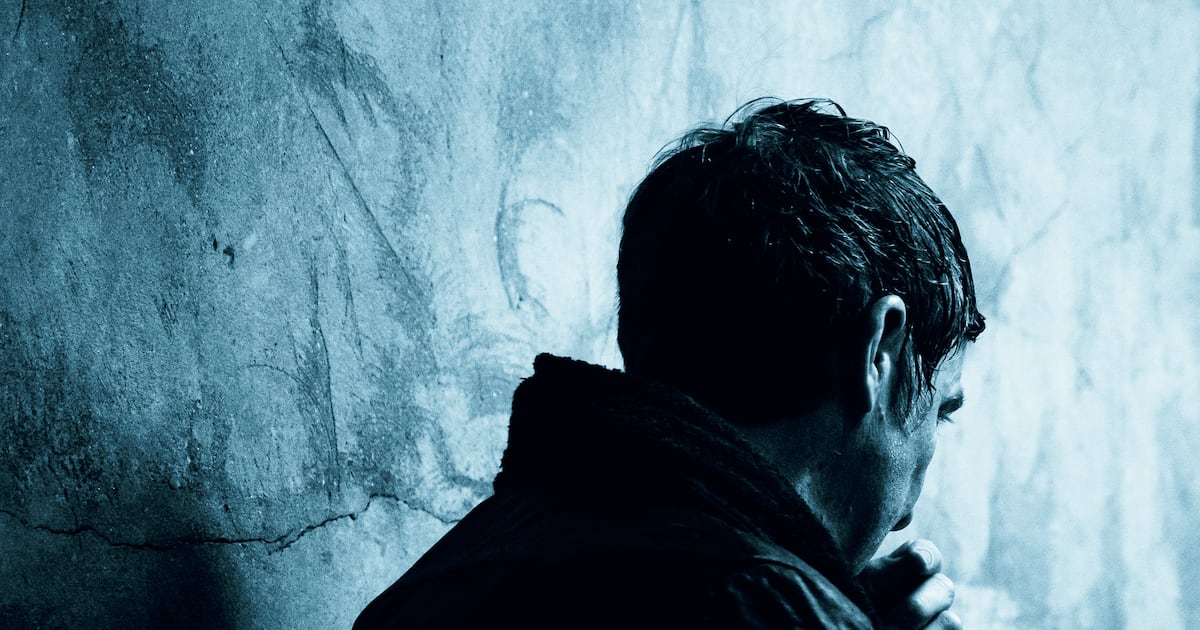
A return to the scene of his summer holidays will be one more staging point along the long road of grief that has stretched out following his father’s death. Last year Fearless poured his emotions into the album Death Mask, by his project Death in Vegas. It’s a beautiful howl of anguish articulated through a blizzard of droning ambient compositions.
Fearless struggles with the meaning of the record. It’s about death, yes. But he sees it also as chronicling the ups and downs of life: his own, his father’s; everybody’s, really. The way he puts it is that he “tried to have a starting point of life and an ending point of the journey in between – the highs, the lows.” Irish fans can judge for themselves when he brings Death in Vegas to Belfast and Dublin for three concerts over the May bank-holiday weekend.
Over video from his home in London, Fearless cuts a matey, low-key figure. He apologises for doing the interview in the evening, explaining that he had to bring his daughter to the dentist earlier that day.
Such chores are a far cry from the figure he cut in the early 2000s, when Death in Vegas had a brief incarnation as a chart-topping “it” band and he was among the coolest figures in pop.
Back then he was the mercurial beatmaster who worked with old masters such as Iggy Pop and Jim Reid of The Jesus and Mary Chain and made it seem as if he was the one doing them the favour, bestowing on his collaborators some of his dark mirror shade chic.
Two and a half decades later he is still making compelling records. But, by design, his platinum-album days are behind him. Nowadays his work engages with the warp and weft of middle age: parenthood, growing older, the death of a parent.
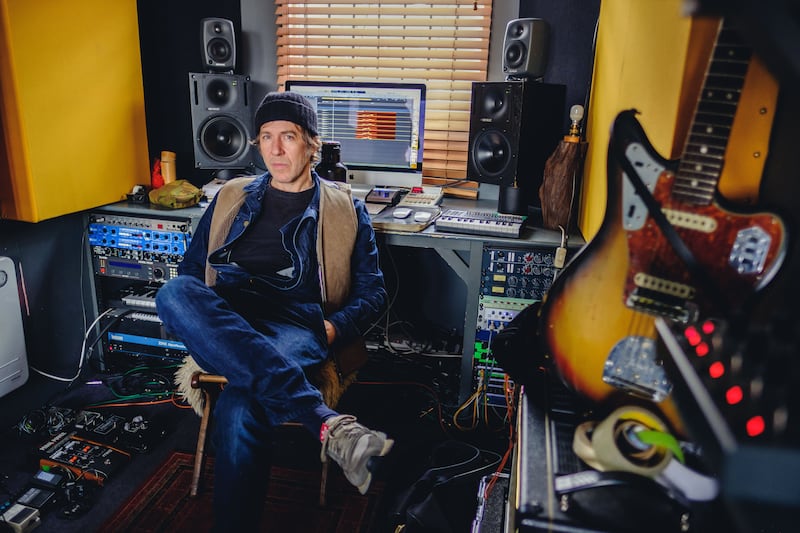 Richard Fearless at his studio in London in 2019. Photograph: Kevin Lake/Future Publishing via Getty
He approaches it almost as much as therapy as a job. In the wake of his father’s death it was a huge relief to be able to go into the studio he operates in east London and write loud, throbbing music. Losing himself in these moments, Fearless felt unburdened – not happy, exactly, but free. It was same feeling he had in the 1990s when he was getting into rave music.
“A lot of that for me is what I found in rave culture. The unity. Music’s not lost that for me. There are certain moments when it feels it’s bigger than yourself. I can still remember the moments I experienced that – going from being an indie kid, going to my first raves. You have that feeling of euphoria.”
Death in Vegas first played what is now the Button Factory in early 2000. Fearless, in the first flush of his burgeoning stardom, was touring Death in Vegas’s hit second album, The Contino Sessions.
Named after the London studio where he recorded it, the LP was mind-blowingly zeitgeisty – the essence of Y2K chic. The song Aisha featured grungy guest vocals from Iggy Pop. Then there was Dirge, a haunting mash-up of shoegaze and trip-hop, with an irresistible riff and banshee-like singing courtesy of Dot Allison, of the great lost 1990s indie-dance trio One Dove. Think My Bloody Valentine spliced with Portishead, given added cool by Allison’s vocals and Fearless’s persona of drop-dead cool DJ.
The record was huge. Too huge, in fact, for Fearless, who over time realised he didn’t want to be a rock star and had better things to do than arrange for famous singers to guest on his albums. In 2004 he finally pulled the plug on his career, parting ways with his label and his manager and moving to New York to study photography.
Death in Vegas did eventually return, but it was as something radically different: an artier electronic project that looked to the underground rather than the mainstream.
“I made conscious choices to leave a major. To go without management for a long time. I do now have a manager. I wouldn’t have done the last three Death in Vegas records if I’d stuck to a major. It would have been a real battle.”
I thought, you know what … I’m done with all of this. I need to get out
— Fearless on his decision to take a break from music
Fearless was born Richard Maguire in 1972. His father was an engineer from Divis Drive, off the Falls Road in nationalist west Belfast. His mother was a Protestant from Scotland. The couple met in Belfast in the 1970s – but, with the Troubles raging, their mixed marriage brought unwelcome attention. And so his father accepted a job offer in Zambia.
His parents separated when they moved back to the UK, by which time their son was enrolled in a Catholic private school near Reading. It was around this time that his father built the house in Donegal, incorporating elements of an older cottage, and moved there on retiring.
Fearless honours that Irish heritage on one of the most haunting moments on Death Mask: nine minutes of fuzzed-out ambient catharsis titled Róisín Dub(h). It reminds him of his father and of his grief. They are important feelings that he wants to hold on to for as long as possible.
“Out of all the songs on the album, that was one where I tried to tap into that overwhelming sense of grief. It’s a weird one; it’s hard talking about it. What I found with grief, it’s overbearing. It comes to a point where those moments between reflection of grief become further and further apart. When they do happen, you start to cherish them. At that moment you’re concentrating purely on that person and on what they meant to you.”
He is far happier following his muse than chasing the charts. He never regretted turning away from that poppier incarnation of Death in Vegas. At the time, he had felt he had allowed music to derail him from his true calling in visual art – which is what he studied in New York. Today he combines both passions, not only composing and producing Death Mask but also designing its striking cover art.
“I needed to push myself in other directions. I knew what I didn’t want. I didn’t want to carry on with Death in Vegas if it became, ‘Who’s going to be the next singers? We’ve had a bit of chart success – how can we take it to the next level?’ That doesn’t interest me in the slightest.”
In addition to those artistic frustrations, the major catalyst behind the move to New York was an abortive collaboration with Oasis. Britpop’s lairiest had tapped him to produce what would be their sixth album, Don’t Believe the Truth. He has no ill feelings towards the Gallaghers, but the subject is still a sensitive one.
Oasis did use some of the ideas they had worked on together, though in radically different form. None of Fearless’s contributions made the final record: the few examples of their collaborations you can find on the internet sound like Liam Gallagher guesting on Death in Vegas – which was never going to fly with the band. A few weeks later he was on a plane to New York.
“I definitely learned I didn’t want to be a producer. It’s a tricky one, that, because it’s quite a complex kind of story. I’ve never gone into it. There’s been various things floating around for years. I don’t want to [go into it], because it’s hurtful to a few people.
“It was a really great experience. There’s a lot that I loved. I enjoyed my time with the band. All of the band members, Liam, Noel – hysterical to work with. It was a great five weeks of my life.”
He pauses to gather his thoughts. “It’s weird … That ending, for the reasons it ended … That was very crucial to my decision to move to New York, plus at the time I had a couple of friends … Things were getting heavy. I lost a couple of friends. I thought, you know what … I’m done with all of this. I need to get out.”
Fearless regrets not being able to attend the reunion shows by Creation Records’ other big 1990s band, the Irish shoegaze innovators My Bloody Valentine, whom he holds in the highest esteem.
“I’ve fortunately seen My Bloody Valentine a few times over the years. I don’t have a big interest in seeing my heroes. I don’t want to see Pet Sounds performed and it not be the same [as on record]. It is such a high godlike thing.
“There are very few bands that I’ve seen [without] having those illusions shattered at some level. My Bloody Valentine, maybe Neil Young and Crazy Horse – that was a spiritual performance.
“After that I can’t think of any other time I haven’t been slightly disappointed. Maybe Iggy. He can still hold his own. Oasis? Nah, wouldn’t be my thing. I couldn’t get that excited about it.”
He doesn’t regret any of his decisions. The Death in Vegas that plays in Dublin will be very different from the one that graced the Button Factory 26 years ago, no longer a hit machine but a vehicle for Fearless’s belief in the need to keep moving forward.
“You can do things on your own terms. It means saying no to a lot of things,” he says. “There are moments I’d rather be broke, have a bit of a struggle, than take the pay cheque and tour the Contino album for two years.”
Fearless smiles before logging off, going back to his routine of dental appointments and school runs – and to the comforting knowledge that there is a future beyond pop stardom.
Death in Vegas play Mandela Hall, Belfast, on Saturday, May 2nd, as part of Cathedral Quarter Arts Festival; and the Button Factory, Dublin, on Sunday, May 3rd, and Monday, May 4th