
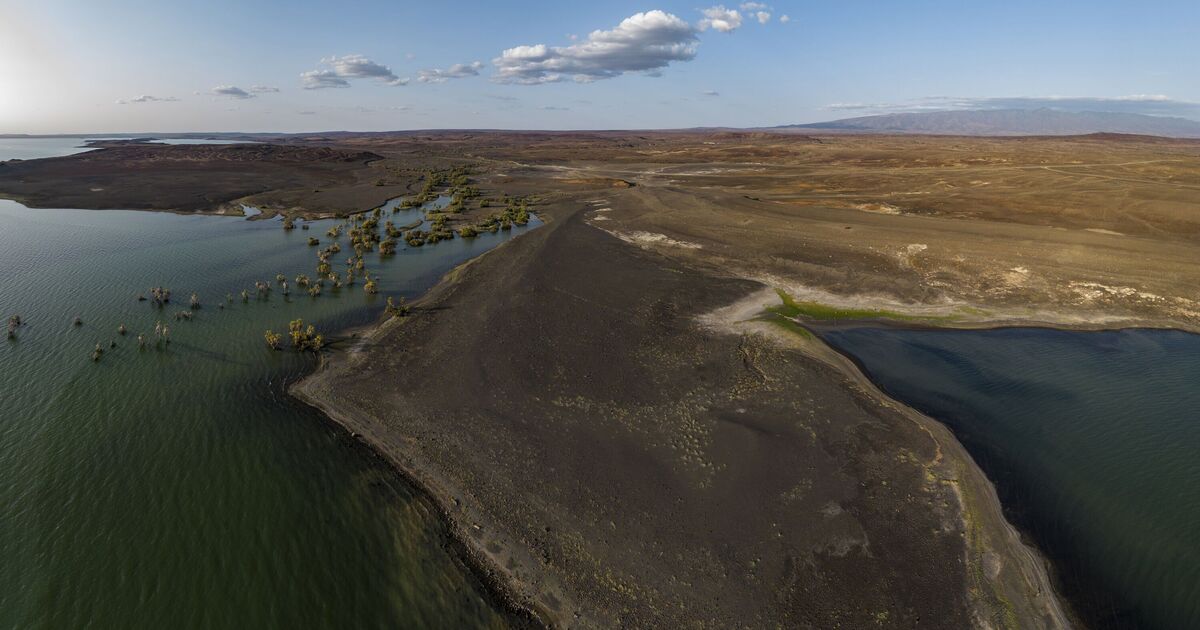
A vast new ocean stretching hundreds of miles could one day split Africa in two, scientists have warned, after discovering the continent is already tearing itself apart deep beneath the surface. New research focused on the Turkana Rift in East Africa suggests the process driving the continent’s breakup is far more advanced than previously believed—raising the prospect that a 300-mile-long ocean basin could eventually form as tectonic forces continue to pull the land apart.
The study, published in Nature Communications, found that Earth’s crust beneath the region has thinned dramatically, a key signal that the rift is approaching a critical stage in continental separation. Christian Rowan, the study’s lead author, said: “We found that rifting in this zone is more advanced, and the crust is thinner, than anyone had recognised. Eastern Africa has progressed further in the rifting process than previously thought.”
The Turkana Rift, spanning parts of Kenya and Ethiopia, forms part of the vast East African Rift System—a geological fault line stretching thousands of miles from the Red Sea down to Mozambique. Here, the African continent is slowly splitting as the Somali Plate drifts away from the rest of Africa at a rate of roughly 4.7 millimetres per year.
Using seismic imaging and subsurface data gathered in collaboration with the Turkana Basin Institute, scientists mapped the structure of the crust beneath the rift.
They found that at its centre, the crust is just 13 kilometres thick—less than half the thickness measured outside the rift zone. This extreme thinning is a hallmark of a process known as “necking,” where the crust stretches and weakens until it ultimately breaks apart.
Mr Rowan explained: “The thinner the crust gets, the weaker it becomes, which helps promote continued rifting.”
Researchers now believe the region has reached a tipping point. Anne Bécel, a co-author of the study, said: “We’ve reached that critical threshold. We think this is why it is more prone to separate.”
While the dramatic breakup will not happen anytime soon—likely taking millions of years—the long-term consequences are profound. Eventually, molten rock will rise to the surface, forming new oceanic crust. Water from the Indian Ocean could then flood the gap, creating a new sea—effectively dividing the continent.
Scientists say the findings not only reshape understanding of how continents break apart, but also shed new light on one of the most important regions in human history.
The Turkana Rift is often described as the “cradle of humankind”, having produced more than 1,200 hominin fossils—around a third of all such discoveries in Africa.
However, the new research suggests its importance may lie less in evolution itself and more in preservation.
Mr Rowan said: “The conditions were right to preserve a continuous fossil record,” pointing to the accumulation of fine sediments following volcanic activity millions of years ago.
The implications stretch beyond geology. By linking tectonic shifts with climate and landscape changes, scientists hope to better understand how environmental forces shaped early human development—and how similar forces may influence the planet’s future.
Co-author Folarin Kolawole said: “In essence, we now have a front row seat to observe a critical rifting phase,” describing the rare opportunity to witness the birth of a new ocean in real time—albeit on a geological clock.