
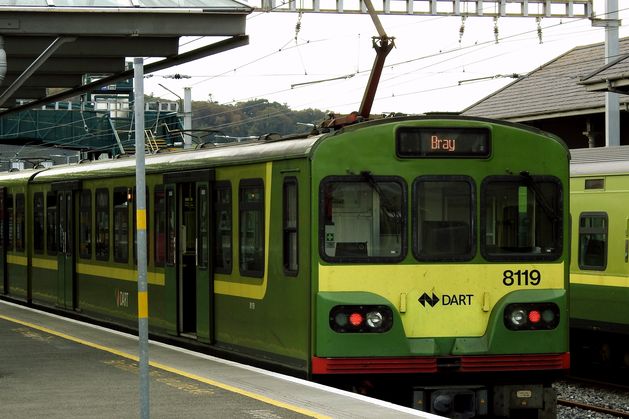
The move follows a recent market engagement phase with industry suppliers and marks a significant acceleration of the project, bringing the expected delivery date forward by several years compared to earlier transport plans.
The new system will enable battery electric Dart trains to operate south of Greystones, where no overhead electrification currently exists. Under the proposed operating model, trains will run on standard overhead power from Dublin to Greystones before switching to battery mode for the final section to Wicklow. They will recharge while stationary at Wicklow station, allowing for a consistent hourly service in both directions.
Tánaiste and Wicklow TD Simon Harris has welcomed the announcement, describing it as “a very important step forward for Wicklow town and for everyone who relies on rail services to commute to and from Dublin”.
He said the project is now moving “from planning towards delivery”, adding that the investment will provide “more frequent, more reliable and cleaner public transport” for the region.
The tender includes the design and installation of specialised charging equipment, including high voltage power systems and platform mounted charging bars on platforms one and two. These will allow the new battery electric Dart fleet to recharge quickly and safely before beginning their return journey to Dublin.
The timeline for the Wicklow project is closely aligned with the national rollout of Ireland’s new Dart fleet. The first of the new polish-built carriages will enter passenger service on the northern line to Drogheda from 2027, following testing and commissioning. These initial units will operate on fully electrified routes. The battery electric variants required for Wicklow will be introduced in later phases of the fleet deployment.
This sequencing is intentional. Construction of the Wicklow charging system is scheduled to begin in 2027, with services expected to commence in 2029. By that stage, the battery electric units will be fully delivered and ready for operation on non electrified sections of the network. The approach ensures that the infrastructure and rolling stock come online in tandem, avoiding delays or under utilisation of the new fleet.
A separate but related initiative, the Wicklow Rail Capacity Enhancement Project, remains at the planning stage and has not yet gone to tender. That project will include platform lengthening, improvements to the station car park, the installation of electric vehicle charging points, and the construction of a new active travel bridge linking the station to the Port Access Road. It will also deliver upgraded bus interchange facilities and enhanced cycling infrastructure.
Together, these projects represent the most substantial investment in Wicklow’s rail infrastructure in decades. They form part of the wider Dart plus programme, which aims to expand high frequency, low emission rail services across the Greater Dublin Area by combining traditional electrification with emerging battery electric technology.
If delivered on schedule, Wicklow town will join the Dart network in a little over three years’ time, bringing cleaner, more reliable rail services to one of Ireland’s fastest growing commuter regions.
Funded by the Local Democracy Reporting Scheme