
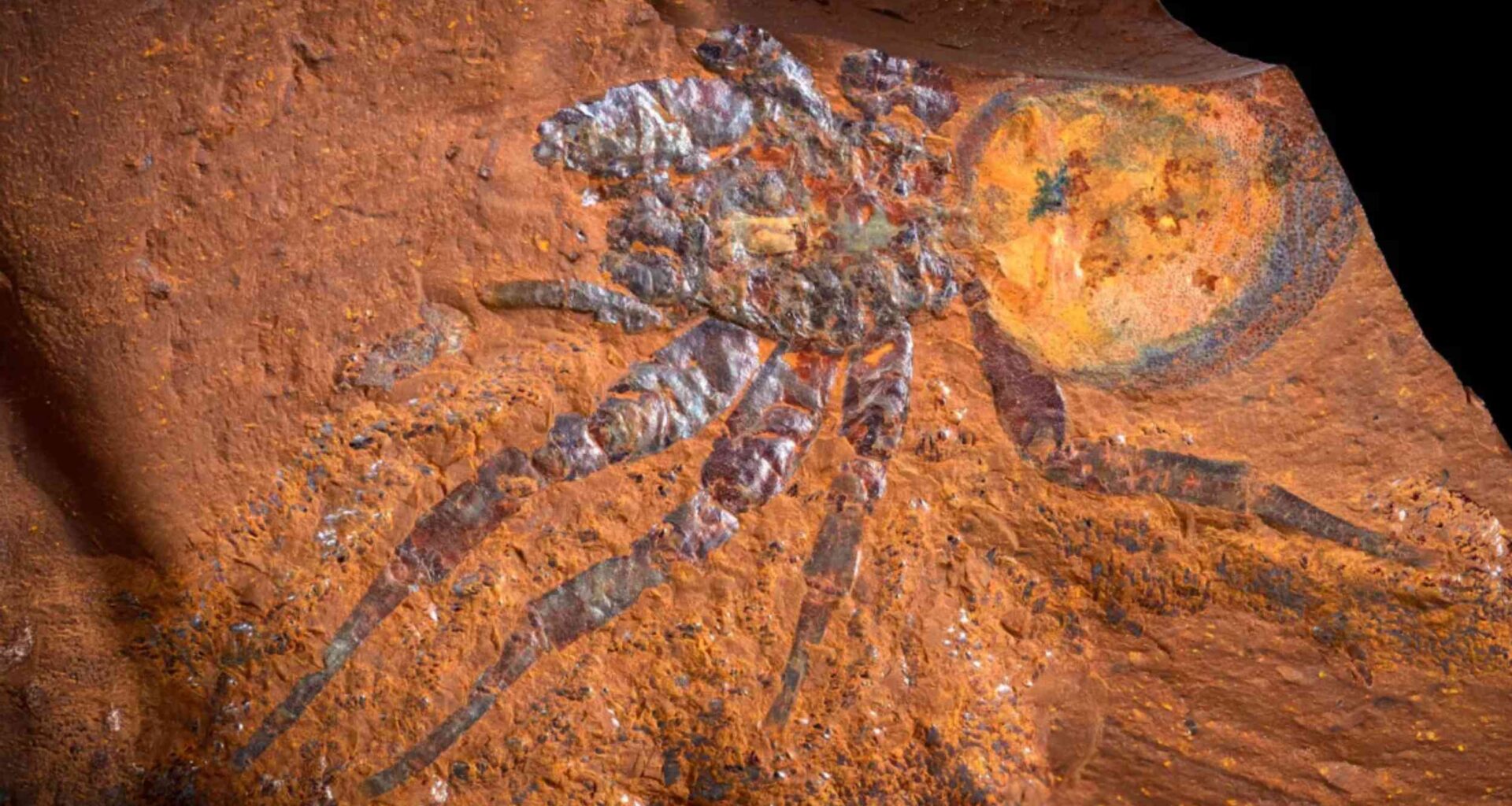
Scientists have found that iron-rich rock beneath Australian farmland preserved a vanished rainforest in remarkable detail. It includes organs, pigments, and even tiny spider hairs.
The discovery turns ordinary-looking rust-colored sediment into a new target for fossil hunters, including rusty layers they might have ignored during fieldwork.
Hidden red record

Red slabs at the McGraths Flat fossil site in southeastern Australia hold plants, insects, spiders, fish, feathers, and tiny life forms.
From those slabs, Tara Djokic, paleontology scientific officer at the Australian Museum Research Institute (AMRI), showed iron minerals captured soft tissue.
The preserved remains include internal organs and cell-sized features, while other specimens show surface details pressed into iron-rich rock.
That boundary changes where the search can begin, because red rock no longer looks like a poor fossil keeper.
Rethinking fossil formation
Most famous soft fossils come from quiet muds, volcanic ash, limestone, or fine rocks. These environments bury bodies quickly and seal away oxygen.
At McGraths Flat, the bodies sit inside ferricrete, a hard rock cemented by iron minerals.
That difference matters because iron-rich sediments usually mark weathering, the slow breakdown of rock near the surface.
Here, the same material became a fossil-making medium. This challenges the habit of focusing only on familiar rocks and ignoring unusual deposits.
A rainforest erased
Between 11 million and 16 million years ago, a wet rainforest grew in New South Wales, a state in southeastern Australia.
Thousands of preserved fossils from the site showed a busy ecosystem now buried under farmland.
Pollen and other clues pointed to drier habitats around the wetter forest, so the landscape was already changing.
That timing makes the site a rare record from before much of Australia turned drier and more open.
Tiny iron particles
Under the microscope, the red layers are made mostly of goethite, an iron mineral that can form rust-colored grains.
The grains measured about 0.0002 inches (0.005 millimeters), small enough to enter spaces inside cells before decay erased their shapes.
As the particles coated bodies and filled tissues, they preserved leaf skin, pollen surfaces, insect eyes, and fish color cells.
Hard parts fared worse, because acidic, oxygen-poor bottom water could dissolve or damage shells, teeth, and some bones before they fossilized.
Fossils formed in a lake
The fossil bed likely formed in an oxbow lake, a cut-off river bend where quiet water collects.
Warm, wet weather broke down nearby basalt, dark volcanic rock rich in iron, and acidic groundwater carried dissolved iron downhill.
When that iron reached oxygen in the lake, chemical reactions and microbes turned dissolved iron into solid grains that settled through the water.
Layer after layer settled over fresh remains, blocking scavengers, slowing decay, and giving minerals time to work.
When rust preserves
For fossil hunters, iron-rich ground has often looked like a place where details should fade.
At McGraths Flat, AMRI researchers found the opposite, because iron formed during burial rather than long afterward.
“Ferricrete is not merely a weathering product but an exceptional fossil preservation medium,” wrote Djokic.
That boundary matters because later rust can blur fossils, while early iron growth can copy fragile structures.
Searching red landscapes
The model gives researchers a practical search list, not just a story about one lucky fossil bed in Australia.
Promising places would have fine layered ferricrete, old river channels, and iron-rich volcanic rocks nearby.
Warm past climates also matter, because heavy weathering can release enough dissolved iron to feed the process.
Limestone and sulfur-rich minerals can interfere, so their absence helps keep iron available for this unusual preservation pathway.
What fossils missed
Fossil records usually favor shells, bones, and tough plant parts. They rarely preserve soft bodies or daily behavior.
Sites like McGraths Flat reduce that bias by catching tissues that usually rot before minerals arrive in time.
They also show food webs more clearly, including stomach contents and pollen carried on insect bodies.
Still, one lake cannot represent all ancient Australia, because local water chemistry shaped what survived.
Limits and next steps
Several details still need testing, especially how much work microbes did compared with simple chemistry.
Crystal shapes inside microfossils – tiny fossil remains preserved in rock – may record bacterial activity, but similar shapes can also grow without life.
Future lab and field studies could compare those tiny crystals with modern iron-rich lakes and springs.
That work would sharpen the search for hidden sites without overselling every red rock as fossil-rich before careful testing.
Why it matters
McGraths Flat connects a lost rainforest, unusual chemistry, and buried iron into one clear lesson: preservation can come from rocks scientists once distrusted.
Better search rules could reveal more soft-bodied life on land, while the limits keep each red deposit from being judged by color alone.
The study is published in Gondwana Research.
—–
Like what you read? Subscribe to our newsletter for engaging articles, exclusive content, and the latest updates.
Check us out on EarthSnap , a free app brought to you by Eric Ralls and Earth.com.
—–