
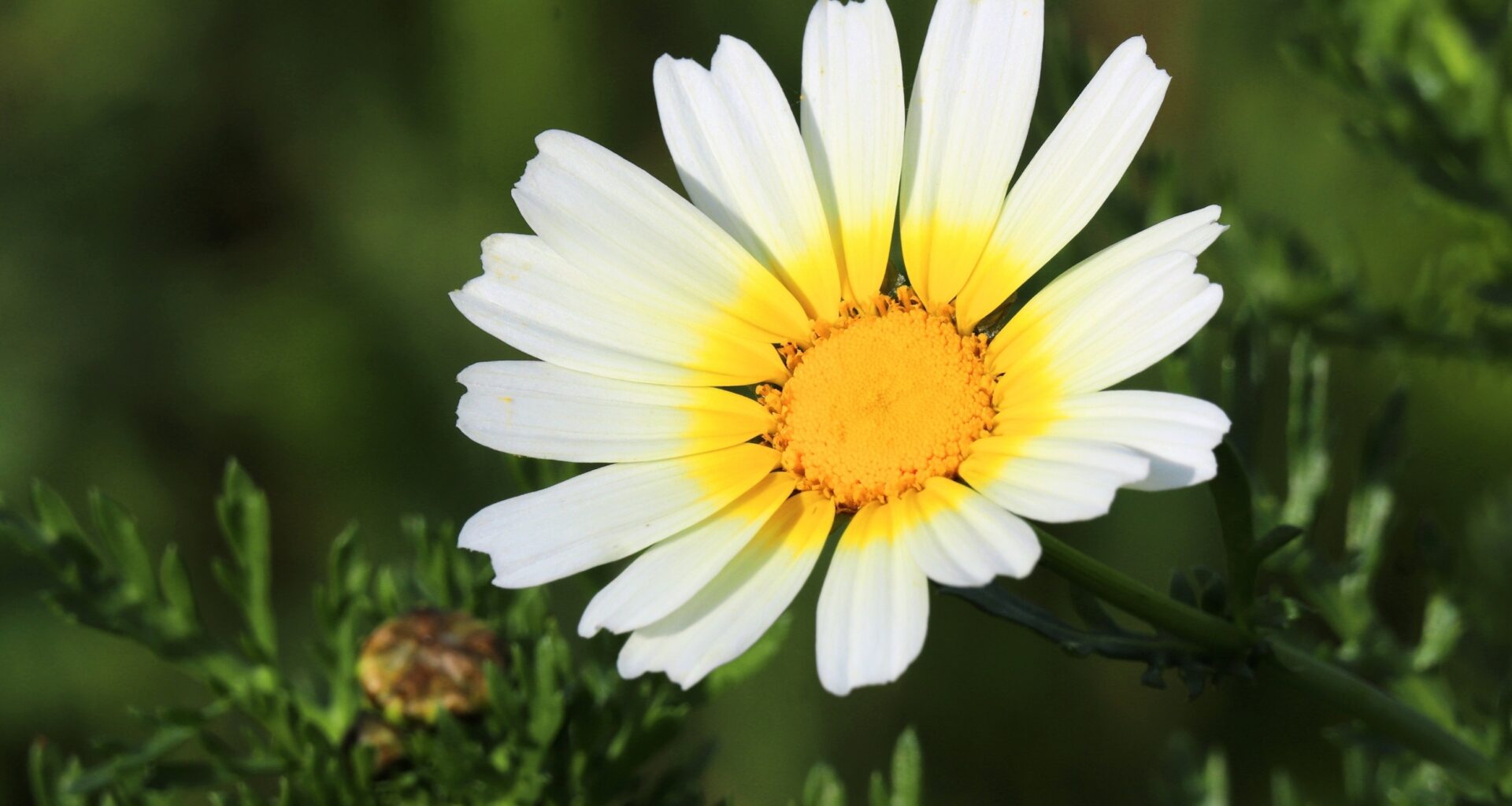
Galapagos giant daisies evolved similar jagged leaves through different sets of genes across the same islands, according to a new study.
The research turns a quiet plant group into a live demonstration that evolution can produce the same trait more than once.
Leaves reveal evolution patterns

Inside the Scalesia family tree, leaf edges separate smooth highland trees from cut-leaf lowland shrubs.
At the Kew Gardens in London, Dr. Vanessa C. Bieker linked complete plant DNA and leaves to separate genetic changes.
Her analysis showed several branches built lobed leaves independently, yet the changed genes belonged to the same leaf-building system.
The finding pushes the story beyond finches, toward plants that are still sorting into new forms and changing conservation stakes.
Plants rapidly evolved on islands
On the Galapagos Islands, an Ecuadorian archipelago in the Pacific, these daisies grew into 15 recognized species within about one million years.
Earlier research framed them as the plant counterpart to Darwin’s finches because one ancestor spread into many forms.
“Just like Darwin’s famous finches, these plants evolved rapidly after arriving on the Galápagos from mainland South America,” explains Bieker.
Fast diversification makes the group a clear case of adaptive radiation, when one lineage rapidly adapts to different environments.
Heat and dryness shaped leaves
In dry lowlands, leaf lobes can help a plant keep cooler and lose less water by breaking one wide blade into sections.
Plant leaf shape influences heat flow because smaller sections shed warmth faster than one wide blade.
The new work found most lobed populations in dry zones, while unlobed species also lived in humid highlands and mid-elevation transition zones.
That pattern does not prove every cut edge evolved for drought, but it links leaf form to harsh places.
Different genes, same outcome
The team analyzed 396 plant genomes, complete sets of DNA instructions, from every recognized Scalesia species and several suspected mixed-ancestry populations.
Those genomes let researchers compare inherited differences across entire plants, not just the surfaces of leaves.
Biologists call the result parallel evolution, when similar traits arise separately, because 43 candidate genes pointed to different DNA changes.
“Our findings highlight the flexibility and creativity of evolution,” says Bieker.
Many genes control leaf shape
Leaf edges did not change through one controlling gene hidden somewhere in the plants’ DNA.
Instead, selection acted on a gene network, a set of genes that work together as young leaves form.
Several targeted genes help control upper and lower leaf surfaces, which guides whether a blade spreads smoothly or forms lobes.
That distributed control makes repeated change more likely, because evolution can alter different parts and reach a similar shape.
Old genetic diversity helped evolution
The plants likely carried a deep supply of variation from an early chromosome merger that arrived before modern species formed.
Allopolyploidy, a merger of chromosome sets from different ancestors, can preserve extra genetic options inside one lineage.
In these daisies, that reserve may have let natural selection choose separate fixes for similar leaf problems.
Past ancestry can widen later choices without making evolution random or directionless in these island plants.
Isolation is creating new species
Genetic differences inside some named species were larger than their very similar appearances would suggest.
Long-separated populations showed little gene flow, meaning pollen or seeds rarely moved enough to keep them mixed.
Some populations may represent nascent speciation, the early formation of new species, even before botanists give them new names.
That slow separation turns each island population into more than a local patch of greenery.
Protecting plants is now harder
Protecting the daisies now means protecting hidden genetic history, not only the most visible trees and shrubs.
The researchers argue that each isolated population should count as a conservation unit, a population managed on its own.
Managers could then avoid blending distinct lines that have been evolving apart for tens of thousands of years.
That approach may complicate restoration, but it gives rare plants a better chance to retain genetic options.
Darwin’s plants return
British naturalist Charles Darwin collected many Galapagos plants, not only birds, during his 1835 visit to the islands.
Later botanists used 78 of those plants to describe species new to science, including four Scalesia species.
Darwin’s finches later showed how beak genes and hybrid ancestry shape feeding differences across island birds.
Now the daisies add a plant version of that lesson, with leaves taking the role beaks once held.
Evolution in motion
Leaf shape, island isolation, and old genetic variation turned Darwin’s daisies into a rare view of evolution while it is still unfolding.
Managers and researchers can use that view by protecting separate populations and testing which genes matter most before small differences become permanent losses.
The study is published in the journal Nature Communications.
—–
Like what you read? Subscribe to our newsletter for engaging articles, exclusive content, and the latest updates.
Check us out on EarthSnap, a free app brought to you by Eric Ralls and Earth.com.
—–