
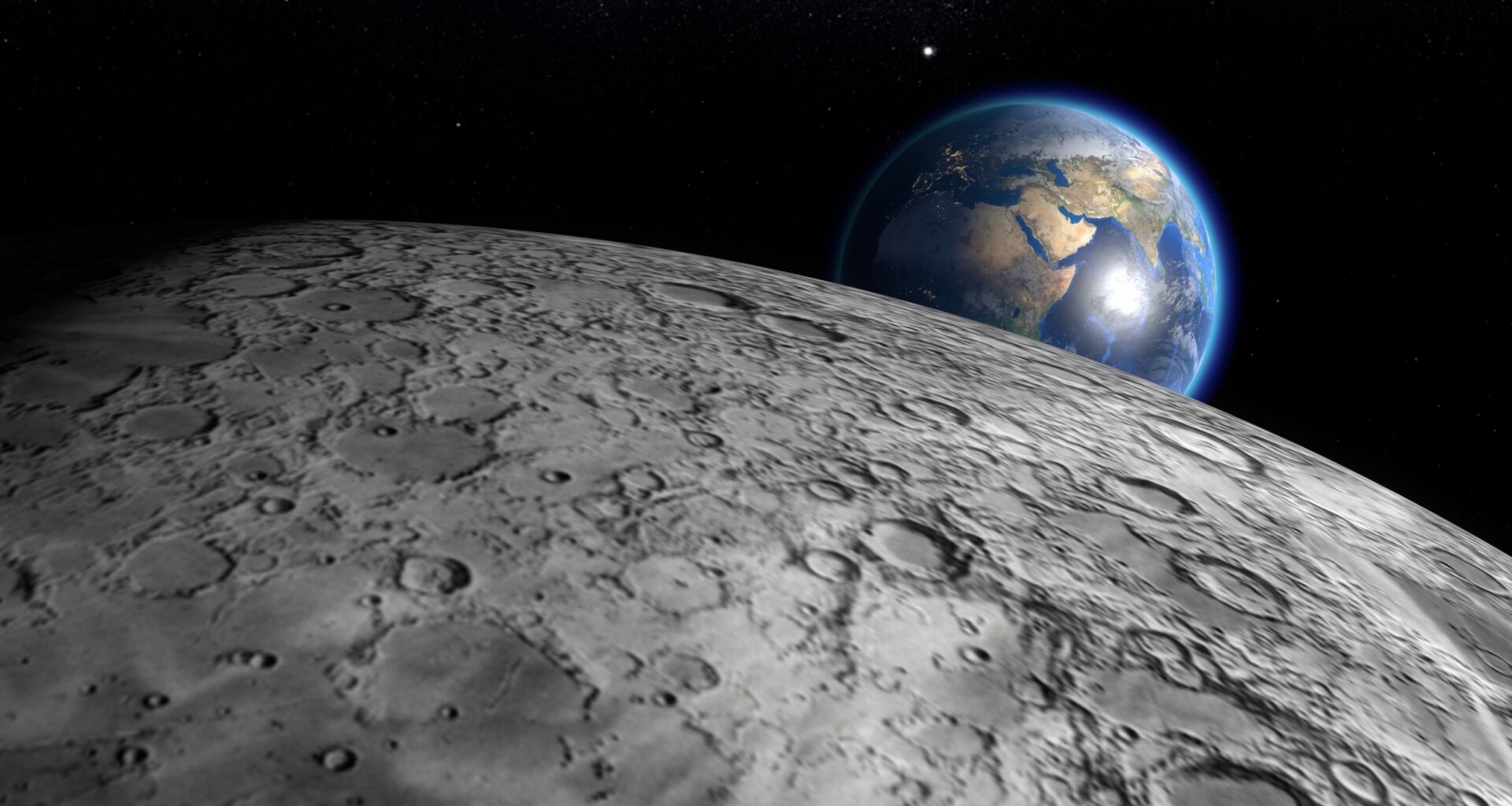
Scientists have identified two new minerals in Moon dust returned to Earth by China, adding rare crystal types with no exact counterpart on Earth.
Their tiny grains preserve chemical differences that could clarify how the Moon melted, cooled, and sorted its elements.
Secrets hidden within dust

Inside drilled Moon rock fragments from the Chang’e 5 mission, China’s 2020 Moon sample-return flight, the discovery began with crystals almost too small to handle.
By studying those specks, Li Ziying, a scientist at the Beijing Research Institute of Uranium Geology (BRIUG), connected the magnesium-rich mineral to dark volcanic debris from the Moon.
His team found atoms arranged in a pattern distinct enough to qualify as a mineral species new to science.
This matters because the next layer of the discovery depends on names, chemistry, and the rare elements locked inside each grain.
Chemistry defines the names
Formal approval gave the first crystal its name, magnesiochangesite-(Y), reflecting its key elements.
Another team confirmed a second mineral, changesite-(Ce), in both returned dust and a Moon rock that later fell to Earth.
The approvals made them the seventh and eighth new minerals confirmed from returned lunar samples.
Those names signify rare earth elements, metals that trace rock formation, not market value, so they do not prove lunar mining is near.
Microscopic grains mattered
At BRIUG, researchers found the first mineral in particles so small they were nearly invisible to the naked eye.
Moving one of these grains between instruments required extreme control because even slight movement could displace it.
“During the operation, we had to hold our breath throughout and handle it with extreme care, fearing that a single breath might blow this ‘lunar treasure’ away without a trace,” said Ge Xiangkun, from BRIUG.
That level of care shows why these minerals can remain hidden in material that appears ordinary until closely examined.
The journey of one mineral
Confidence in the second mineral grew when scientists identified it in two separate sources. One source was Chang’e 5 dust from a lava plain on the Moon’s near side.
The other was a Moon rock that fell to Earth in northwest China, giving researchers a second point of comparison.
Finding the same chemistry in both places makes it far less likely that the result came from a single unusual grain.
Chemical separation in magma
Inside magma, molten rock that cools into stone, elements entered crystals at different moments.
Light rare earth elements concentrated more strongly in the new changesite-type minerals reported from Chang’e 5 samples.
Apollo samples, Moon material gathered by NASA astronauts decades earlier, often show heavier rare earth elements in related grains.
That contrast gives geologists a sharper clue to how the lunar magma ocean, the early molten outer Moon, split into layers.
New clues to Moon volcanism
Chang’e 5 mattered before these minerals because its samples weighed about 3.8 pounds.
Scientists dated basalt, dark volcanic rock from the same mission, at about 2.03 billion years old.
That age extended the known span of lunar volcanism by roughly 800 to 900 million years.
Now the new minerals add finer chemical evidence from that same broader volcanic neighborhood on the Moon.
Evidence must be precise
Naming a mineral requires more than the discovery of one unusual speck under a powerful laboratory microscope.
The group that approves new mineral names checks both what a mineral is made of and how its atoms are arranged.
Researchers must show that the atoms follow a clear, repeating pattern, because composition alone can be misleading.
That requirement helps to prevent naming errors caused by contamination, damage, or incomplete measurements.
Crystals store conditions
Minerals form under specific heat and chemical conditions, locking those conditions in as they solidify.
Elements like magnesium, yttrium, and cerium become part of the structure in different amounts depending on how the rock formed.
Those proportions let scientists compare rocks from the Moon, Mars, and asteroids without relying only on age.
Small differences can separate one world’s cooling history from another’s, even when minerals share a family name.
Limitations and future research
Rare earth elements make the discovery sound practical, but real-world applications remain limited for now.
These minerals exist in tiny grains, so they do not point to mineable deposits or easy extraction.
These crystals reveal important processes, but don’t serve as an option for supply chains in the industry.
Further work on the two minerals can connect crystal ingredients, volcanic timing, and rare earth separation in one clearer lunar story.
Future missions that bring Moon material home will test whether these grains mark an isolated discovery or a broader pattern.
This study was published by the Beijing Research Institute of Uranium Geology.
—–
Like what you read? Subscribe to our newsletter for engaging articles, exclusive content, and the latest updates.
Check us out on EarthSnap , a free app brought to you by Eric Ralls and Earth.com.
—–