
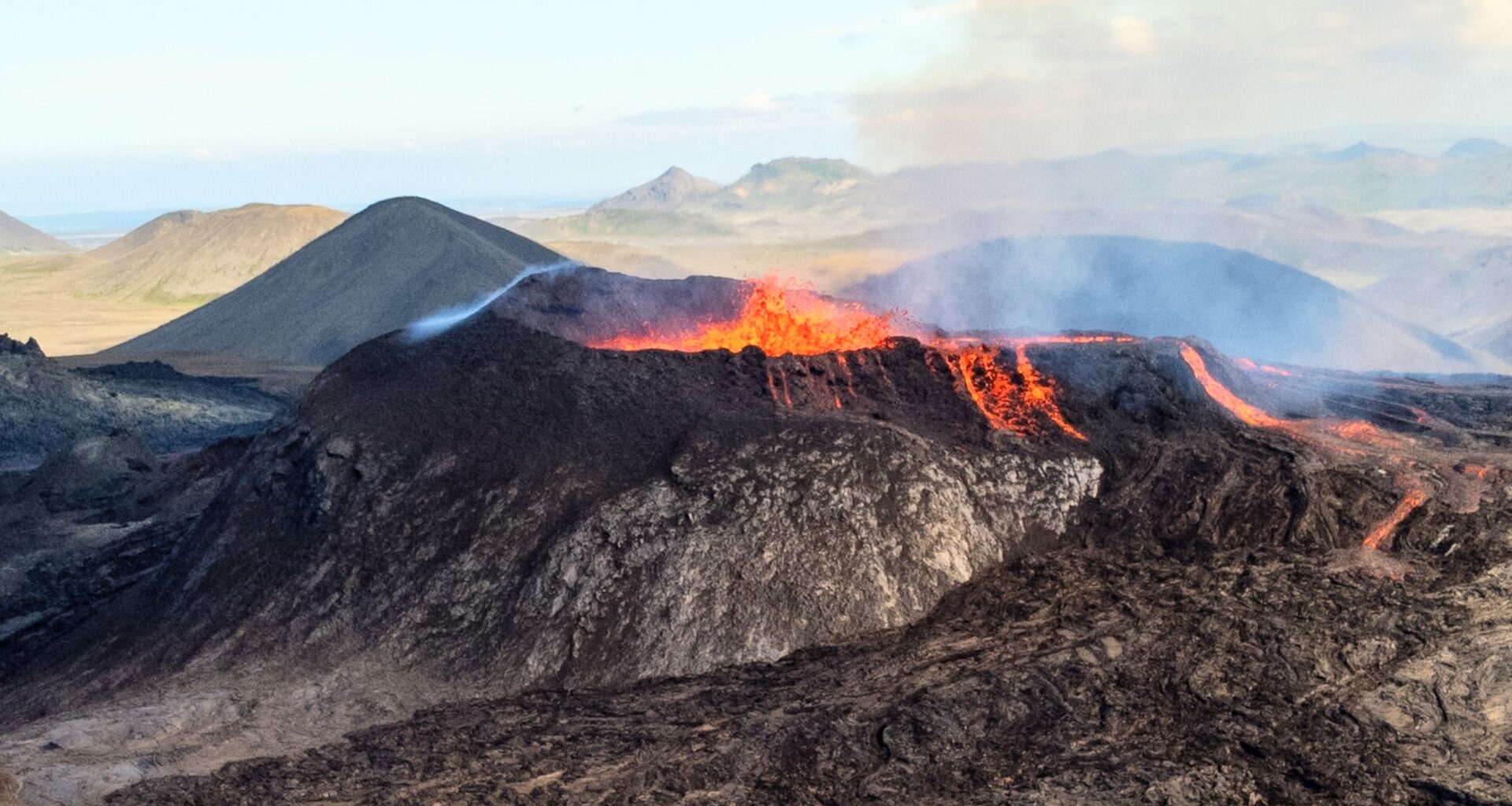
Mauna Loa, a massive volcano in Hawaii, gave off a measurable heat signal about one month before its 2022 eruption, according to a recent study.
The same record shows how lava that stopped short of a vital road can sharpen warnings on Earth and guide scientists reading volcanoes on Venus.
Lava near the road

During the 2022 eruption on Hawaii Island, the main lava stream moved toward the Daniel K. Inouye Highway.
At the University of Pittsburgh, Dr. Ian T.W. Flynn tracked that advancing front in satellite images as it moved day by day.
The analysis showed that the front covered about 80 percent of its 11-mile path in 48 hours, then slowed as supply faded.
That rapid early motion can prompt officials to protect roads, reroute commuters, or keep closer watch on nearby communities.
Heat before the eruption
Heat records added the surprise: a small temperature rise appeared inside the volcano’s summit area on October 22, 2022.
Machine learning separated that warm spot from normal hot ground and cloudy scenes.
At the same time, earthquake activity increased as magma pushed into the volcano’s storage system.
A single warm patch cannot guarantee an eruption, but it gives monitors a stronger reason to look closer when other signals line up.
Why this volcano differs
Mauna Loa behaves differently from Kilauea, its active neighbor on Hawaii Island, so warning signs cannot be copied without care.
Some volcanoes swell, some release more gas, and some heat older cracks before lava reaches the surface.
“Every volcano has its own personality,” Flynn said. Site-by-site records turn that personality into practical warning, especially where people live near fast lava routes.
Measuring lava thickness
After the eruption ended, satellite height maps showed the lava field and vents covered 13.8 square miles.
Scientists compared before-and-after ground heights, which revealed how much new rock piled across each part of the flow.
The thickest zones reached more than 66 feet, while the total new rock volume measured about 0.031 cubic miles.
Thickness changes forecasts because deeper lava keeps heat longer, blocks land harder, and cools more slowly.
Cooling after danger
Lava did not become harmless as soon as it stopped moving, because heat lingered for months beneath the dark crust.
Thinner flows cooled to background temperatures within 3 or 4 months, but thick areas stayed warm for about 21 months.
“If it’s still hot, it’s still a hazard,” Flynn said. Lingering heat can drive dangerous gases from fresh rock and make fieldwork unsafe long after the glow ends.
Satellites can speed up decisions
Government satellites gave steady heat records, while commercial fleets added sharper pictures during the fast-moving days.
Because the pictures arrived often, researchers could measure changing flow speed instead of seeing only a before-and-after shape.
The U.S. Geological Survey later reported the 2022 lava came within 1.7 miles of the highway.
Faster images cannot stop lava, but they can reduce uncertainty while emergency decisions about roads and crews are still alive.
Heat cameras kept a reliable record
Long before eruption night, orbiting heat cameras had been taking Mauna Loa’s temperature from space during repeated passes.
The Advanced Spaceborne Thermal Emission and Reflection Radiometer – a heat-mapping instrument on NASA’s Terra satellite – recorded land heat and surface details across many years.
That record let software compare each scene with normal conditions, so small heat changes did not vanish into noise.
A stronger archive makes future warnings less dependent on one lucky image or one clear-weather pass.
Lessons for Venus
Venus enters the story because its clouds hide the surface, leaving scientists to infer fresh lava from orbital measurements.
A recent Venus study found radar changes that best fit new lava flows during a NASA mapping mission in the 1990s.
Earth lava cooling rates help researchers judge whether a hot Venus feature is fresh, fading, or merely old rock.
Different air, pressure, and surface temperatures on Venus mean Earth rules must be adjusted before use.
A future with better forecasts
Better forecasts will come from combining heat, motion, thickness, gas, and ground shaking into site-specific systems.
For Mauna Loa, the new record ties a pre-eruption heat signal to later flow speed and cooling.
Other volcanoes still need years of local data at each site before a pattern becomes trustworthy.
That limit keeps the finding useful without pretending one volcano can explain all eruptions everywhere, even when the data look impressive.
A road-threatening eruption, a small early heat signal, and a 21-month cooling trail now form one clearer warning story.
Future monitors can use that story to watch earlier, map faster, and protect people while uncertainty remains.
The study is published in the Journal of Volcanology and Geothermal Research.
—–
Like what you read? Subscribe to our newsletter for engaging articles, exclusive content, and the latest updates.
Check us out on EarthSnap, a free app brought to you by Eric Ralls and Earth.com.
—–