
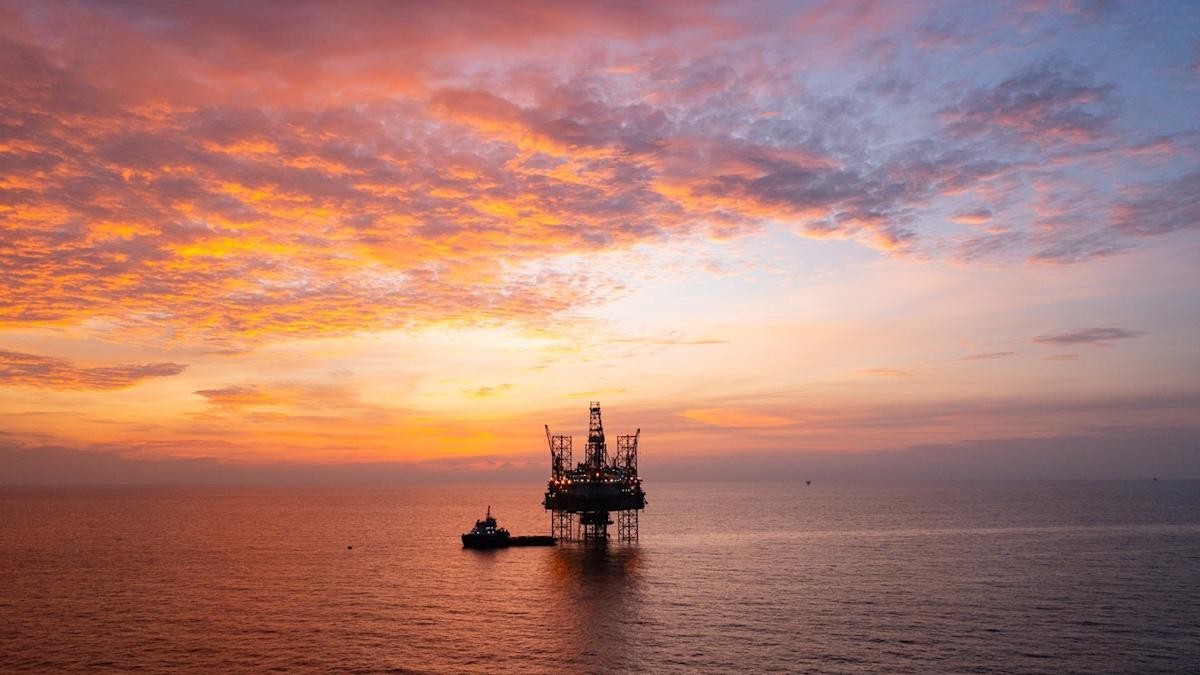
With little fanfare but clear strategic impact, Equinor has brought the long-forgotten Eirin gas field into production, sending fresh gas volumes into Europe’s system at a moment when security of supply still outweighs nearly every other energy priority. The project may not be large by global standards, but its timing, speed, and symbolism speak far louder than its size.
Once written off as uneconomic, Eirin is now flowing gas through the Gina Krog platform and onward via the Sleipner A hub, reinforcing Norway’s position as Europe’s most dependable energy supplier at a time when reliability matters more than ambition.
Europe Still Needs Gas—And Norway Is Still Delivering
Despite years of political messaging around electrification and rapid demand reduction, the reality is that Europe remains structurally short of natural gas. Domestic production continues to decline, LNG markets remain tight, and geopolitical risk is now a permanent feature rather than an exception.
That backdrop explains why Eirin, holding expected recoverable resources of about 27.6 million barrels of oil equivalent, mainly gas, suddenly carries strategic weight. The field’s gas is exported through the Gassled network, while liquids are sent to Kårstø for processing, making full use of Norway’s mature and highly efficient infrastructure.
The Sleipner area, already one of Europe’s most important gas gateways, becomes even more critical with Eirin now tied in. This is not about headline-grabbing volumes, but about keeping incremental supply flowing in a market where every additional molecule helps contain volatility.
From 1978 Relic to Post?Ukraine Asset
The Eirin discovery dates back to 1978, yet it spent decades on the shelf, dismissed as commercially unviable under earlier market conditions.
That assessment collapsed after Russia’s full-scale invasion of Ukraine, which fundamentally reshaped Europe’s energy calculus. Speed became more valuable than scale, and low-risk tie-backs suddenly made more sense than multi-billion-dollar greenfield projects. Equinor reassessed Eirin in 2023 and moved quickly to exploit a resource that no longer looked marginal in a changed world.
In that sense, Eirin is emblematic of how geopolitics can resurrect stranded resources almost overnight.
Related: Big Oil Resists Push To Prioritize Output Growth
Execution at Speed—and a Signal to the Industry
What truly sets Eirin apart is not the gas itself, but how fast Equinor delivered it. The investment decision was reached in just a few months, and production started only three years after the project was formally established in early 2023. Total investment came in at roughly NOK 4.5 billion, underscoring a ruthless focus on efficiency and capital discipline.
The field was developed as a subsea tie-back with a compact, standardized design that reused existing infrastructure at Gina Krog. The result was lower costs, reduced emissions, and—most importantly—time saved. Equinor is clearly signalling that the future of Norwegian gas is fast, modular, and infrastructure-led, not defined by megaprojects that take a decade to deliver.
Stretching the Shelf—and Buying Time
Eirin does more than deliver gas. It delivers longevity.
The project will extend the economic life of the Gina Krog platform by around seven years, pushing its operational horizon out to 2036 instead of 2029. That extension preserves offshore jobs, maximizes the value of existing assets, and keeps export capacity available for Europe during a period when alternatives remain scarce.
Equinor frames this as value creation, but it also represents something more blunt: a recognition that Europe’s gas era is not ending as quickly as policymakers once claimed.
Low-Emission Gas in a High-Stakes Market
Because Gina Krog was electrically powered from shore in 2023, gas from Eirin comes with an estimated emissions intensity of just 3 kilograms of CO? per barrel of oil equivalent, among the lowest on the Norwegian continental shelf.
That gives the project political legitimacy in Brussels and national capitals alike, but it does not change the underlying reality. Europe’s energy transition, for all its ambition, remains deeply dependent on gas, and Norwegian supply remains the least controversial option available.
The Bigger Message Behind a Small Field
Equinor operates Eirin with a 58.7% stake, alongside ORLEN Upstream Norway holding 41.3%. More importantly, the project underlines a broader truth about the Norwegian continental shelf. Fields once dismissed as marginal are now central to sustaining supply, particularly when they can be tied back quickly and cheaply to existing hubs.
As long as Europe continues to struggle with gas shortages, price volatility, and geopolitical uncertainty, forgotten fields like Eirin will keep coming back into focus.
The bottom line: Eirin will not reshape global gas markets on its own, but it captures today’s energy reality perfectly—speed matters, infrastructure beats ideology, and Norway keeps quietly doing what Europe still needs most: delivering gas when it counts.
By Jan-Thore Bergsagel for Oilprice.com