
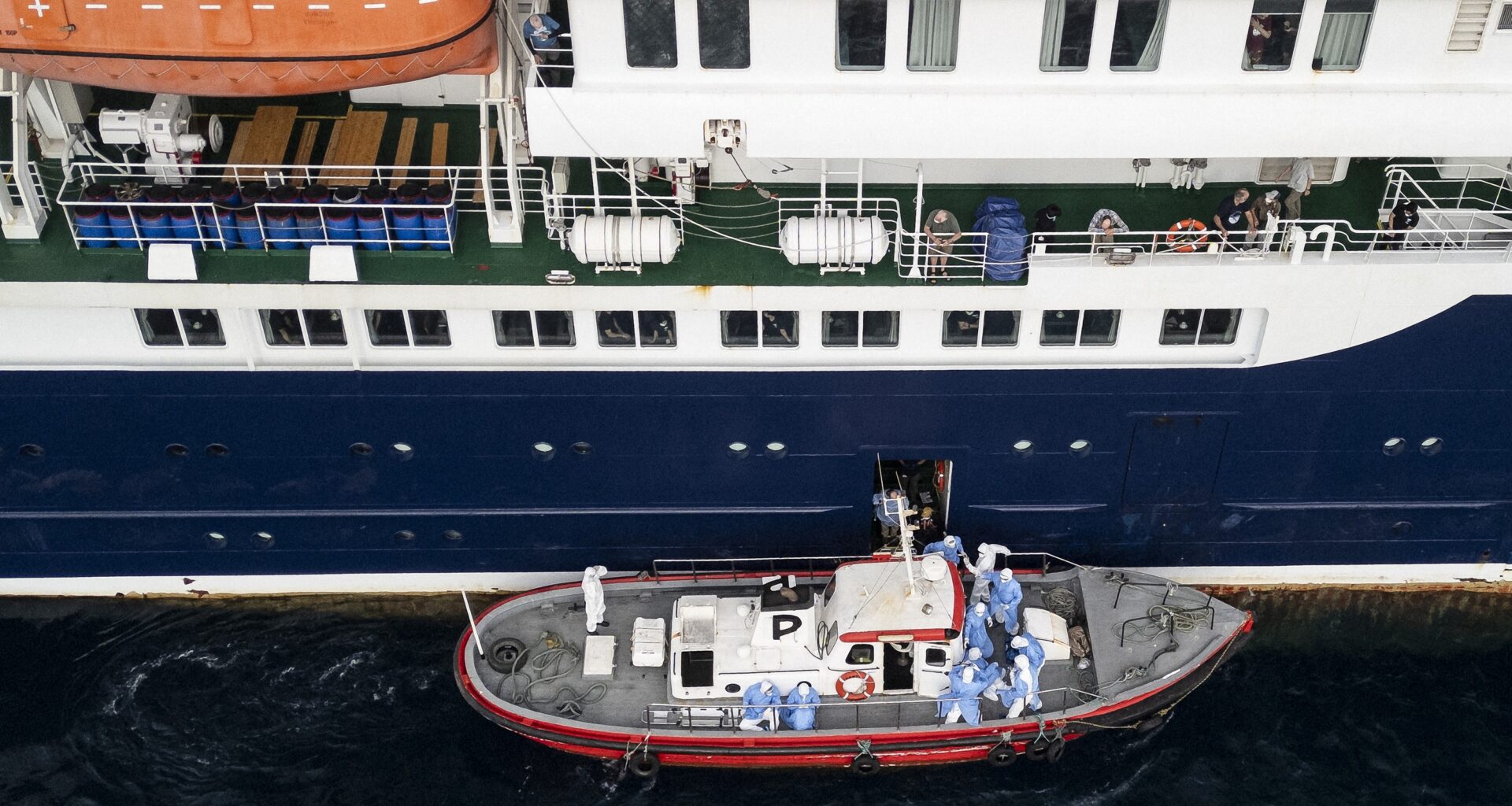
Three people in Canada — including one in Quebec — are being monitored by health authorities after possible exposure to hantavirus linked to a deadly outbreak aboard an international cruise ship, federal and provincial officials said Thursday.
The outbreak aboard the MV Hondius has already left three passengers dead, either on the ship or shortly after travelling aboard it.
But health authorities and the World Health Organization say the risk to the public remains low, noting the Andes strain of hantavirus, a rodent-borne illness, spreads far less easily than viruses such as COVID-19, or measles, and human-to-human transmission is extremely rare.
In a joint statement Friday, federal Health Minister Anita Anand and Public Health Minister Marjorie Michel said two Canadians who had been aboard the ship returned to Canada before the outbreak was identified. A third Canadian, who was not on the vessel, but travelled on the same flight as a symptomatic passenger, is also being monitored.
“All three are asymptomatic, have received guidance to self-isolate, and are being monitored by local authorities for the development of symptoms,” Anand and Michel said.
“We have stood up a Strategic Response Team, which ensures a co-ordinated, whole-of-government approach to this matter.
“In addition to contacting the four Canadians on board, consular support is currently en route to the Canary Islands to monitor the process when the Canadians disembark and to ensure that all public health protocols are followed,” the minister added.
Quebec Health Minister Sonia Bélanger said in a statement the Quebec resident may have been exposed during the flight, but was not believed to have been in close proximity to the infected passenger.
“According to our information, it appears they were not in close proximity, and the risk of transmission is, therefore, extremely low. We remain vigilant regarding the situation concerning a possible case of hantavirus exposure in Quebec,” Bélanger said.
She added the person is being monitored by public health officials.
About a month ago, the cruise ship departed from Argentina, carrying passengers from multiple countries. Global health authorities are now tracing potential contacts in several countries, including the United States, Britain, South Africa, the Netherlands and Switzerland.
In an update Thursday, Maria Van Kerkhove stressed the outbreak was not comparable to the COVID-19 pandemic.
“This is not COVID, this is not influenza,” she said. “It spreads very, very differently.”
Authorities have not yet determined how the outbreak began.
Hantavirus is typically spread through contact with infected rodents or by breathing in air contaminated by their urine, droppings or saliva.
Symptoms usually appear between two and four weeks after exposure, although in some cases they can take more than a month to develop.